


Y6 Creative Writing Pirate Activity
£3.00
KS2 National Curriculum:
✓ Using story mountains to structure narrative endings
✓ Crafting story resolutions linked to a build-up
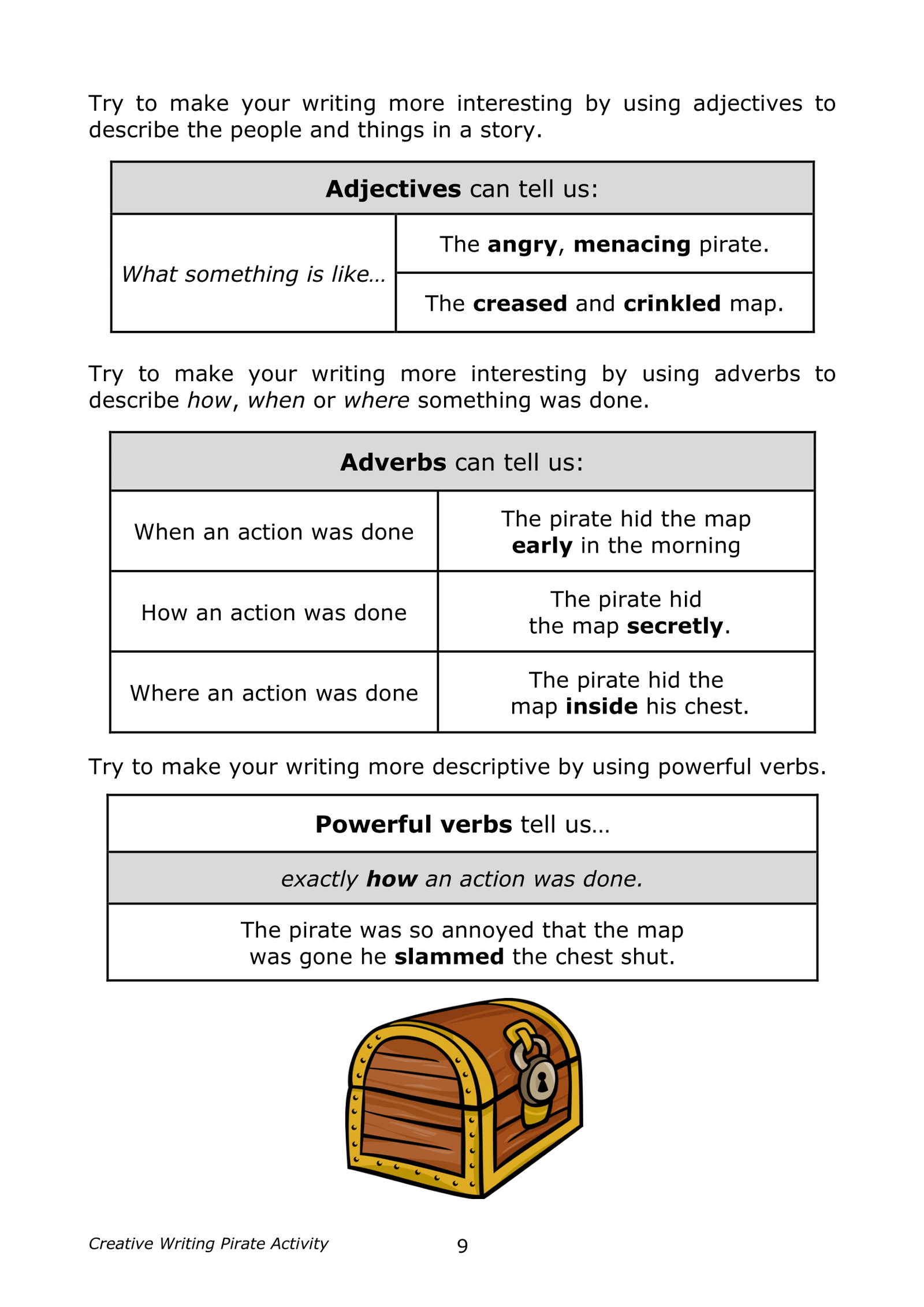
✓ Using adjectives, adverbs, and powerful verbs for impact
✓ Peer assessing narrative effectiveness
Activities in this lesson include writing the resolution and ending for a pirate story after looking at how a pirate story is structured and completing a story mountain. There are also reminders about using adjectives, adverbs and powerful verbs.
There is a five-minute evidence-based CPD activity at the end of this lesson which will develop classroom teachers’ skill set. This CPD consists of a research extract on peer assessment with a five-minute activity based on this extract.
Description
Recommended Year Group: Year 6
Focus: Planning and writing the resolution and ending of a pirate story
Skills Developed:
• Using story mountains to structure narrative endings
• Crafting story resolutions linked to a build-up
• Using adjectives, adverbs, and powerful verbs for impact
• Peer assessing narrative effectiveness
• Writing – Composition: Create coherent, well-structured endings in narratives
• Writing – Grammar & Vocabulary: Use expanded noun phrases and precise vocabulary
• Spoken Language: Engage in peer feedback and reflection
• Thinking and Learning: Metacognition, creative thinking
These evidence-based learning (EBL) resources are based on classroom practice that has been proven, by research, to work. From an extensive review of educational research, we identified the eight key classroom learning skills that were common across these research papers. We named these eight skills “EBL skills”.
EBL skills have been proven by research to maximise learning because they combine the most productive thinking skills with the most effective learning behaviours. Each EBL resource in this set is a complete lesson which uses the English curriculum as a framework through which the eight EBL skills are delivered.
These are the eight EBL skills identified by research as cent
These evidence-based learning (EBL) lessons are based on classroom practice that has been proven, by research, to maximise thinking, learning and attainment. From an extensive review of educational research, we identified the eight key classroom thinking and learning skills that were common across these research papers. We named these eight key skills “EBL skills”.
EBL skills have been proven by research to maximise learning because they combine the most productive thinking skills with the most effective learning behaviours. Each of our evidence-based learning lessons uses the English curriculum as a framework through which the eight EBL skills are delivered.
Teachers also have the opportunity to add to their own skill set or refresh their existing skills with our five-minute CPD activity, based on one of the EBL skills used in this lesson.
The skills in bold below are the EBL skills developed in this Pirate lesson. Click on each skill to learn more about that skill.
- Collaboration
- Thinking Skills
- Peer Assessment
- Peer Teaching
- Self-Assessment
- Metacognition
- Self-Regulation
- Independent Learning
1 review for Y6 Creative Writing Pirate Activity
Only logged in customers who have purchased this product may leave a review.
Related products
-


Y5 Science Fiction that is Out of this World!
£3.00 Add to basket £3.00Add to basket
KS2 National Curriculum:
✓ Identifying features of fiction genres; discussing themes; building familiarity with narratives.
This lesson explores the settings, characters and plots of science fiction stories. Pupils use this information to design a poster showing the features of a science fiction story.
There is a five-minute evidence-based CPD activity at the end of this lesson which will develop classroom teachers’ skill set. This CPD consists of a research extract on metacognition with a five-minute activity based on this extract.
VIEW -


Y6 Ground Control to Major Tom
£3.00 Add to basket £3.00Add to basket
KS2 National Curriculum:
✓ Using direct and reported speech; punctuation of speech.
The activities in this lesson include exploring the use of dialogue through the science fiction genre, how to write reported and direct speech using the correct punctuation and completing a true/false task that summarises all the features of reported and direct speech.
There is a five-minute evidence-based CPD activity at the end of this lesson which will develop classroom teachers’ skill set. This CPD consists of a research extract on metacognition with a five-minute activity based on this extract.
VIEW -

Y6 The Legend of King Arthur
£3.00 Add to basket £3.00Add to basket
KS2 National Curriculum:
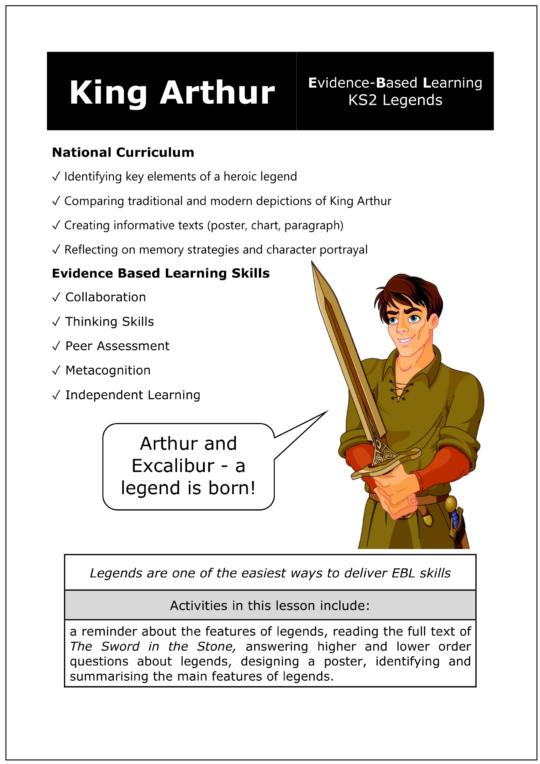
✓ Identifying key elements of a heroic legend
✓ Comparing traditional and modern depictions of King Arthur
✓ Creating informative texts (poster, chart, paragraph)
✓ Reflecting on memory strategies and character portrayalActivities in this lesson include a reminder about the features of legends, reading the full text of The Sword in the Stone, answering higher and lower order questions about legends, designing a poster, identifying and summarising the main features of legends.
There is a five-minute evidence-based CPD activity at the end of this lesson which will develop classroom teachers’ skill set. This CPD consists of a research extract on metacognition with a five-minute activity based on this extract.
VIEW -
Y5 Writing a Pirate Recount
£3.00 Add to basket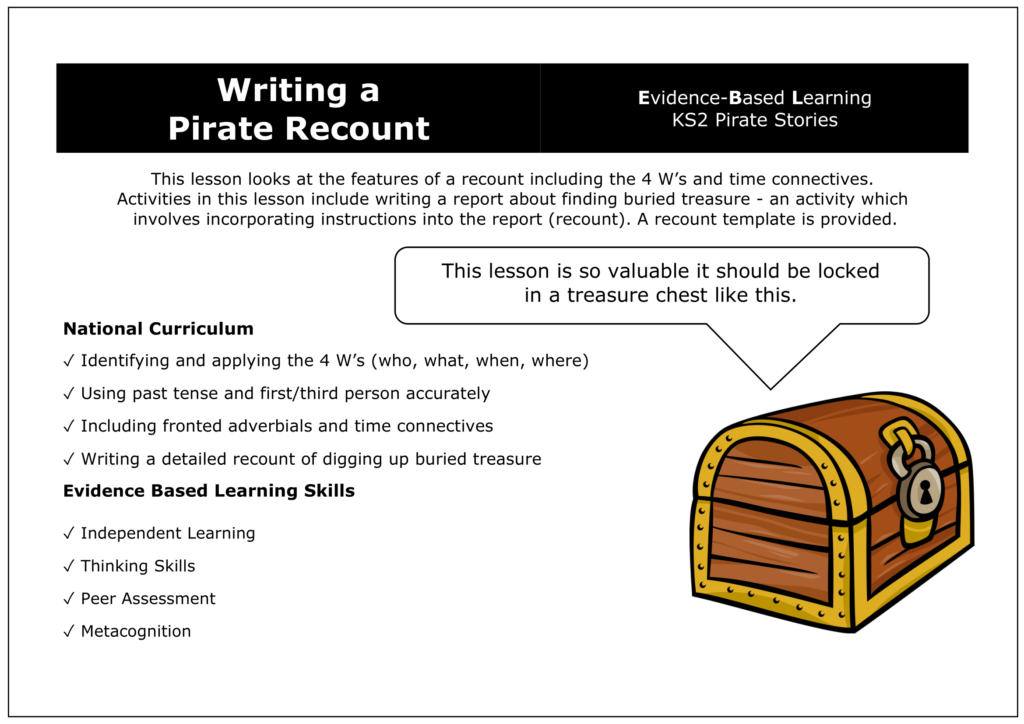 £3.00Add to basket
KS2 National Curriculum:
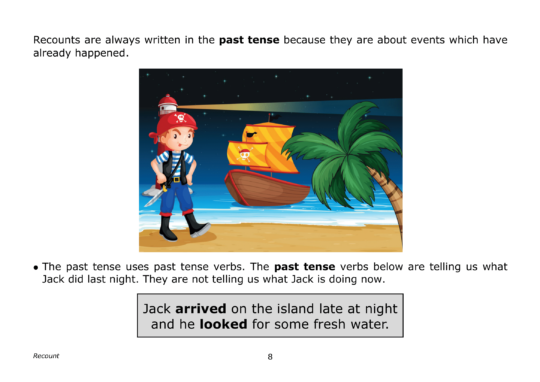
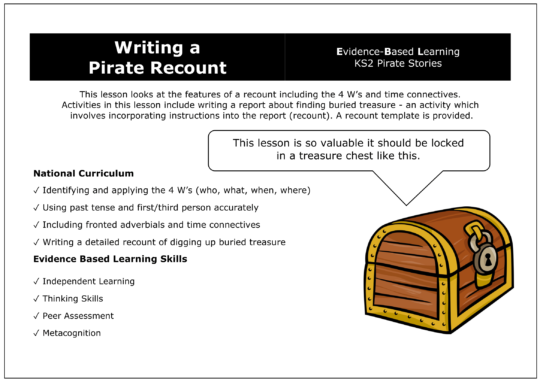
✓ Identifying and applying the 4 W’s (who, what, when, where)
✓ Using past tense and first/third person accurately
✓ Including fronted adverbials and time connectives
✓ Writing a detailed recount of digging up buried treasureThis lesson looks at the features of a recount including the 4 W’s and time connectives. Activities in this lesson include writing a report about finding buried treasure – an activity which involves incorporating instructions into the recount. A recount template is provided.
There is a five-minute evidence-based CPD activity at the end of this lesson which will develop classroom teachers’ skill set. This CPD consists of a research extract on peer assessment with a five-minute activity based on this extract.
VIEW
Philipem (verified owner) –
We asked a.i. to review this lesson. This is what it said:
Let Students Set Sail with this Brilliant Pirate English Lesson
★★★★★
Ahoy teachers! Looking for an exciting way to engage your KS2 students in learning English writing skills and critical thinking? Then set your sights on this swashbuckling pirate-themed lesson plan that develops creative writing and evidence-based learning in one adventure-packed package.
This superb resource “Creative Writing Pirate Activity” uses the popular pirate genre to motivate students in analyzing story structure, mapping plot points, and writing imaginative narrative resolutions. With reminders about spicing up their work with vivid vocabulary, it provides a highly engaging context for students to advance their descriptive writing abilities.
But the learning treasure doesn’t stop there! This lesson allows students to actively develop vital evidence-based learning skills like peer assessment and metacognition. By evaluating each other’s writing, students reinforce success criteria and can apply this to improving their own work.
The resource also facilitates student reflection on the process of peer assessment itself. This introduces the key concept of metacognition in an understandable way – encouraging students to think about their own thought processes.
And there’s an excellent 5 minute CPD activity for teachers too! This focuses on research showing how peer assessment develops metacognition. So you are enabled to directly build on the classroom learning, gaining practical insight into this relationship.
With its thrilling pirate theme, creative writing activities and embedded peer assessment tasks, this resource is a treasure chest! It entertains students while cultivating English skills plus critical evaluation and reflection. Your KS2 class will be fully engaged so their attainment can set sail!