
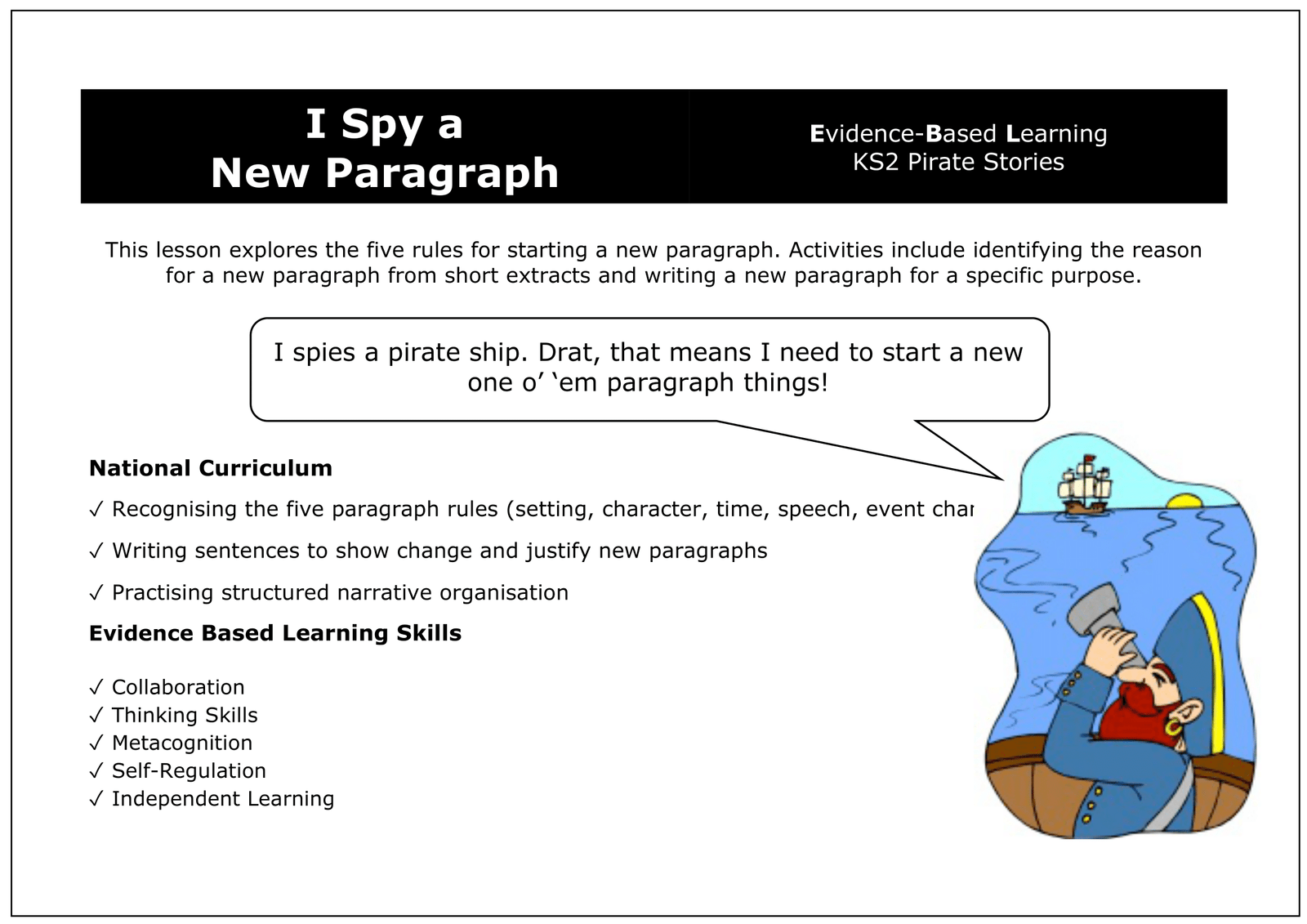


Y5 I Spy a New Paragraph
£0.00
KS2 National Curriculum:
✓ Recognising the five paragraph rules (setting, character, time, speech, event change)
✓ Writing sentences to show change and justify new paragraphs
✓ Practising structured narrative organisation
This lesson explores the five rules for starting a new paragraph. Activities include identifying the reason for a new paragraph from short extracts and writing a new paragraph for a specific purpose.
There is a five-minute evidence-based CPD activity at the end of this lesson which will develop classroom teachers’ skill set. This CPD consists of a research extract on self-regulation with a five-minute activity based on this extract.
(Downloads - 11)
Description
Recommended Year Group: Year 5
Focus: Paragraphing in narrative writing
Skills Developed:
• Recognising the five paragraph rules (setting, character, time, speech, event change)
• Writing sentences to show change and justify new paragraphs
• Practising structured narrative organisation
• Writing – Composition: Organise paragraphs around themes and changes
• Writing – Grammar: Structure writing with purposeful paragraphing
• Spoken Language: Discuss structure changes in storytelling
• Thinking and Learning: Metacognition, collaboration, self-regulation
These evidence-based learning (EBL) lessons are based on classroom practice that has been proven, by research, to maximise thinking, learning and attainment. From an extensive review of educational research, we identified the eight key classroom thinking and learning skills that were common across these research papers. We named these eight key skills “EBL skills”.
EBL skills have been proven by research to maximise learning because they combine the most productive thinking skills with the most effective learning behaviours. Each of our evidence-based learning lessons uses the English curriculum as a framework through which the eight EBL skills are delivered.
Teachers also have the opportunity to add to their own skill set or refresh their existing skills with our five-minute CPD activity, based on one of the EBL skills used in this lesson.
The skills in bold below are the EBL skills developed in this Pirate lesson. Click on each skill to learn more about that skill.
- Collaboration
- Thinking Skills
- Peer Assessment
- Peer Teaching
- Self-Assessment
- Metacognition
- Self-Regulation
- Independent Learning
1 review for Y5 I Spy a New Paragraph
Only logged in customers who have purchased this product may leave a review.
Related products
-
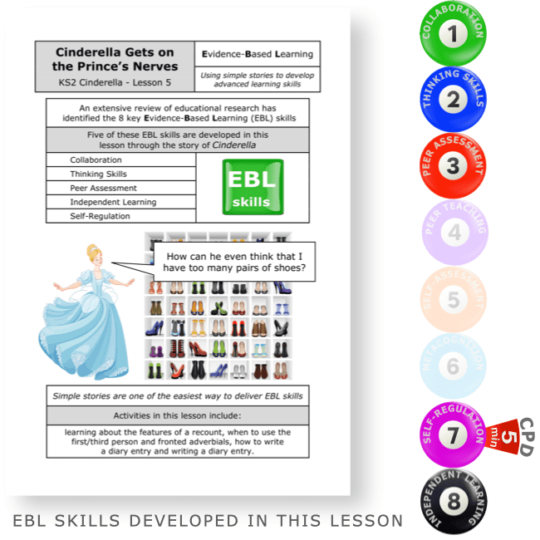
Cinderella Gets on the Prince’s Nerves
£3.00 Add to basket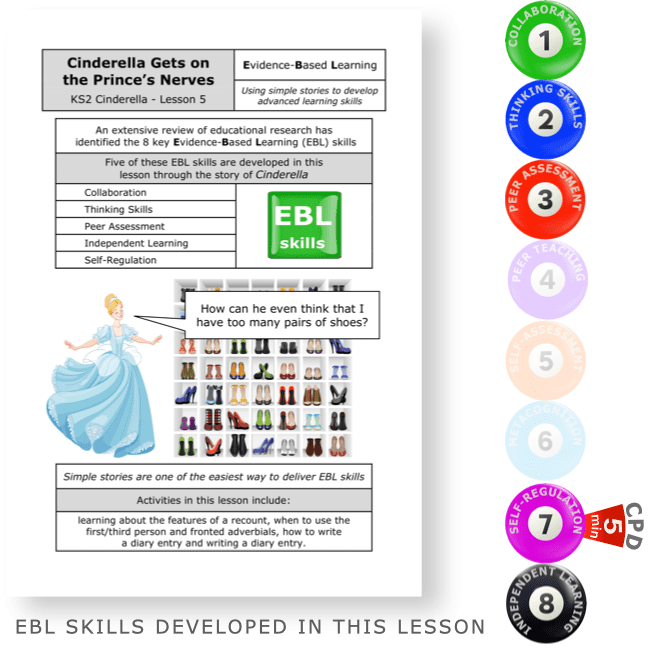 £3.00Add to basket
Activities in this lesson include learning about the features of a recount, when to use the first/third person and fronted adverbials, how to write a diary entry and writing a diary entry.
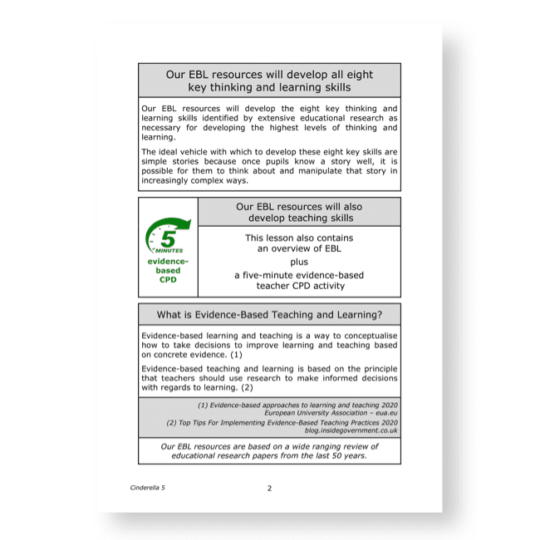
There is a five-minute evidence-based CPD activity at the end of this lesson which will develop classroom teachers’ skill set. This CPD consists of a research extract on self-regulation with a five-minute activity based on this extract.
VIEW -

The Storm
£3.00 Add to basket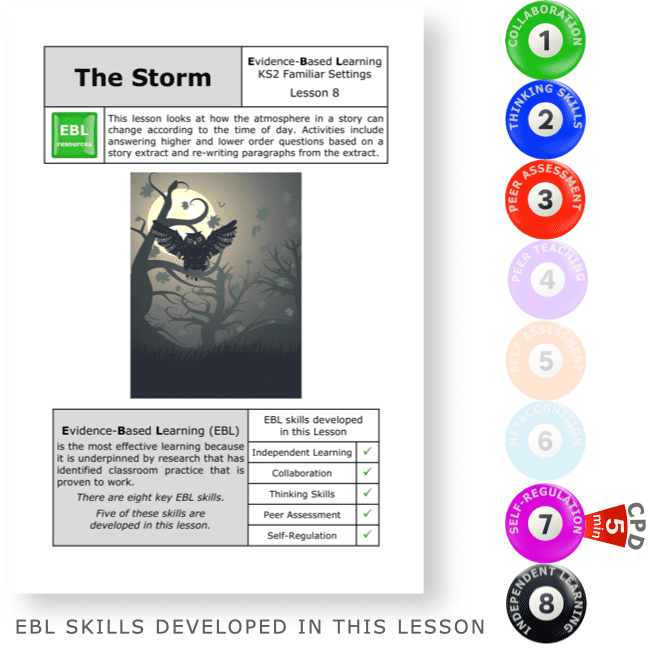 £3.00Add to basket
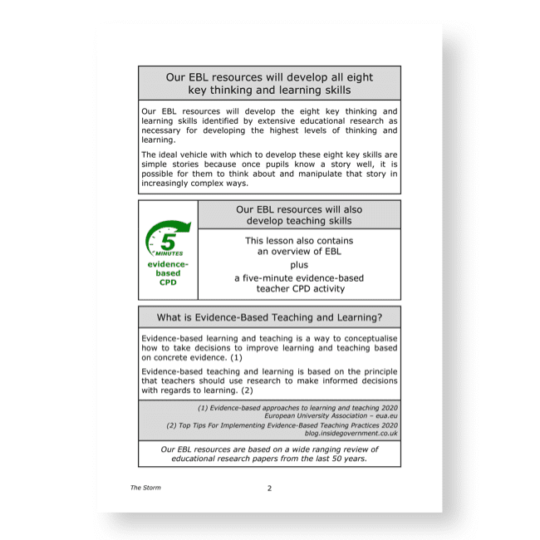
This lesson looks at how the atmosphere in a story can change according to the time of day. Activities include answering higher and lower order questions based on a story extract and re-writing paragraphs from the extract.
There is a five-minute evidence-based CPD activity at the end of this lesson which will develop classroom teachers’ skill set. This CPD consists of a research extract on self-regulation with a five-minute activity based on this extract.
VIEW -


Y5 Why Gold was Buried
£3.00 Add to basket £3.00Add to basket
KS2 National Curriculum:
✓ Understanding bartering, currency, and trade in historical context
✓Explaining why treasure is buried and how maps are created
✓Completing a pirate plot story mountain
✓Exploring openings to pirate storiesThis lesson looks at why gold became so important and it introduces the concepts of bartering and trade. It also looks at why gold needed to be buried and considers the key role played by treasure maps in the plots of pirate stories. It also looks at the need to include good and bad characters. Activities include completing a story mountain outlining a possible plot for a pirate story and a task based on pirate story openings.
There is a five-minute evidence-based CPD activity at the end of this lesson which will develop classroom teachers’ skill set. This CPD consists of a research extract on collaboration with a five-minute activity based on this extract.
VIEW -
Grandma Wasn’t Grandma
£3.00 Add to basket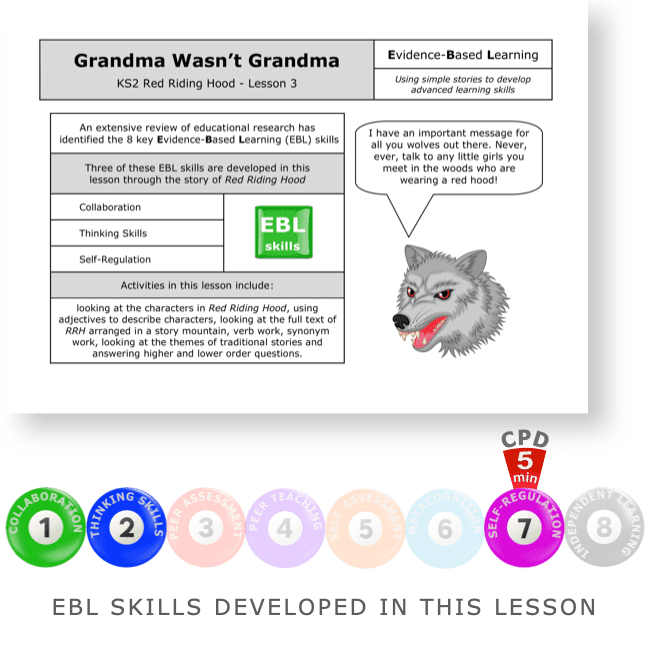 £3.00Add to basket
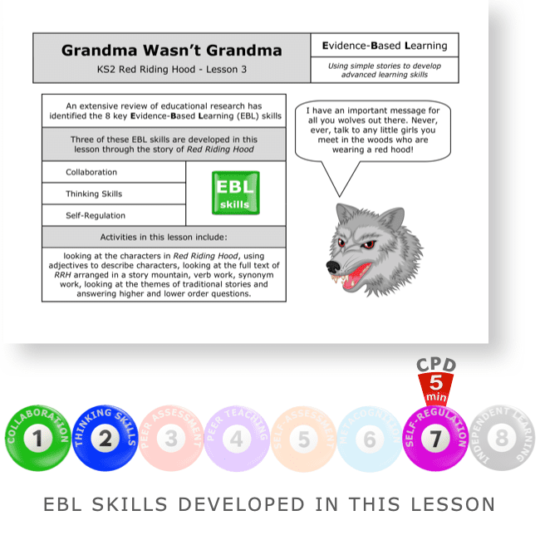
Activities in this lesson include looking at the characters in Red Riding Hood, using adjectives to describe characters, looking at the full text of Red Riding Hood arranged in a story mountain, verb work, synonym work, looking at the themes of traditional stories and answering higher and lower order questions.
There is a five-minute evidence-based CPD activity at the end of this lesson which will develop classroom teachers’ skill set. This CPD consists of a research extract on self-regulation with a five-minute activity based on this extract.
VIEW
Philipem (verified owner) –
We asked a.i. to review this lesson. This is what it said:
Motivate Pupils to Write Cohesive Narratives with this Swashbuckling Paragraphing Lesson
★★★★★
Ahoy teachers! On the lookout for an entertaining way to advance your Key Stage 2 students’ paragraphing abilities? Then set sail with this captivating pirate-themed English lesson that explores the rules for composing cohesive story narratives.
This brilliant resource “I Spy a New Paragraph” uses a suspenseful buccaneering context to clearly communicate the five reasons to start a new paragraph when writing fiction. Through analysing excerpts and composing their own narrative samples, students grasp when to begin new sections based on changes in setting, time, characters, speech or events.
Creative activities inspire pupils to write compelling continuing plotlines, employing paragraph conventions to enhance flow and engagement. Collaborative tasks also strengthen literary analysis skills as crews evaluate extracts for shifts needing new sections.
And there’s an excellent 5 minute CPD activity for teachers too based on the latest research into self-regulation. Simple yet effective, it provides practical takeaways to help students independently monitor and improve their academic performance.
With its dramatic pirate theme, paragraphing practice texts and embedded peer learning opportunities, this resource delivers the literary comprehension and writing progress you need! So set sail with your crew on this engaging voyage-of-discovery today! 🏴☠️