


Y5 Looking at a Character in Treasure Island
£3.00
KS2 National Curriculum:
✓ Identifying character traits through description
✓ Using evidence from the text
✓ Descriptive writing continuation in the character’s voice
Activities include answering higher and lower order questions based on an extract from the book and writing a new paragraph for Treasure Island.
There is a five-minute evidence-based CPD activity at the end of this lesson which will develop classroom teachers’ skill set. This CPD consists of a research extract on metacognition with a five-minute activity based on this extract.
Description
Recommended Year Group: Year 5
Focus: Character analysis – Long John Silver Skills Developed:
- Identifying character traits through description
- Using evidence from the text
- Descriptive writing continuation in the character’s voice
- Designing a wanted poster (creative writing and inference)
- Reading – Comprehension: Drawing inferences; identifying how language contributes to meaning
- Writing – Composition: Writing narratives using character voice
- Speaking and Listening: Partner discussion and reasoning
- Thinking and Learning: Metacognition, collaboration, peer/independent learning
These evidence-based learning (EBL) lessons are based on classroom practice that has been proven, by research, to maximise thinking, learning and attainment. From an extensive review of educational research, we identified the eight key classroom thinking and learning skills that were common across these research papers. We named these eight key skills “EBL skills”.
EBL skills have been proven by research to maximise learning because they combine the most productive thinking skills with the most effective learning behaviours. Each of our evidence-based learning lessons uses the English curriculum as a framework through which the eight EBL skills are delivered.
Teachers also have the opportunity to add to their own skill set or refresh their existing skills with our five-minute CPD activity, based on one of the EBL skills used in this lesson.
The skills in bold below are the EBL skills developed in this Treasure Island lesson. Click on each skill to learn more about that skill.
- Collaboration
- Thinking Skills
- Peer Assessment
- Peer Teaching
- Self-Assessment
- Metacognition
- Self-Regulation
- Independent Learning
1 review for Y5 Looking at a Character in Treasure Island
Only logged in customers who have purchased this product may leave a review.
Related products
-
Y6 Looking at the Start of Treasure Island
£3.00 Add to basket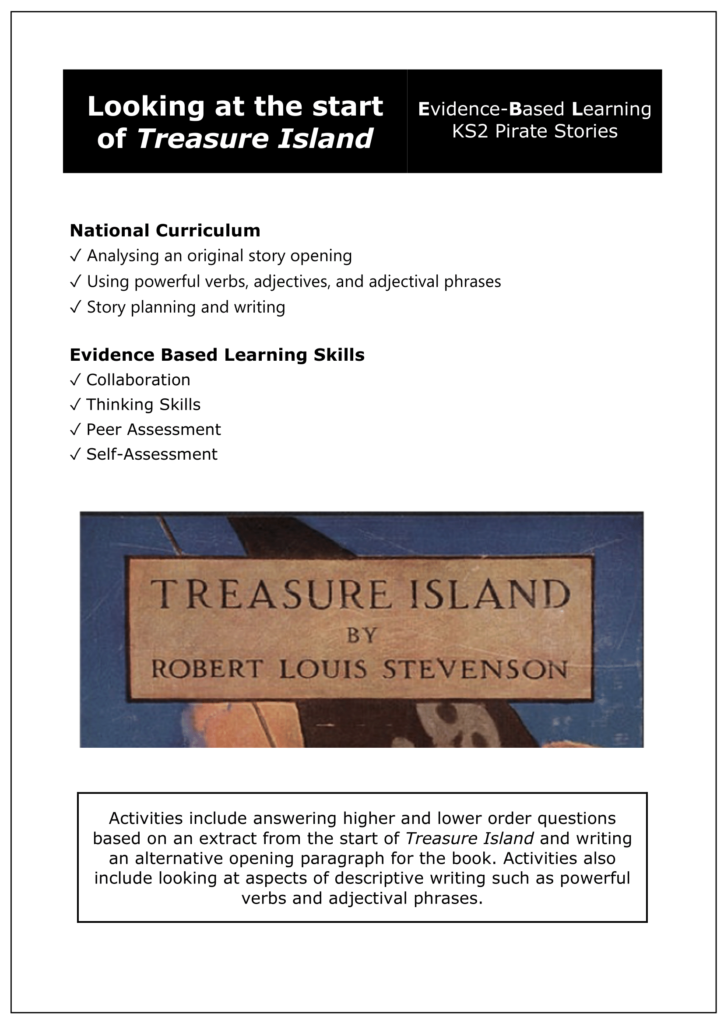 £3.00Add to basket
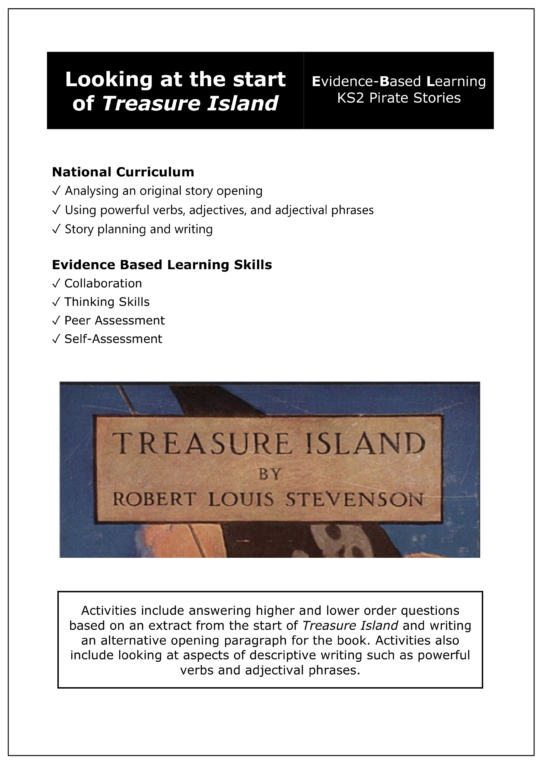
KS2 National Curriculum:
✓ Analysing an original story opening
✓ Using powerful verbs, adjectives, and adjectival phrases
✓ Story planning and writingActivities include answering higher and lower order questions based on an extract from the start of Treasure Island and writing an alternative opening paragraph for the book. Activities also include looking at aspects of descriptive writing such as powerful verbs and adjectival phrases.
There is a five-minute evidence-based CPD activity at the end of this lesson which will develop classroom teachers’ skill set. This CPD consists of a research extract on thinking skills with a five-minute activity based on this extract.
VIEW -


Y6 Ground Control to Major Tom
£3.00 Add to basket £3.00Add to basket
KS2 National Curriculum:
✓ Using direct and reported speech; punctuation of speech.
The activities in this lesson include exploring the use of dialogue through the science fiction genre, how to write reported and direct speech using the correct punctuation and completing a true/false task that summarises all the features of reported and direct speech.
There is a five-minute evidence-based CPD activity at the end of this lesson which will develop classroom teachers’ skill set. This CPD consists of a research extract on metacognition with a five-minute activity based on this extract.
VIEW -


Comparing Early and Later Traditional Stories (II)
£3.00 Add to basket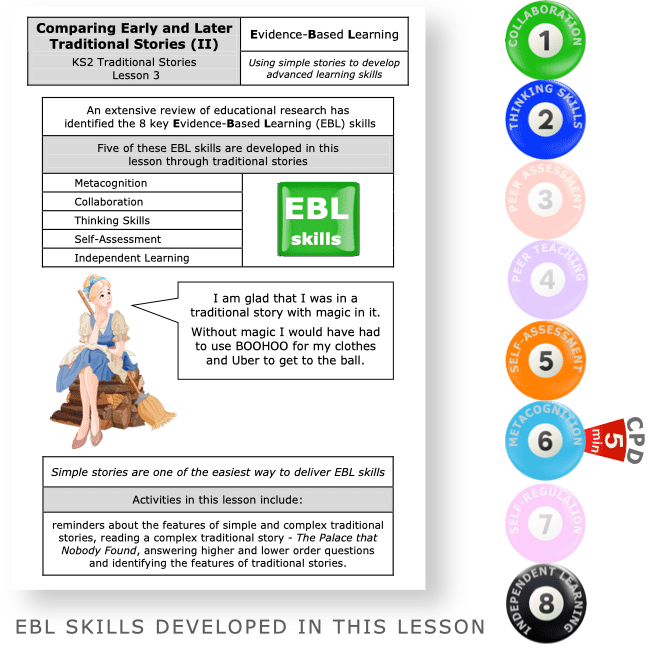 £3.00Add to basket
Activities in this lesson reminders about the features of simple and complex traditional stories, reading a complex traditional story – The Palace that Nobody Found, answering higher and lower order questions and identifying the features of traditional stories.
There is a five-minute evidence-based CPD activity at the end of this lesson which will develop classroom teachers’ skill set. This CPD consists of a research extract on metacognition with a five-minute activity based on this extract.
VIEW -


Y6 The Emperor’s New Clothes (II) Idioms
£3.00 Add to basket £3.00Add to basket
KS2 National Curriculum:
✓ Exploring the meaning and origin of common idioms
✓ Discussing non-literal language and interpreting figurative phrases
✓ Creating sentences that apply idioms in context
✓ Reflecting on idiomatic meaning through structured dialogue and peer teachingActivities in this lesson include learning about idioms, looking at how to design a poster and designing a poster to show the main features of idioms.
There is a five-minute evidence-based CPD activity at the end of this lesson which will develop classroom teachers’ skill set. This CPD consists of a research extract on metacognition with a five-minute activity based on this extract.
VIEW

Philipem (verified owner) –
We asked a.i. to review this lesson. This is what it said:
Bring Treasure Island to Life While Teaching Key Skills
★★★★★
Immerse your students in the iconic pirate world of Treasure Island while building essential English and learning capabilities. This resource uses the universally-loved Robert Louis Stevenson classic to teach reading, writing, comprehension and analysis skills alongside vital evidence-based learning techniques.
Introduce a Literary Masterpiece
The plot and characters of Treasure Island instantly engage most KS2 pupils. This lesson taps into students’ natural excitement for pirate stories by exploring the charming but cunning personality of the book’s most famous pirate, Long John Silver.
Embedded English Skills Development
While uncovering Long John Silver’s true motives, students must closely read descriptive passages, define vocabulary, answer factual and analytical questions, discuss interpretations, and write creative pieces. This strengthens literacy skills from basic comprehension to higher-order analysis without feeling like traditional English work.
Future-Proof Students with EBL Skills
Collaboration, creative thinking, peer review, metacognition and independent learning are built into the student activities. Mastering these evidence-based capabilities equips students with the key cognitive skills needed for exams, further education and career success.
Complete 3-Part Unit Available
This resource is the first lesson in a three-part Treasure Island unit spanning setting, characters and themes. Sequenced lessons allow students to deeply explore the book over time through varied meaningful activities.
Fire up your students’ imagination while covering English and 21st century skills with this engaging Treasure Island resource!