


Y6 New Paragraphs and New Worlds
£3.00
KS2 National Curriculum:
✓ Using paragraphs to organise writing; understanding narrative structure.
Activities in this lesson include reminders about the three main features of stories and the features of science fiction stories in particular. Activities also include looking at the five reasons for starting a new paragraph and adding new paragraphs to extracts from science fiction stories.
There is a five-minute evidence-based CPD activity at the end of this lesson which will develop classroom teachers’ skill set. This CPD consists of a research extract on peer teaching with a five-minute activity based on this extract.
Description
These evidence-based learning (EBL) lessons are based on classroom practice that has been proven, by research, to maximise thinking, learning and attainment. From an extensive review of educational research, we identified the eight key classroom thinking and learning skills that were common across these research papers. We named these eight key skills “EBL skills”.
EBL skills have been proven by research to maximise learning because they combine the most productive thinking skills with the most effective learning behaviours. Each of our evidence-based learning lessons uses the English curriculum as a framework through which the eight EBL skills are delivered.
Teachers also have the opportunity to add to their own skill set or refresh their existing skills with our five-minute CPD activity, based on one of the EBL skills used in this lesson.
The skills in bold below are the EBL skills developed in this Science Fiction lesson. Click on each skill to learn more about that skill.
- Collaboration
- Thinking Skills
- Peer Assessment
- Peer Teaching
- Self-Assessment
- Metacognition
- Self-Regulation
- Independent Learning
1 review for Y6 New Paragraphs and New Worlds
Only logged in customers who have purchased this product may leave a review.
Related products
-


Y5 Nailing a Setting
£3.00 Add to basket £3.00Add to basket
KS2 National Curriculum:
✓ Identifying setting components: place, time of day, time period, and weather
✓ Analysing visual cues and using setting vocabulary
✓ Teaching peers to consolidate understanding
✓ Generating original examples through partner workThis lesson looks at the four possible features of a story setting: the place, the time period, the time of day and the weather. It also looks at real and imaginary settings. Activities include answering higher and lower order questions.
There is a five-minute evidence-based CPD activity at the end of this lesson which will develop classroom teachers’ skill set. This CPD consists of a research extract on peer teaching with a five-minute activity based on this extract.
VIEW -

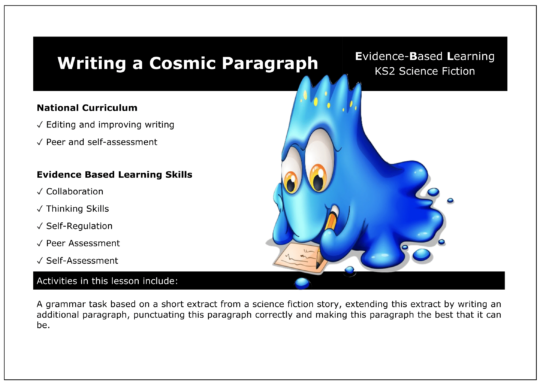
Y6 Writing a Cosmic Paragraph
£3.00 Add to basket £3.00Add to basket
KS2 National Curriculum:
✓ Editing and improving writing; peer and self-assessment.
Activities in this lesson include a grammar task based on a short extract from a science fiction story, extending this extract by writing an additional paragraph, punctuating this paragraph correctly and making this paragraph the best that it can be.
There is a five-minute evidence-based CPD activity at the end of this lesson which will develop classroom teachers’ skill set. This CPD consists of a research extract on self-regulation with a five-minute activity based on this extract.
VIEW -

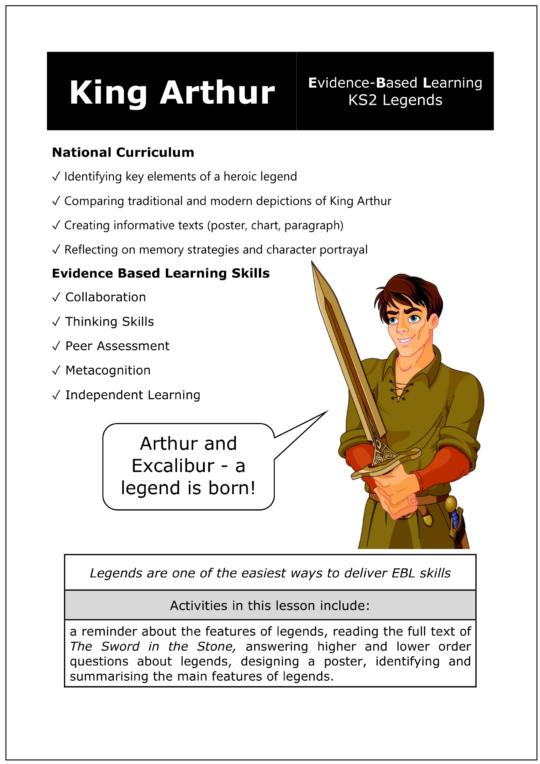
Y6 The Legend of King Arthur
£3.00 Add to basket £3.00Add to basket
KS2 National Curriculum:
✓ Identifying key elements of a heroic legend
✓ Comparing traditional and modern depictions of King Arthur
✓ Creating informative texts (poster, chart, paragraph)
✓ Reflecting on memory strategies and character portrayalActivities in this lesson include a reminder about the features of legends, reading the full text of The Sword in the Stone, answering higher and lower order questions about legends, designing a poster, identifying and summarising the main features of legends.
There is a five-minute evidence-based CPD activity at the end of this lesson which will develop classroom teachers’ skill set. This CPD consists of a research extract on metacognition with a five-minute activity based on this extract.
VIEW -

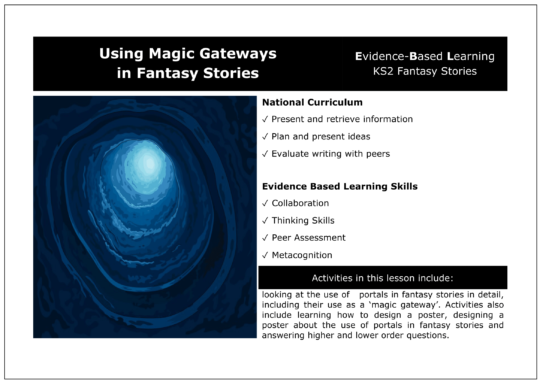
Y6 Using Magic Gateways in Fantasy Stories
£3.00 Add to basket £3.00Add to basket
KS2 National Curriculum:
✓ Present and retrieve information
✓ Plan and present ideas
✓ Evaluate writing with peersActivities in this lesson include looking at the use of portals in fantasy stories in detail, including their use as a ‘magic gateway’. Activities also include learning how to design a poster, designing a poster about the use of portals in fantasy stories and answering higher and lower order questions.
There is a five-minute evidence-based CPD activity at the end of this lesson which will develop classroom teachers’ skill set. This CPD consists of a research extract on metacognition with a five-minute activity based on this extract.
VIEW

Philipem (verified owner) –
We asked a.i. to review this lesson. This is what it said:
Title: Fly Your Pupils to New Narrative Heights with This Paragraph-Focused Lesson called “New Paragraphs and New Worlds” Rating: ⭐⭐⭐⭐⭐
The “New Paragraphs and New Worlds” resource from the KS2 science fiction series is a stellar way to build literacy proficiency alongside collaborative and cognitive skills. Pupils explore paragraph structure through the engaging lens of sci-fi stories and settings.
Analysing excerpts for paragraph rationale reinforces comprehension of key story elements like time, setting, and plot events. Generating their own paragraphs to continue narratives exercises creative writing abilities. The focus on dialogue mechanics like speech tags is also invaluable writing practice.
What makes this lesson truly out-of-this-world is how it melds literacy objectives with diverse evidence-based learning (EBL) opportunities. Activities tap into 5 core competencies: collaboration, thinking skills, peer teaching, and elements of self-regulation. Simple icons map exercises to specific skills.
The peer teaching component, where students explain “paragraph rules” to partners, beautifully models the learning-by-teaching approach. Reflection prompts also nurture metacognitive thinking about individual learning preferences.
Teachers will appreciate the bite-sized 5-minute CPD section unpacking research behind peer teaching strategies. The actionable steps and examples empower an evidence-based teaching mindset.
Overall, I’d give “New Paragraphs and New Worlds” an enthusiastic 5-star rating. It’s a complete skills-boosting package that engages literacy and EBL through the motivating context of science fiction – the perfect resource for a thriving 21st century classroom.