


Y5 Stanley, Head Elf Inspector and New Paragraphs
£3.00
KS2 National Curriculum:
✓ Use paragraphs to organise writing
✓ Use and punctuate dialogue
✓ Plan and structure narrative writing
Activities in this lesson include exploring the five reasons for starting a new paragraph and looking at the three rules for writing dialogue. Examples of starting a new paragraph are presented using a story extract about Stanley, Head Elf Inspector. Activities also include a close procedure for the five reasons for starting a new paragraph and also for the three rules for writing dialogue.
There is a five-minute evidence-based CPD activity at the end of this lesson which will develop classroom teachers’ skill set. This CPD consists of a research extract on self-assessment with a five-minute activity based on this extract.
Description
These evidence-based learning (EBL) lessons are based on classroom practice that has been proven, by research, to maximise thinking, learning and attainment. From an extensive review of educational research, we identified the eight key classroom thinking and learning skills that were common across these research papers. We named these eight key skills “EBL skills”.
EBL skills have been proven by research to maximise learning because they combine the most productive thinking skills with the most effective learning behaviours. Each of our evidence-based learning lessons uses the English curriculum as a framework through which the eight EBL skills are delivered.
Teachers also have the opportunity to add to their own skill set or refresh their existing skills with our five-minute CPD activity, based on one of the EBL skills used in this lesson.
The skills in bold below are the EBL skills developed in this Fantasy Story lesson. Click on each skill to learn more about that skill.
- Collaboration
- Thinking Skills
- Peer Assessment
- Peer Teaching
- Self-Assessment
- Metacognition
- Self-Regulation
- Independent Learning
1 review for Y5 Stanley, Head Elf Inspector and New Paragraphs
Only logged in customers who have purchased this product may leave a review.
Related products
-


Y5 Alice, the White Rabbit and the Portal
£3.00 Add to basket £3.00Add to basket
KS2 National Curriculum:
✓ Identify themes and conventions
✓ Understand story structure
✓ Develop speaking and listening through partner workActivities in this lesson include exploring the key components of fantasy stories: real and imaginary settings, real and imaginary characters, good vs evil, real journeys vs portals, the passing of time and the use of magic. Activities also include answering higher and lower order questions.
There is a five-minute evidence-based CPD activity at the end of this lesson which will develop classroom teachers’ skill set. This CPD consists of a research extract on collaboration with a five-minute activity based on this extract.
VIEW -
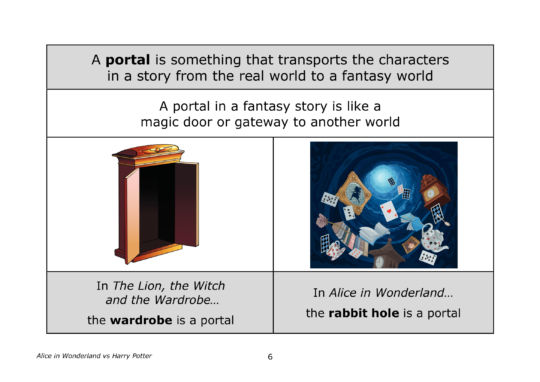

Y6 Alice in Wonderland vs Harry Potter
£3.00 Add to basket £3.00Add to basket
KS2 National Curriculum:
✓ Compare texts and themes
✓ Write non-narrative reports
✓ Use cohesive devicesActivities in this lesson include comparing the main features of early (simple) fantasy stories such as Alice in Wonderland and The Lion, the Witch and the Wardrobe with later (complex) fantasy stories such as Harry Potter. Activities in this lesson also include looking at the features of a report, and writing a report about the differences between early fantasy stories and the Harry Potter stories.
There is a five-minute evidence-based CPD activity at the end of this lesson which will develop classroom teachers’ skill set. This CPD consists of a research extract on peer assessment with a five-minute activity based on this extract.
VIEW -

Pirates, Parrots and Adjectives
£3.00 Add to basket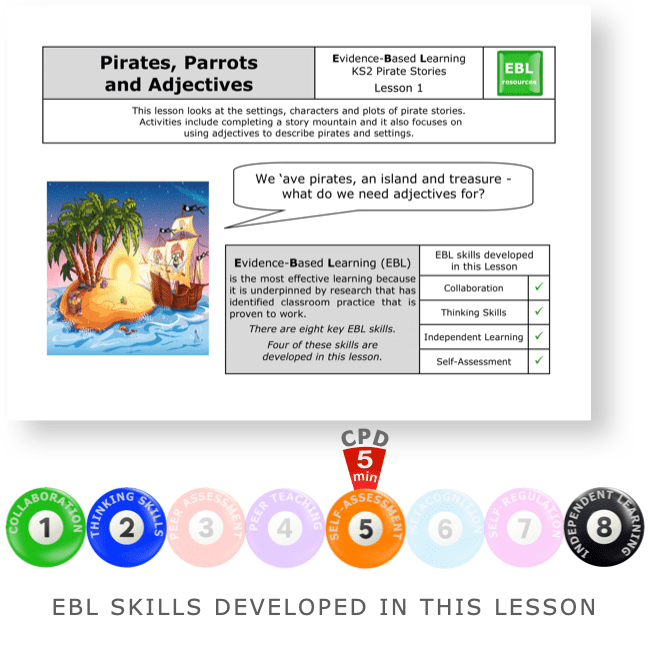 £3.00Add to basket
This lesson looks at the settings, characters and plots of pirate stories. Activities include completing a story mountain and it also focuses on using adjectives to describe pirates and settings.
There is a five-minute evidence-based CPD activity at the end of this lesson which will develop classroom teachers’ skill set. This CPD consists of a research extract on self-assessment with a five-minute activity based on this extract.
VIEW -


Y5 Looking at the Features of Fables
£3.00 Add to basket £3.00Add to basket
KS2 National Curriculum:
✓ Recognising common structural elements of fables
✓ Exploring animals as character types and moral messengers
✓ Writing a leaflet explaining fable features
✓ Analysing how language conveys a warning messageActivities in this lesson include learning about the features of fables including their purpose in detail, answering higher and lower order questions on the features of fables, reading the text of The Fox and the Crow, designing a leaflet warning all other animals to beware of the crafty fox and completing a true/false exercise that includes all the features of a fable.
There is a five-minute evidence-based CPD activity at the end of this lesson which will develop classroom teachers’ skill set. This CPD consists of a research extract on self-assessment with a five-minute activity based on this extract.
VIEW

Philipem (verified owner) –
We asked a.i. to review this lesson. This is what it said:
Teachers – Magical New Lesson on Paragraphs and Dialogue – Rating: ⭐⭐⭐⭐⭐
I’ve discovered an enchanting KS2 English called “Stanley, Head Elf Inspector and New Paragraphs”. This charming resource earns top marks for covertly developing advanced skills!
This lesson explores the rules around paragraph structure and writing dialogue, using the story of a stranded elf inspector as a hook. Activities consolidate learning, with students completing cloze passages on the key rules.
As well as literacy goals, these activities build vital evidence-based abilities like critical thinking, metacognition and self-assessment. So students learn key writing skills while incrementally developing their advanced learning skills.
There’s even a 5 minute CPD excerpt on the proven benefits of self-assessment, allowing you to magically enhance your professional knowledge.
So if you’re looking to cast a spell on your students with a super English lesson that secretly conjures up higher order talents, this elf-themed resource comes highly recommended.