
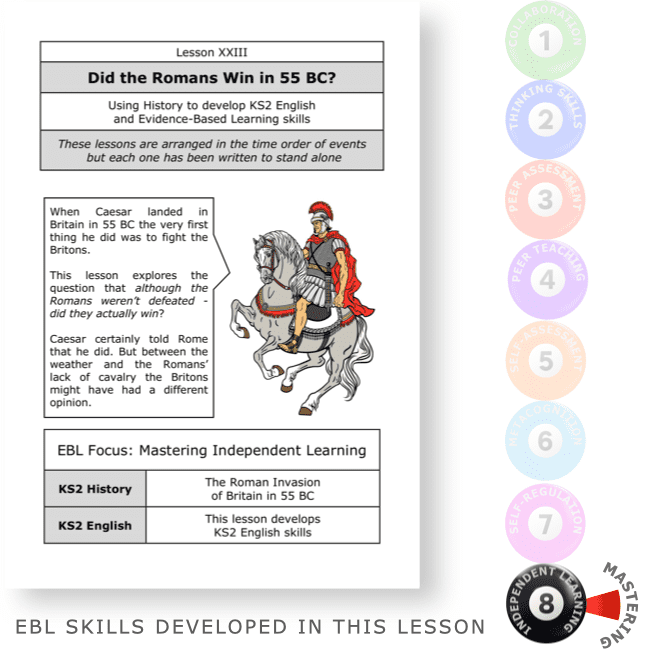

Did the Romans Win in 55 BC?
£3.00
When Caesar landed in Britain in 55 BC the very first thing he did was to fight the Britons. This lesson explores the question that although the Romans weren’t defeated – did they actually win? Caesar certainly told Rome that he did. But between the weather and the Romans’ lack of cavalry the Britons might have had a different opinion.
As well as English (designing a poster) and history skills the Evidence-Based Learning skills developed in this lesson offer pupils the opportunity to master independent learning.
Description
Each evidence-based learning (EBL) Roman history resource in this set is a complete lesson which uses the history curriculum as a framework through which each of the eight EBL skills can be mastered. Each resource has “mastering” one EBL skill as its central focus and all eight EBL skills are covered more than once in these lessons.
All eight EBL skills are better gained working with a partner so much of the work in these lessons is collaborative. These resources will ensure that pupils can master and use EBL skills regardless of their ability.
Each Roman history lesson will develop a single EBL skill through:
1) A “Before You Start” page that introduces the EBL skill.
2) Opportunities to master this skill during the lesson.
3) An “After You Finish” page that offers pupils the chance to evaluate their learning experience (of the lesson and the EBL skill) and to identify their next step in using the EBL skill.
The skill in bold below is the EBL skill developed in this Roman lesson. Click on this skill to learn more about this skill.
- Collaboration
- Thinking Skills
- Peer Assessment
- Peer Teaching
- Self-Assessment
- Metacognition
- Self-Regulation
- Independent Learning
1 review for Did the Romans Win in 55 BC?
Only logged in customers who have purchased this product may leave a review.
Related products
-


Caesar Has Big Plans
£3.00 Add to basket £3.00Add to basket
This lesson explains how the Roman invasion of Britain was just part of Caesar’s bigger plan to rule Rome and its empire. It also has a summary of the events in the first part of the invasion in 55 BC. Things didn’t go that well for Caesar, so he might have to give it another go next year!
As well as English and history skills the Evidence-Based Learning skills developed in this lesson include collaborative learning, self-assessment and thinking skills. This lesson also offers pupils the opportunity to master self-regulation.
VIEW -

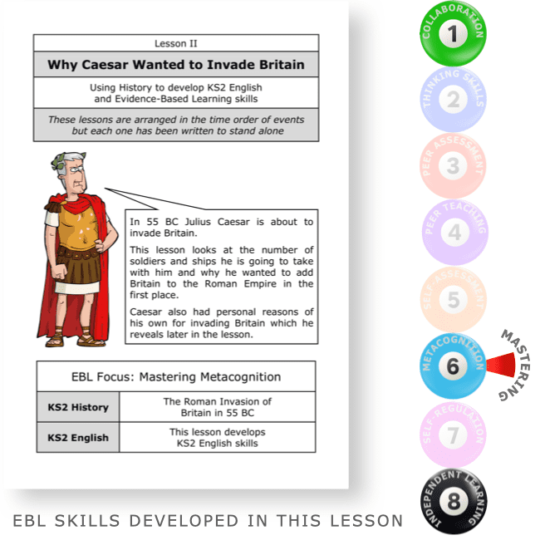
Why Caesar Wanted to Invade Britain
£3.00 Add to basket £3.00Add to basket
In 55 BC Julius Caesar is about to invade Britain. This lesson looks at the number of soldiers and ships he is going to take with him and why he wanted to add Britain to the Roman Empire in the first place. Caesar also had personal reasons of his own for invading Britain which he reveals later in the lesson.
As well as English and history skills the Evidence-Based Learning skills developed in this lesson include collaborative and independent learning. This lesson also offers pupils the opportunity to master metacognition.
VIEW -
It’s 54 BC and Caesar is Back
£3.00 Add to basket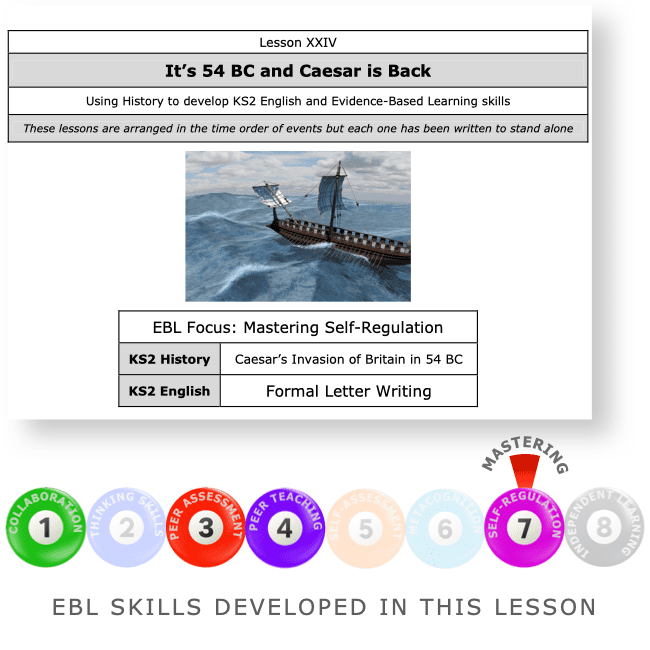 £3.00Add to basket
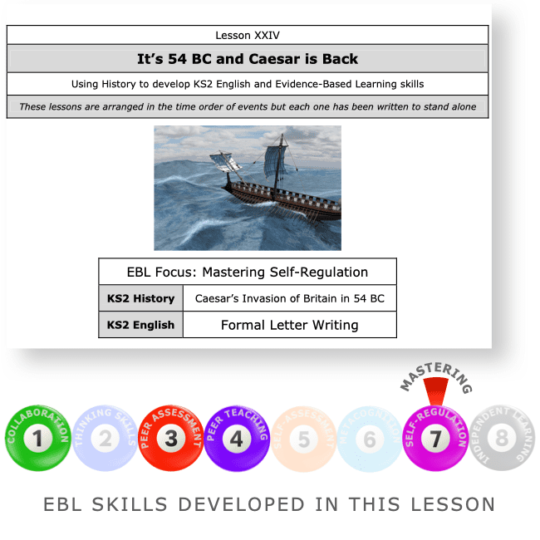
This lesson uses the mechanism of a formal letter to explore the fact that although Caesar’s first invasion in 55 BC was a failure, his second invasion a year later in 54 BC was a success. This lesson also considers why invading Britain was extremely important for Caesar and for the Roman Empire.
As well as English (writing a formal letter) and history skills the Evidence-Based Learning skills developed in this lesson include collaborative learning, peer teaching and peer assessment. This lesson also offers pupils the opportunity to master self-regulation.
VIEW -


Even More Problems for Caesar
£3.00 Add to basket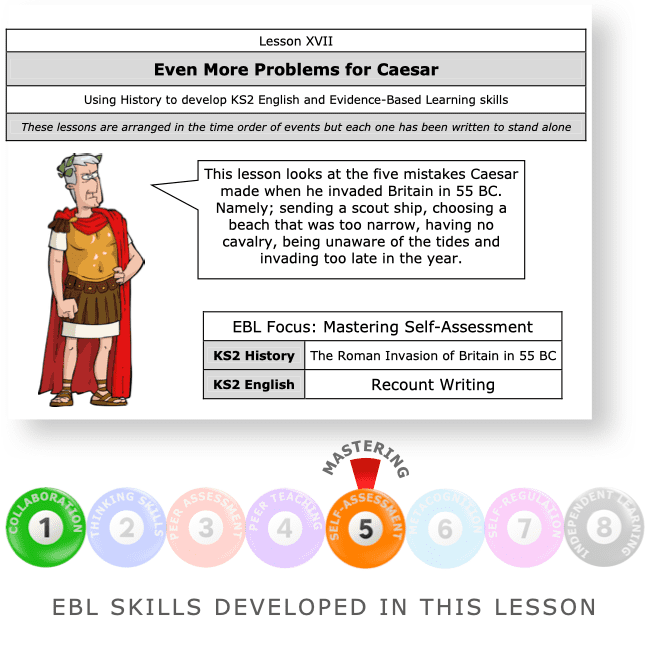 £3.00Add to basket
This lesson looks at the five mistakes Caesar made when he invaded Britain in 55 BC. Namely; sending a scout ship, choosing a beach that was too narrow, having no cavalry, being unaware of the tides and invading too late in the year.
As well as English (writing a recount) and history skills the Evidence-Based Learning skills developed in this lesson includes collaborative learning. This lesson also offers pupils the opportunity to master self-assessment.
VIEW
Philipem (verified owner) –
We asked a.i. to review this lesson. This is what it said:
Explore Caesar’s Invasion with This Thought-Provoking Roman Lesson
Looking for a way to get your upper KS2 students thinking critically about the Romans while developing valuable literacy and independent learning skills? Check out the lesson “Did the Romans Win in 55 BC?” from the Romans series.
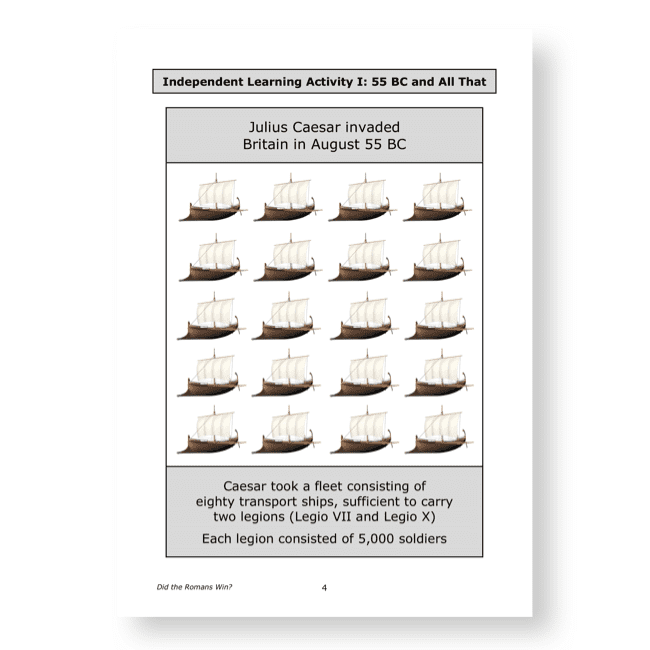
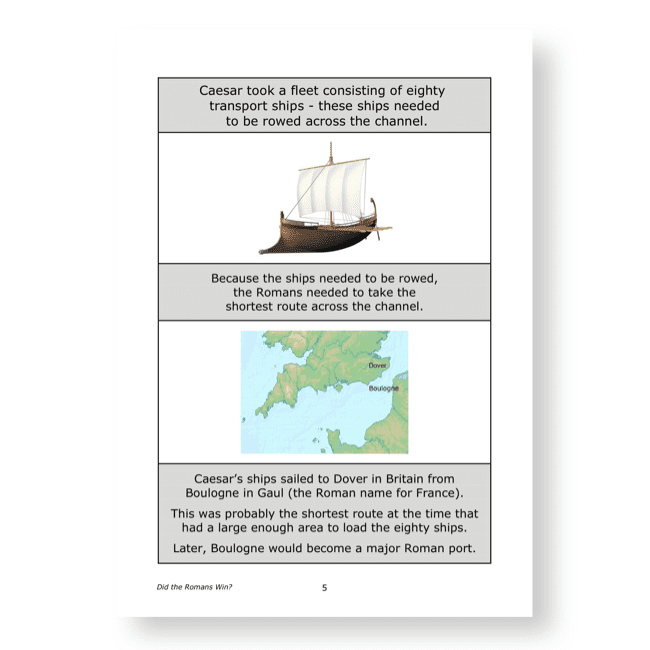
This engaging lesson takes students back to 55 BC when Julius Caesar first invaded Britain. Despite fighting successful battles against the Britons, the question is raised – did the Romans actually win the invasion attempt? Between the poor weather conditions, lack of cavalry support, and Britons’ resilience, students are prompted to evaluate the outcomes from multiple perspectives.
By working through the background information and designing a summary poster, students will:
– Learn key details about Caesar’s invasion forces, tactics, and the sequence of events
– Practice summarising historical information in a concise, structured format
– Develop the valuable skill of independent learning by completing the poster activity without support
The Evidence-Based Learning focus on independent learning skills is perfectly embedded, allowing students to take full ownership of their work. Each lesson highlights one specific EBL technique to gradually build students’ abilities.
Whether you’re teaching upper KS2 History, English, or an integrated topic, this thought-provoking Roman lesson is sure to spark lively discussions and critical thinking practice. Use it to put your students’ evidence-analysis abilities to the test!
Rating: ⭐⭐⭐⭐⭐ (5/5 stars)