

A Roman Soldier’s First Day in Britain
£3.00
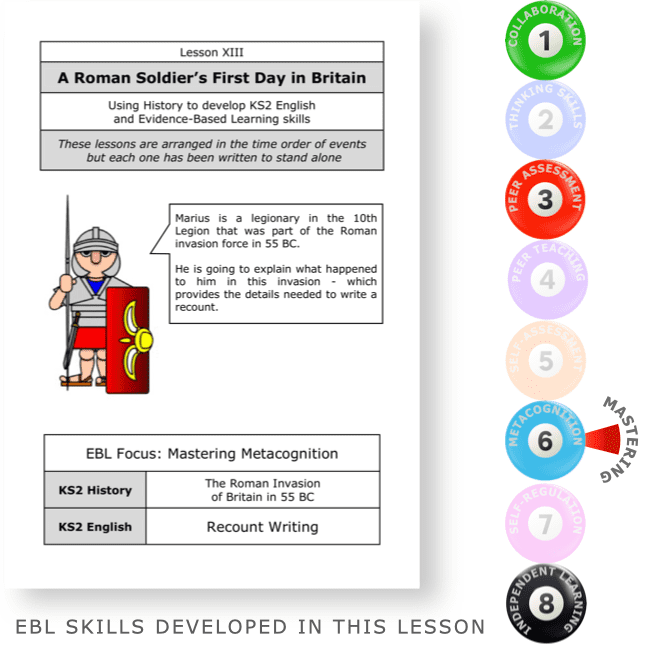
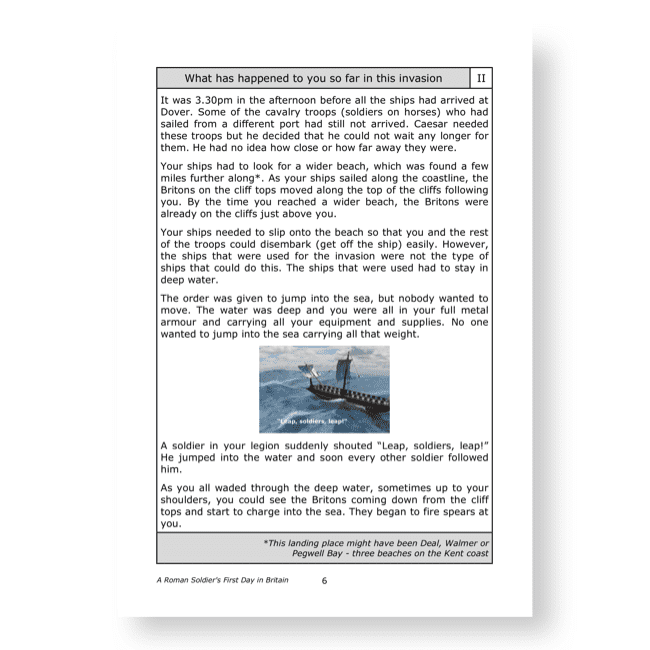
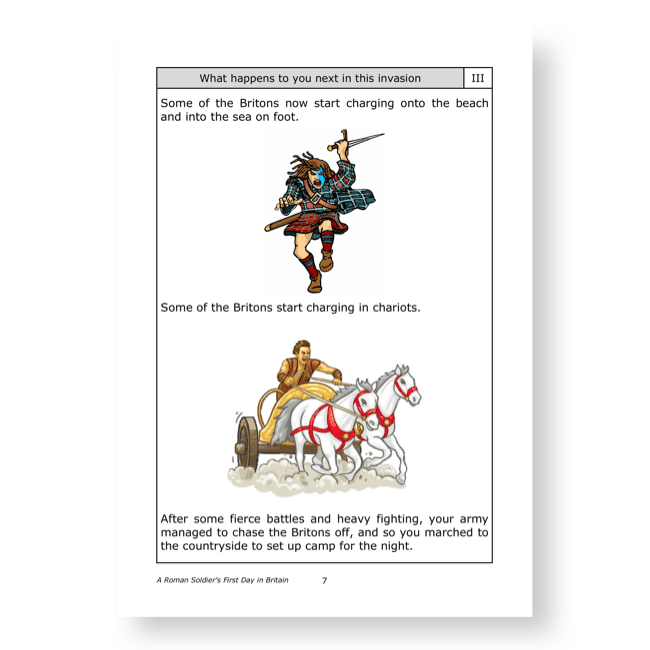
Marius is a legionary in the 10th Legion that was part of the Roman invasion force in 55 BC. He is going to explain what happened to him in this invasion – which provides the details needed to write a recount.
As well as English (writing a recount) and history skills the Evidence-Based Learning skills developed in this lesson include collaborative learning, peer assessment and independent learning. This lesson also offers pupils the opportunity to master metacognition.
Description
Each evidence-based learning (EBL) Roman history resource in this set is a complete lesson which uses the history curriculum as a framework through which each of the eight EBL skills can be mastered. Each resource has “mastering” one EBL skill as its central focus and all eight EBL skills are covered more than once in these lessons.
All eight EBL skills are better gained working with a partner so much of the work in these lessons is collaborative. These resources will ensure that pupils can master and use EBL skills regardless of their ability.
Each Roman history lesson will develop a single EBL skill through:
1) A “Before You Start” page that introduces the EBL skill.
2) Opportunities to master this skill during the lesson.
3) An “After You Finish” page that offers pupils the chance to evaluate their learning experience (of the lesson and the EBL skill) and to identify their next step in using the EBL skill.
The skills in bold below are all the EBL skills developed in this Roman lesson. Click on each skill to learn more about that skill.
- Collaboration
- Thinking Skills
- Peer Assessment
- Peer Teaching
- Self-Assessment
- Metacognition
- Self-Regulation
- Independent Learning
1 review for A Roman Soldier’s First Day in Britain
Only logged in customers who have purchased this product may leave a review.
Related products
-


Romans, Taxes, and Donkeys
£3.00 Add to basket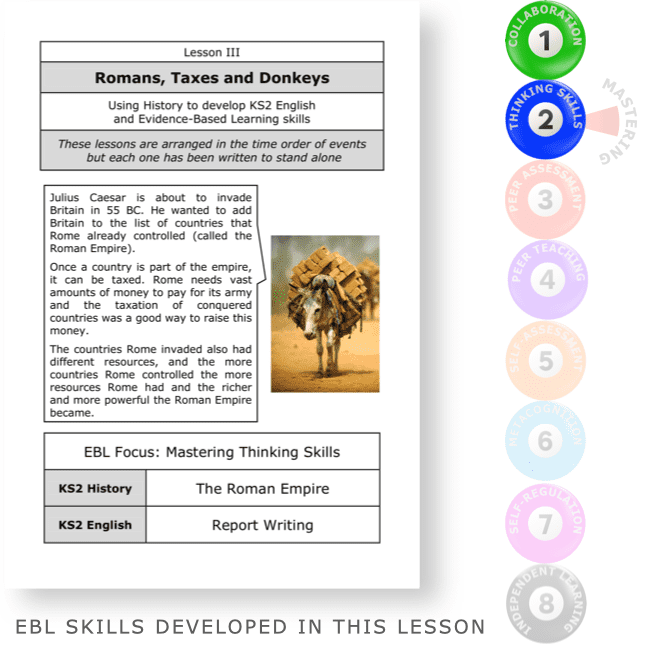 £3.00Add to basket
Julius Caesar is about to invade Britain in 55 BC. He wanted to add Britain to the list of countries that Rome already controlled (called the Roman Empire). Once a country is part of the empire, it can be taxed. Rome needs vast amounts of money to pay for its army and the taxation of conquered countries was a good way to raise this money. The countries Rome invaded also had different resources, and the more countries Rome controlled the more resources Rome had and the richer and more powerful the Roman Empire became.
As well as English (writing a report) and history skills the Evidence-Based Learning skills developed in this lesson includes collaborative learning. This lesson also offers pupils the opportunity to master thinking skills.
VIEW -


Did the Britons have a Spy
£3.00 Add to basket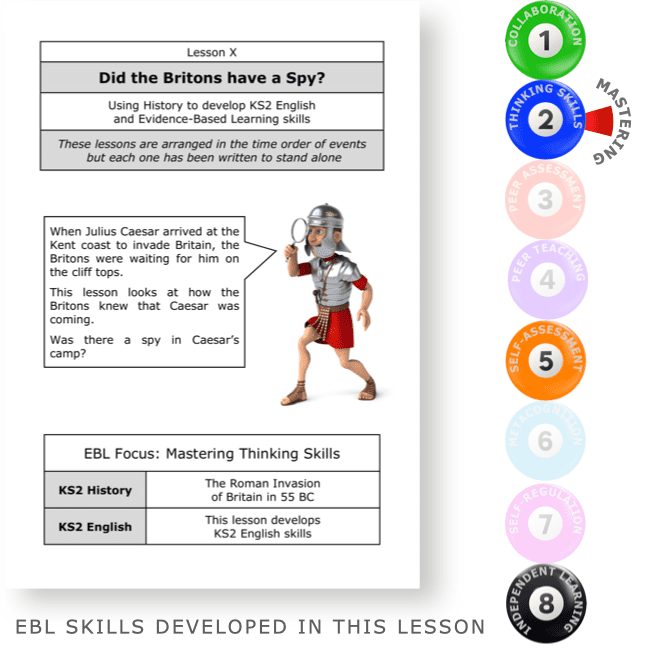 £3.00Add to basket
When Julius Caesar arrived at the Kent coast to invade Britain, the Britons were waiting for him on the cliff tops. This lesson looks at how the Britons knew that Caesar was coming. Was there a spy in Caesar’s camp?
As well as English and history skills the Evidence-Based Learning skills developed in this lesson include collaborative learning and self-assessment. This lesson also offers pupils the opportunity to master thinking skills.
VIEW -

The Roman Army vs the Britons
£3.00 Add to basket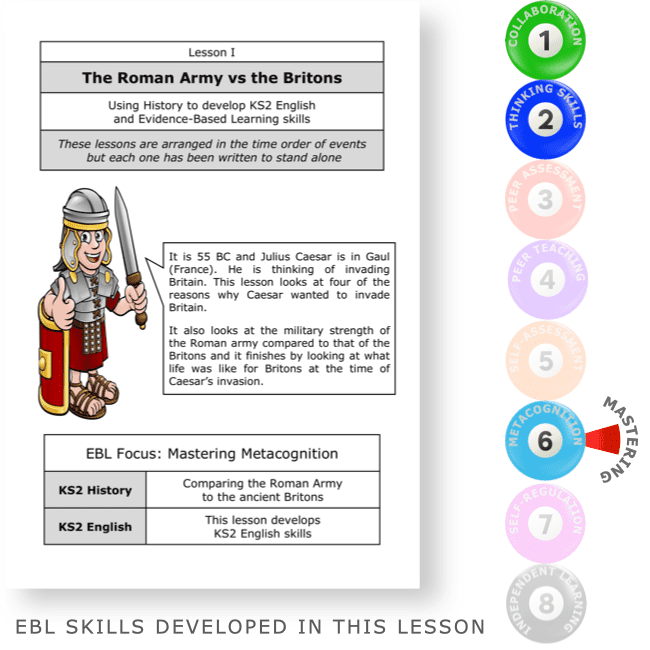 £3.00Add to basket
It is 55 BC and Julius Caesar is in Gaul (France). He is thinking of invading Britain. This lesson looks at four of the reasons why Caesar wanted to invade Britain. It also looks at the military strength of the Roman army compared to that of the Britons and it finishes by looking at what life was like for Britons at the time of Caesar’s invasion.
As well as English and history skills the Evidence-Based Learning skills developed in this lesson include collaborative learning and thinking skills. This lesson also offers pupils the opportunity to master metacognition.
VIEW -
Two Days in August 55 BC
£3.00 Add to basket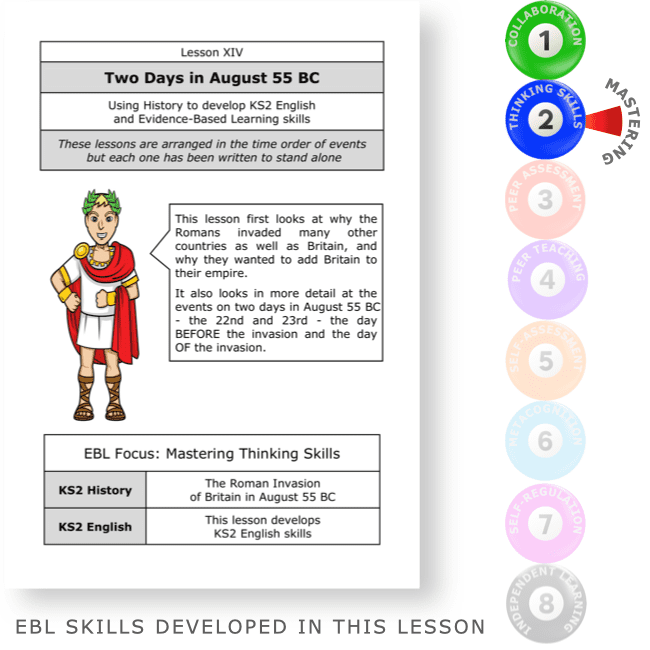 £3.00Add to basket
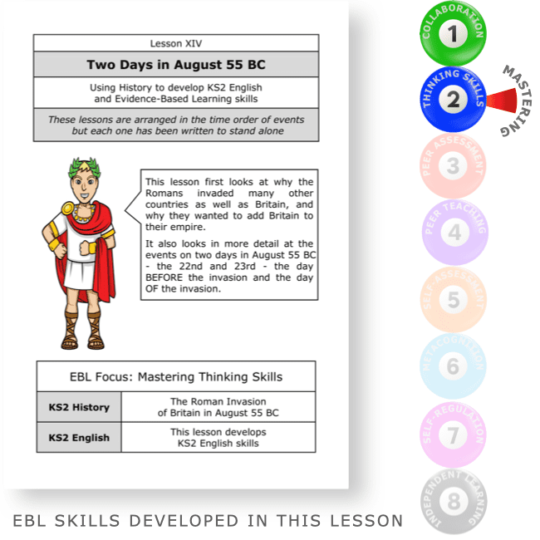
This lesson first looks at why the Romans invaded many other countries as well as Britain, and why they wanted to add Britain to their empire. It also looks in more detail at the events on two days in August 55 BC – the 22nd and 23rd – the day BEFORE the invasion and the day OF the invasion.
As well as English and history skills the Evidence-Based Learning skills developed in this lesson includes collaborative learning. This lesson also offers pupils the opportunity to master thinking skills.
VIEW
Philipem (verified owner) –
We asked a.i. to review this lesson. This is what it said:
Master Multiple Skills with “A Roman Soldier’s First Day in Britain” Lesson
Are you looking for an engaging lesson that will allow your upper KS2 students to develop skills across multiple subjects? Look no further than Lesson 13: “A Roman Soldier’s First Day in Britain.” This cross-curricular resource is perfect for teaching historical knowledge about the Roman invasion of Britain, honing English recount writing abilities, and building evidence-based learning skills like collaborative work, peer assessment, independent learning, and metacognition.
The lesson puts students in the shoes of Marius, a legionary in the 10th Legion of Caesar’s invasion force in 55 BC. By explaining what happened to Marius on that pivotal first day, students gain the details needed to write a compelling historical recount. Talk about making learning come alive!
But the benefits don’t stop there. Throughout the activities, students practice key evidence-based learning techniques. They collaborate with partners, assess each other’s work, complete an independent activity, and utilise metacognitive strategies to plan, monitor, and evaluate their learning process. These transferable skills will pay dividends across all subject areas.
Each lesson in the 25-part set gradually builds one evidence-based learning skill through purposeful scaffolding and repetition, allowing students to truly master it. In Lesson 13, the focus is on “Mastering Metacognition.”
The structured content makes it easy to teach multiple important concepts simultaneously. Your students will be building historical knowledge, practising recount writing, and levelling up their learning skills, all within a single powerfully engaging lesson.
If you want to bring an interdisciplinary punch to your classroom while developing vital capabilities, put “A Roman Soldier’s First Day in Britain” at the top of your list. I give it ⭐⭐⭐⭐⭐ – it’s a resource you’ll come back to again and again.