
An Interview with Julius Caesar
£3.00
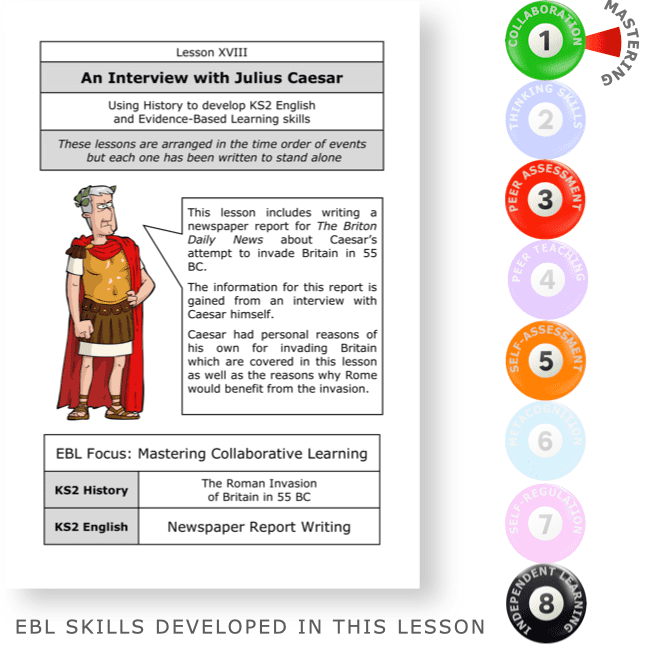
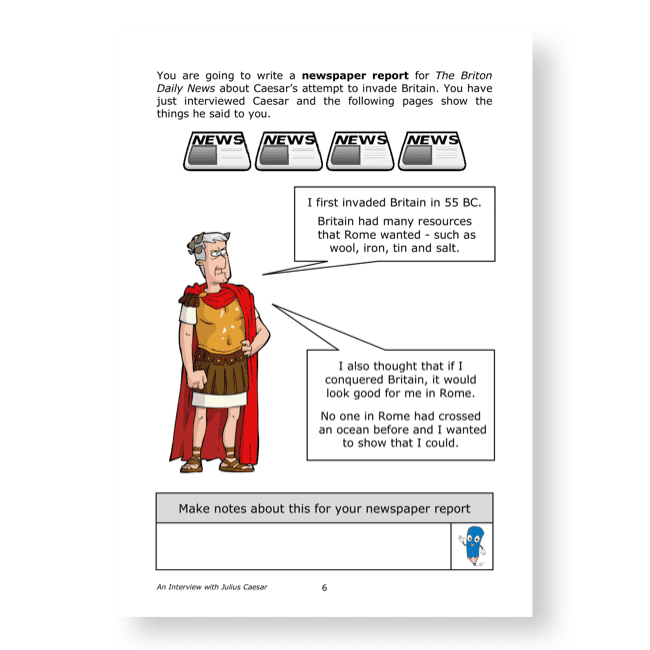
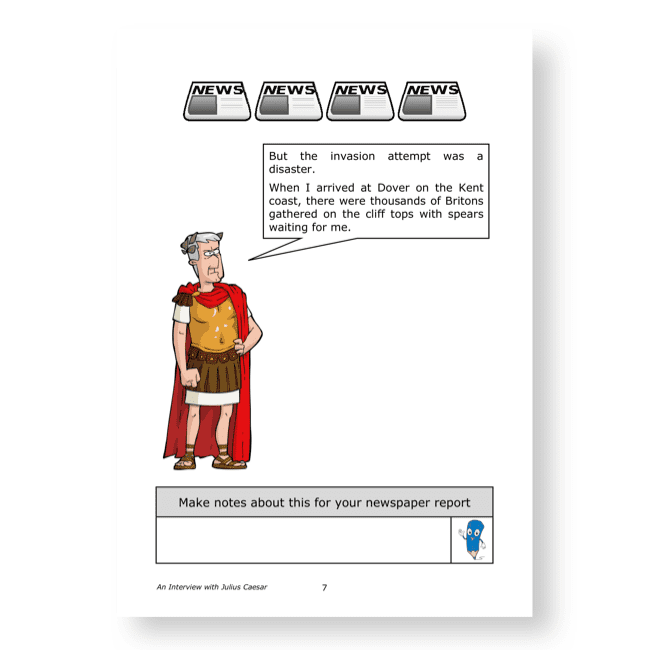
This lesson includes writing a newspaper report for The Briton Daily News about Caesar’s attempt to invade Britain in 55 BC. The information for this report is gained from an interview with Caesar himself.
Caesar had personal reasons of his own for invading Britain which are covered in this lesson as well as the reasons why Rome would benefit from the invasion.
As well as English (writing a newspaper report) and history skills the Evidence-Based Learning skills developed in this lesson include independent learning, peer and self-assessment. This lesson also offers pupils the opportunity to master collaborative learning.
Description
Each evidence-based learning (EBL) Roman history resource in this set is a complete lesson which uses the history curriculum as a framework through which each of the eight EBL skills can be mastered. Each resource has “mastering” one EBL skill as its central focus and all eight EBL skills are covered more than once in these lessons.
All eight EBL skills are better gained working with a partner so much of the work in these lessons is collaborative. These resources will ensure that pupils can master and use EBL skills regardless of their ability.
Each Roman history lesson will develop a single EBL skill through:
1) A “Before You Start” page that introduces the EBL skill.
2) Opportunities to master this skill during the lesson.
3) An “After You Finish” page that offers pupils the chance to evaluate their learning experience (of the lesson and the EBL skill) and to identify their next step in using the EBL skill.
The skills in bold below are all the EBL skills developed in this Roman lesson. Click on each skill to learn more about that skill.
- Collaboration
- Thinking Skills
- Peer Assessment
- Peer Teaching
- Self-Assessment
- Metacognition
- Self-Regulation
- Independent Learning
1 review for An Interview with Julius Caesar
Only logged in customers who have purchased this product may leave a review.
Related products
-
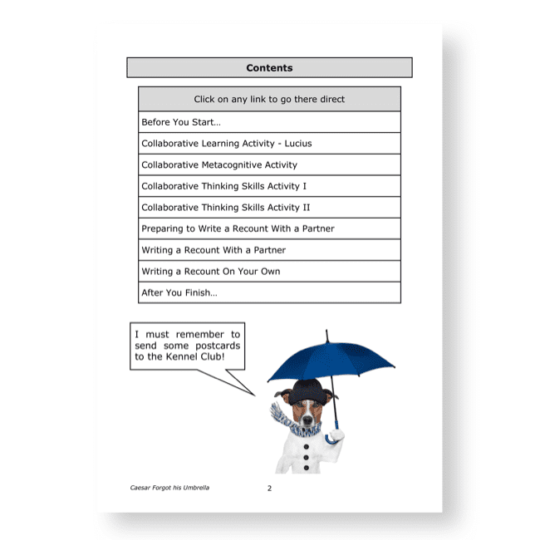
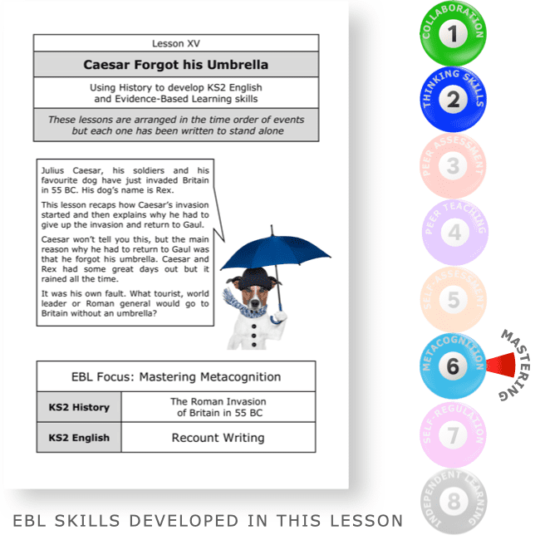
Caesar Forgot His Umbrella
£3.00 Add to basket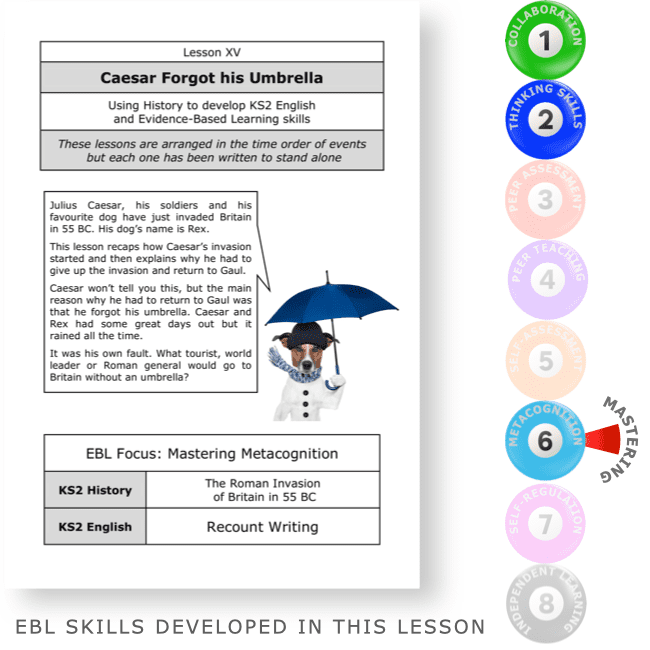 £3.00Add to basket
Julius Caesar, his soldiers and his favourite dog have just invaded Britain in 55 BC. His dog’s name is Rex. This lesson recaps how Caesar’s invasion started and then explains why he had to give up the invasion and return to Gaul.
Caesar won’t tell you this, but the main reason why he had to return to Gaul was that he forgot his umbrella. Caesar and Rex had some great days out but it rained all the time. It was his own fault. What tourist, world leader or Roman general would go to Britain without an umbrella?
As well as English (writing a recount) and history skills the Evidence-Based Learning skills developed in this lesson include collaborative learning and self-assessment. This lesson also offers pupils the opportunity to master metacognition.
VIEW -


Caesar Has Big Plans
£3.00 Add to basket £3.00Add to basket
This lesson explains how the Roman invasion of Britain was just part of Caesar’s bigger plan to rule Rome and its empire. It also has a summary of the events in the first part of the invasion in 55 BC. Things didn’t go that well for Caesar, so he might have to give it another go next year!
As well as English and history skills the Evidence-Based Learning skills developed in this lesson include collaborative learning, self-assessment and thinking skills. This lesson also offers pupils the opportunity to master self-regulation.
VIEW -
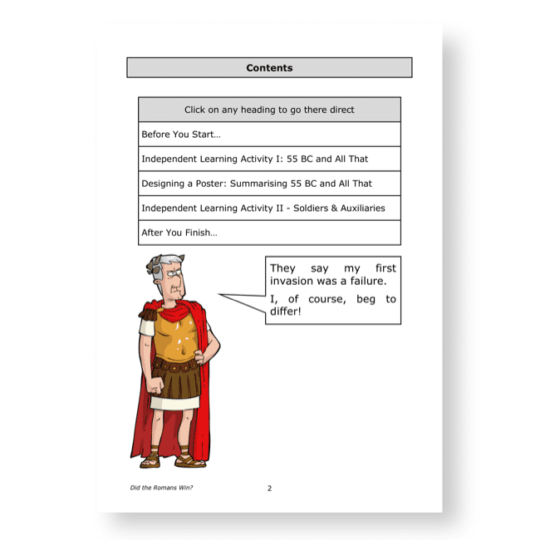
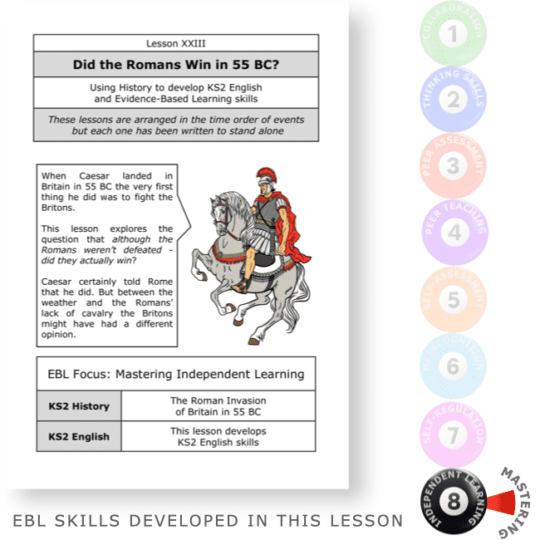
Did the Romans Win in 55 BC?
£3.00 Add to basket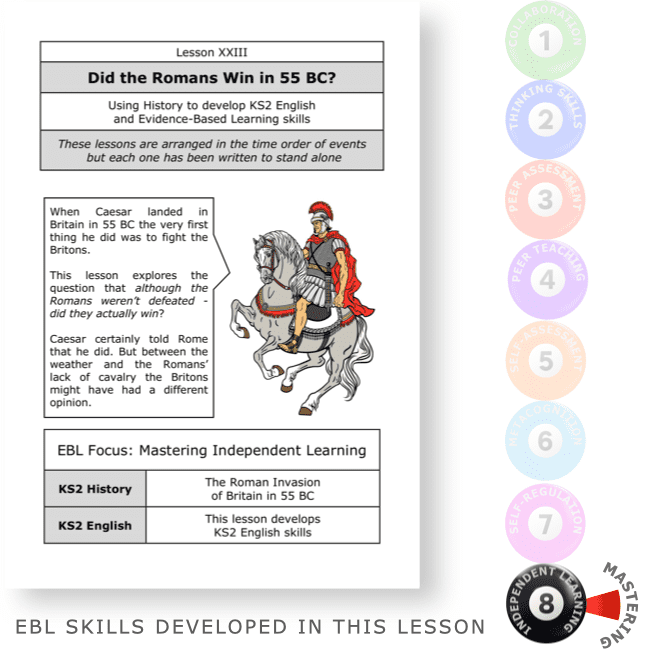 £3.00Add to basket
When Caesar landed in Britain in 55 BC the very first thing he did was to fight the Britons. This lesson explores the question that although the Romans weren’t defeated – did they actually win? Caesar certainly told Rome that he did. But between the weather and the Romans’ lack of cavalry the Britons might have had a different opinion.
As well as English (designing a poster) and history skills the Evidence-Based Learning skills developed in this lesson offer pupils the opportunity to master independent learning.
VIEW -


Caesar’s Parrot Enjoys an Awayday
£3.00 Add to basket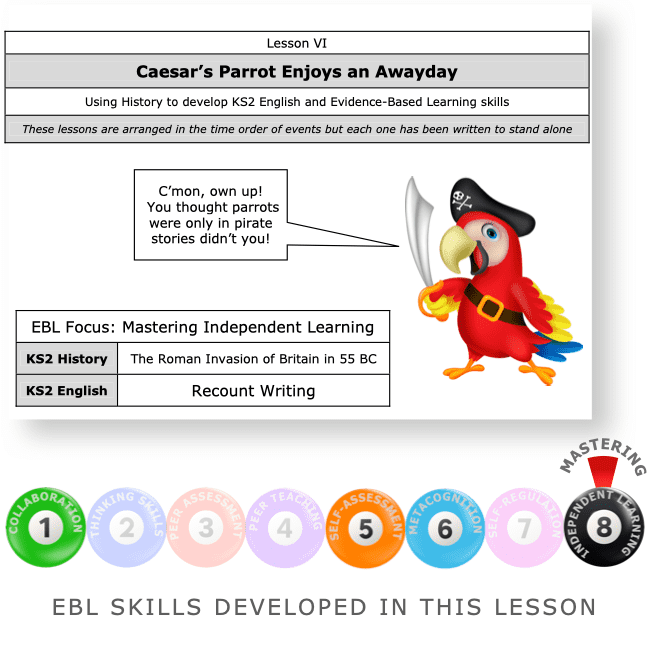 £3.00Add to basket
This lesson offers a light-hearted look at Caesar’s first invasion of Britain in 55 BC from the perspective of his (imaginary) parrot called Capitano. Capitano is not invading of course – he is going on an awayday!
As well as English (writing a recount on their own) and history skills the Evidence-Based Learning skills developed in this lesson include metacognition and self-assessment. This lesson also offers pupils the opportunity to master independent learning.
VIEW
Philipem (verified owner) –
We asked a.i. to review this lesson. This is what it said:
Teaching Multiple Skills with One Engaging Lesson
Are you looking for a lesson that allows your upper KS2 students (years 5 and 6) to develop skills across multiple subjects in an engaging way? The lesson “An Interview with Julius Caesar” from the Romans series is a fantastic option.
This 18th lesson in the 25-lesson set seamlessly combines the teaching of English skills (writing a newspaper report), history knowledge about the Roman invasion of Britain, and crucial evidence-based learning (EBL) skills like collaboration, independent learning, peer assessment, and self-assessment.
The central activity has students working in pairs to write a newspaper report from the perspective of ancient reporters interviewing Julius Caesar himself about his invasion attempt in 55 BC. Not only do they get to practise the newspaper writing genre, but they also learn key details about this pivotal historical event, like Caesar’s motivations and the dramatic events of the invasion as it unfolded.
But that’s not all. The lesson also focuses on mastering the EBL skill of collaborative learning through structured partner activities. Students reflect on the benefits of collaboration and assess how well they worked with their partner. Additional activities reinforce independent learning and the ability to give and receive constructive feedback through peer assessment.
By scaffolding the development of one core EBL skill in each lesson, the Romans series helps students build essential skills for future success. The engaging topic of the Roman invasion provides fantastic real-world context for practising these skills.
If you want to hit multiple learning targets in one richly contextual lesson, I highly recommend giving “An Interview with Julius Caesar” a try. I rate it ⭐⭐⭐⭐⭐ for its skilful integration of curriculum areas and focus on evidence-based pedagogical practices.