
Caesar’s Own Account of the Invasion
£3.00
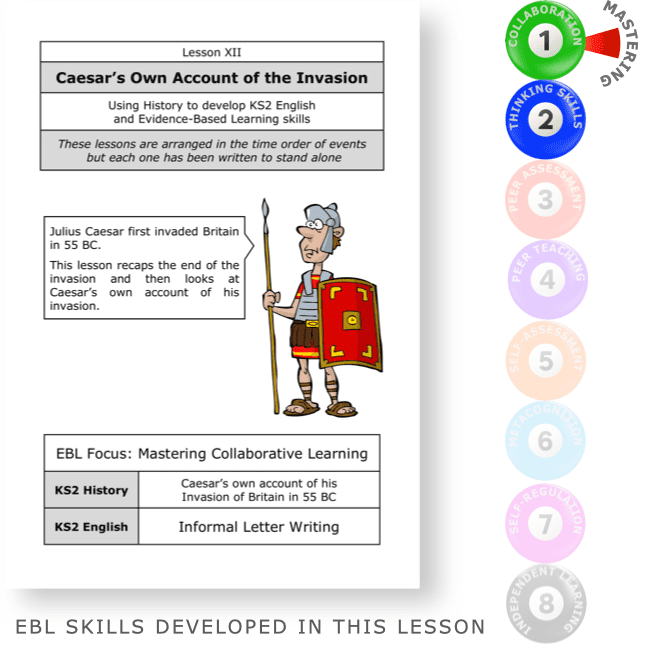
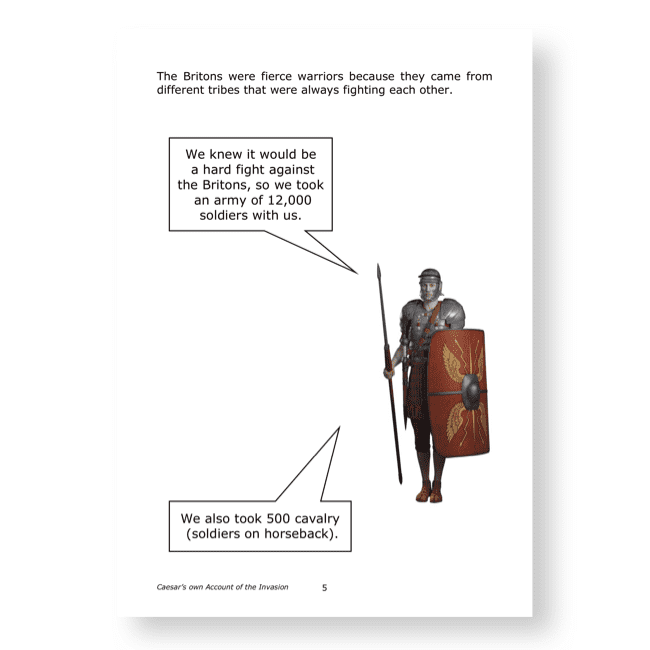
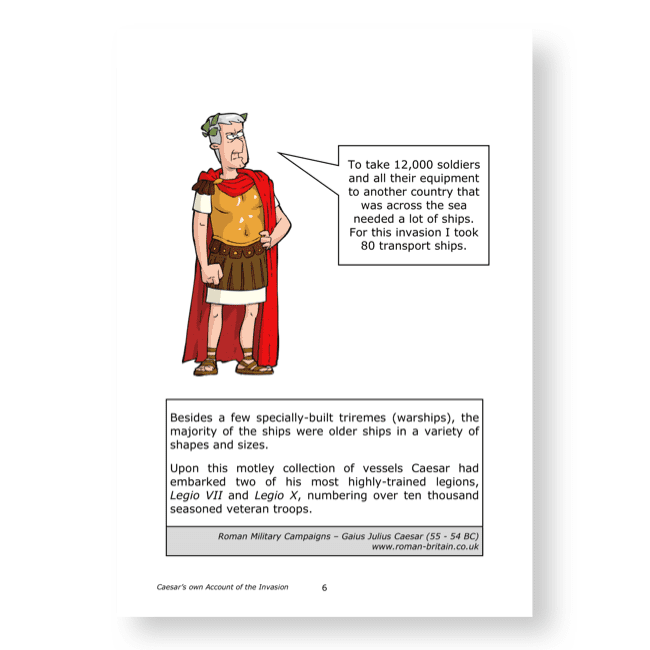
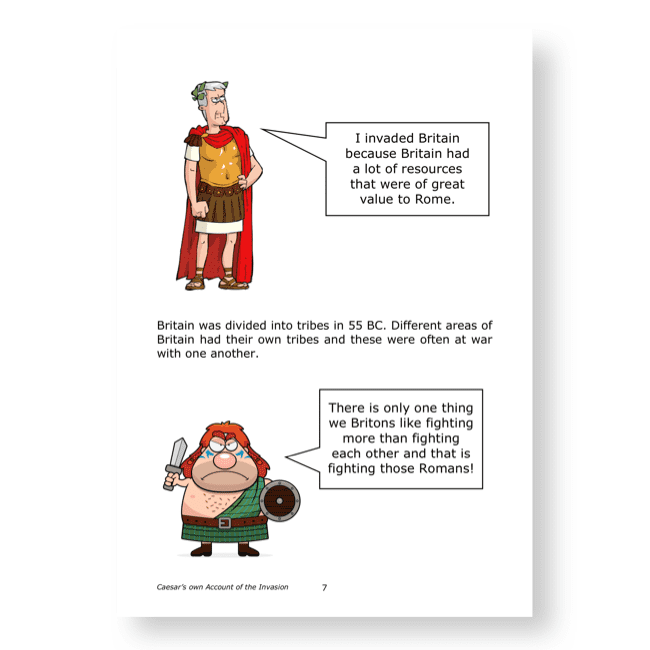
Julius Caesar first invaded Britain in 55 BC. This lesson recaps the end of the invasion and then looks at Caesar’s own account of his invasion.
As well as English (writing an informal letter) and history skills the Evidence-Based Learning skills developed in this lesson includes thinking skills. This lesson also offers pupils the opportunity to master collaborative learning.
Description
Each evidence-based learning (EBL) Roman history resource in this set is a complete lesson which uses the history curriculum as a framework through which each of the eight EBL skills can be mastered. Each resource has “mastering” one EBL skill as its central focus and all eight EBL skills are covered more than once in these lessons.
All eight EBL skills are better gained working with a partner so much of the work in these lessons is collaborative. These resources will ensure that pupils can master and use EBL skills regardless of their ability.
Each Roman history lesson will develop a single EBL skill through:
1) A “Before You Start” page that introduces the EBL skill.
2) Opportunities to master this skill during the lesson.
3) An “After You Finish” page that offers pupils the chance to evaluate their learning experience (of the lesson and the EBL skill) and to identify their next step in using the EBL skill.
The skills in bold below are all the EBL skills developed in this Roman lesson. Click on each skill to learn more about that skill.
- Collaboration
- Thinking Skills
- Peer Assessment
- Peer Teaching
- Self-Assessment
- Metacognition
- Self-Regulation
- Independent Learning
1 review for Caesar’s Own Account of the Invasion
Only logged in customers who have purchased this product may leave a review.
Related products
-


Nine Reasons Why Caesar Invaded Britain
£3.00 Add to basket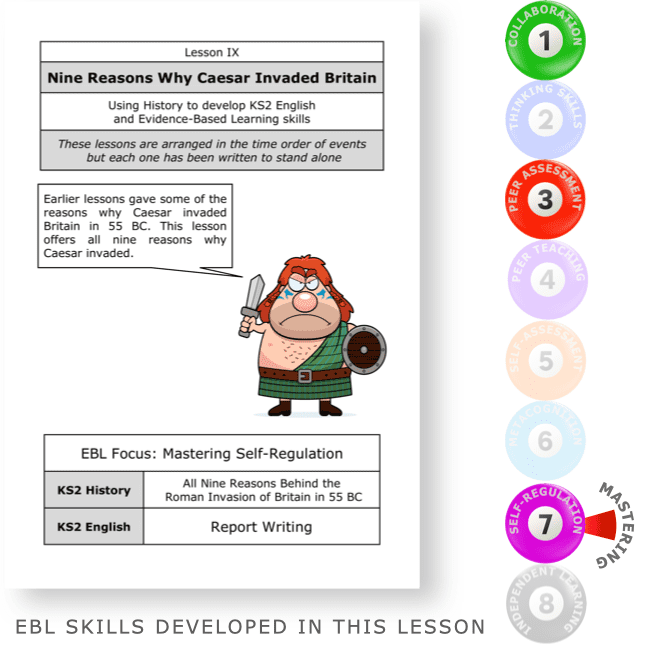 £3.00Add to basket
Earlier lessons gave some of the reasons why Caesar invaded Britain in 55 BC. This lesson offers all nine reasons why Caesar invaded.
As well as English (writing a report) and history skills the Evidence-Based Learning skills developed in this lesson include collaborative learning and peer assessment. This lesson also offers pupils the opportunity to master self-regulation.
VIEW -
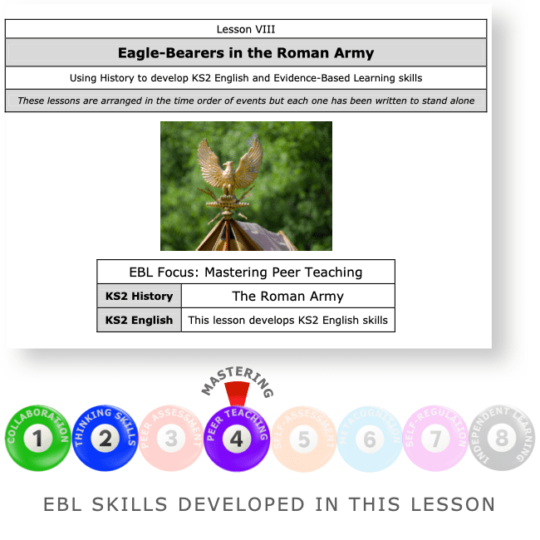
Eagle-Bearers in the Roman Army
£3.00 Add to basket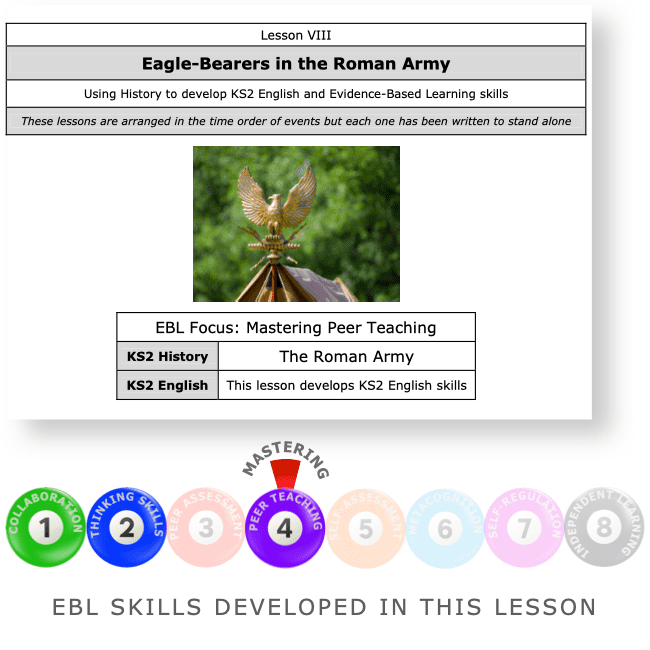 £3.00Add to basket
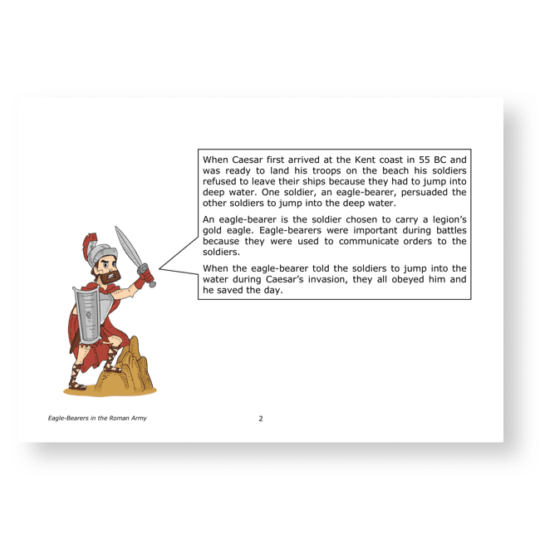
When Caesar first arrived at the Kent coast in 55 BC and was ready to land his troops on the beach his soldiers refused to leave their ships because they had to jump into deep water. One soldier, an eagle-bearer, persuaded the other soldiers to jump into the deep water.
An eagle-bearer is the soldier chosen to carry a legion’s gold eagle. Eagle-bearers were important during battles because they were used to communicate orders to the soldiers. When the eagle-bearer told the soldiers to jump into the water during Caesar’s invasion, they all obeyed him and he saved the day.
As well as English and history skills the Evidence-Based Learning skills developed in this lesson include collaborative learning and metacognition. This lesson also offers pupils the opportunity to master peer teaching.
VIEW -

Why Caesar Wanted to Invade Britain
£3.00 Add to basket £3.00Add to basket
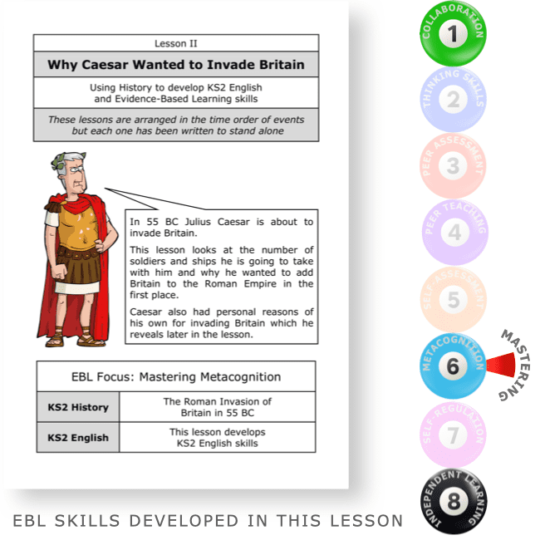
In 55 BC Julius Caesar is about to invade Britain. This lesson looks at the number of soldiers and ships he is going to take with him and why he wanted to add Britain to the Roman Empire in the first place. Caesar also had personal reasons of his own for invading Britain which he reveals later in the lesson.
As well as English and history skills the Evidence-Based Learning skills developed in this lesson include collaborative and independent learning. This lesson also offers pupils the opportunity to master metacognition.
VIEW -


Did the Britons have a Spy
£3.00 Add to basket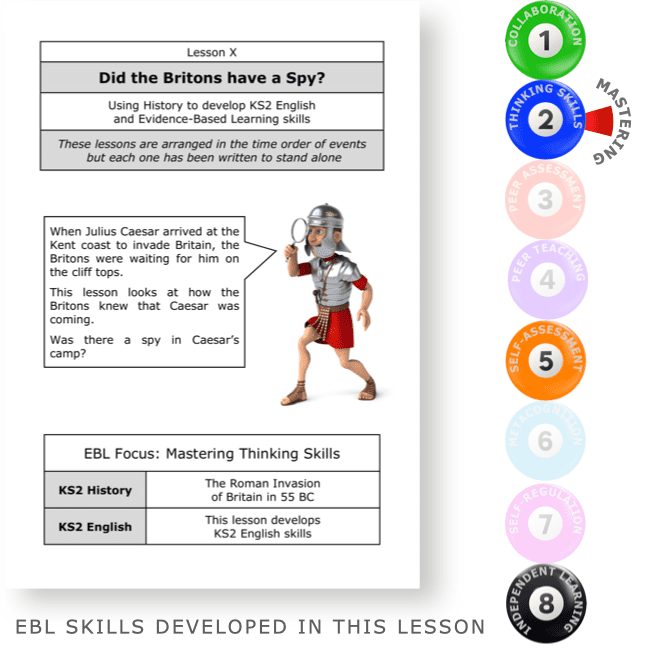 £3.00Add to basket
When Julius Caesar arrived at the Kent coast to invade Britain, the Britons were waiting for him on the cliff tops. This lesson looks at how the Britons knew that Caesar was coming. Was there a spy in Caesar’s camp?
As well as English and history skills the Evidence-Based Learning skills developed in this lesson include collaborative learning and self-assessment. This lesson also offers pupils the opportunity to master thinking skills.
VIEW
Philipem (verified owner) –
We asked a.i. to review this lesson. This is what it said:
Mastering Collaborative Learning with Caesar’s Invasion
Do you want to engage your upper KS2 students in an immersive historical experience while developing their English, history and evidence-based learning skills? Look no further than Lesson 12 from the 25 lesson set “Caesar’s Own Account of the Invasion.”
This cross-curricular lesson brings the ancient Roman conquest of Britain vividly to life as students delve into Caesar’s first-hand account from 55 BC. Not only will they analyse primary source material and build historical context, but they’ll also practise crucial English skills like recount writing and informal letter composition.
What makes this resource truly exceptional is its intentional focus on developing collaborative learning skills. Students work in pairs, taking turns explaining concepts to one another and striving for mutual understanding. This dynamic approach promotes active engagement, critical thinking, and effective communication.
The lesson thoughtfully scaffolds the collaborative learning process, guiding students through structured activities that build this essential 21st century skill. From analysing excerpts of Caesar’s invasion account to crafting informal letters from a Roman soldier’s perspective, students navigate the material as a team.
But the benefits don’t stop there! Embedded within the historical narrative are opportunities to hone evidence-based learning skills like analysing evidence, synthesising information, and evaluating sources. These transferable competencies will serve your students well across all subjects.
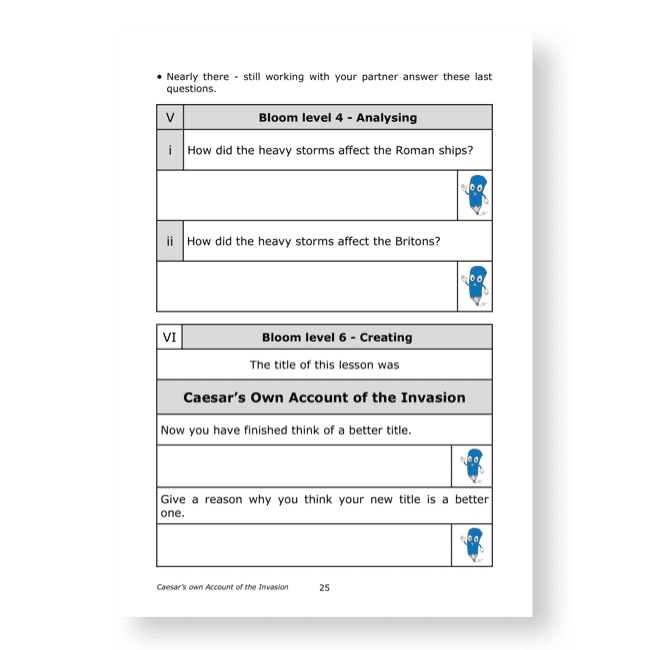
As an added bonus, the lesson incorporates Bloom’s Taxonomy, challenging students with higher-order thinking questions that promote analysis, evaluation, and creative problem-solving.
If you’re looking to breathe new life into your history and English lessons while cultivating invaluable learning skills, this resource is a must-have. Immerse your students in the drama of Caesar’s conquest while empowering them as collaborative, evidence-based learners.
Star Rating: ⭐⭐⭐⭐⭐ (5/5 stars)
Don’t miss out on this engaging and comprehensive learning experience!