
Two Days in August 55 BC
£3.00
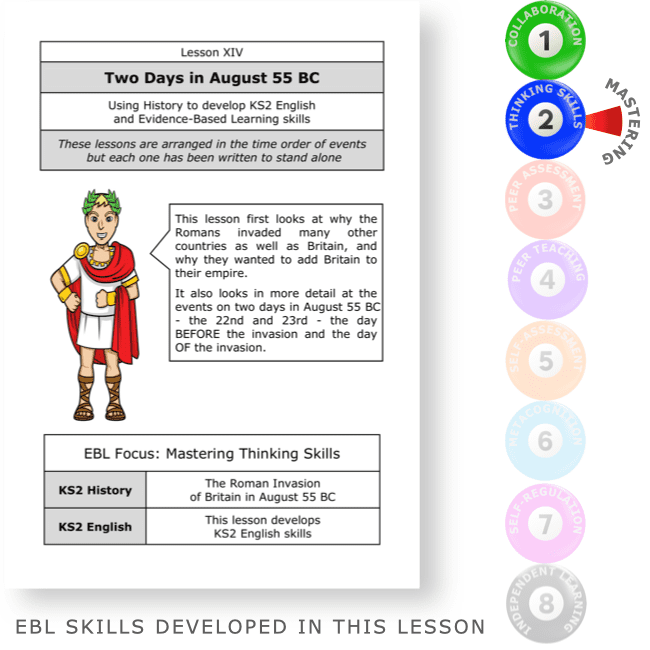
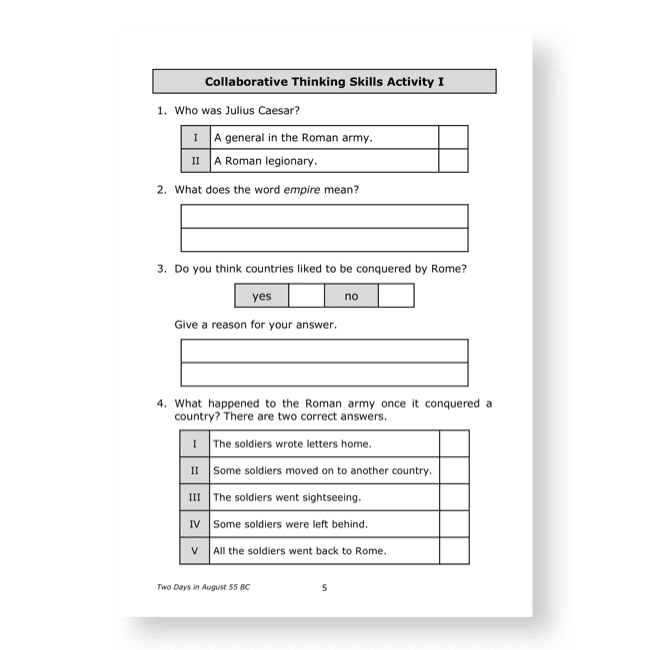
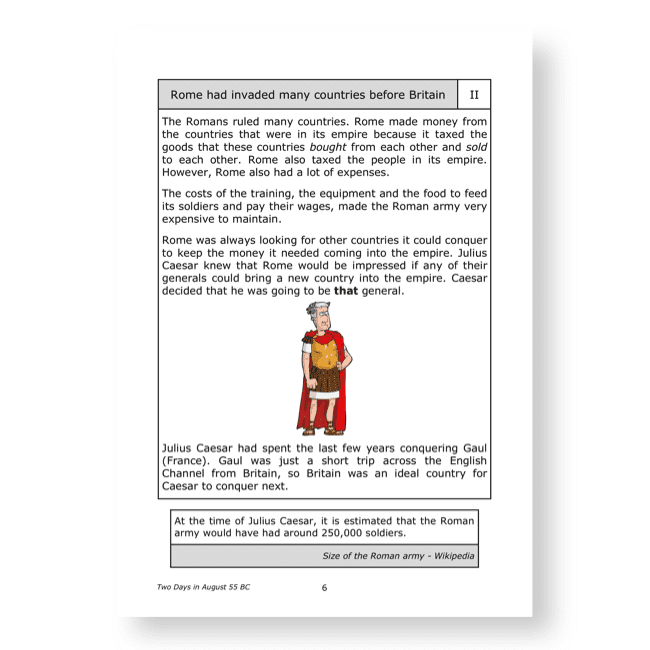
This lesson first looks at why the Romans invaded many other countries as well as Britain, and why they wanted to add Britain to their empire. It also looks in more detail at the events on two days in August 55 BC – the 22nd and 23rd – the day BEFORE the invasion and the day OF the invasion.
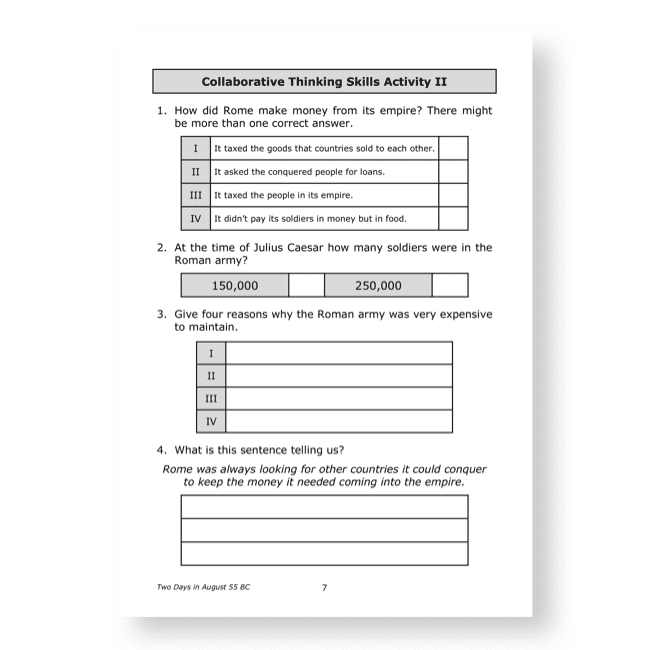
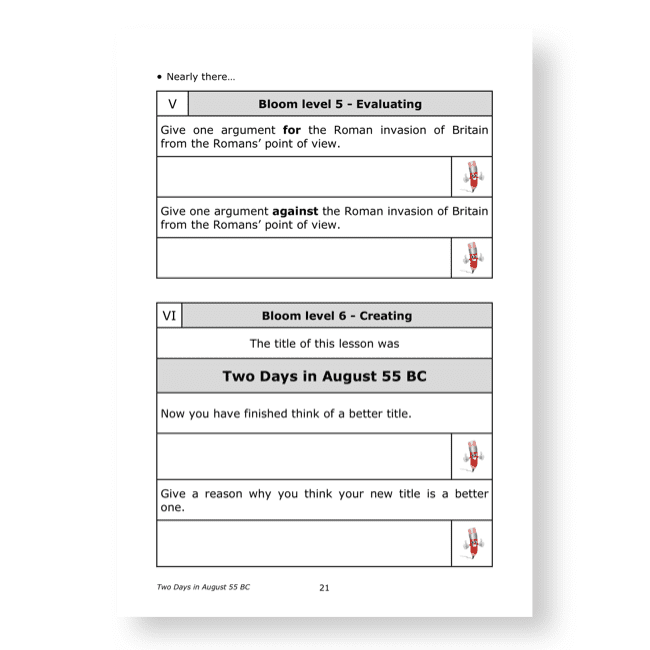
As well as English and history skills the Evidence-Based Learning skills developed in this lesson includes collaborative learning. This lesson also offers pupils the opportunity to master thinking skills.
Description
Each evidence-based learning (EBL) Roman history resource in this set is a complete lesson which uses the history curriculum as a framework through which each of the eight EBL skills can be mastered. Each resource has “mastering” one EBL skill as its central focus and all eight EBL skills are covered more than once in these lessons.
All eight EBL skills are better gained working with a partner so much of the work in these lessons is collaborative. These resources will ensure that pupils can master and use EBL skills regardless of their ability.
Each Roman history lesson will develop a single EBL skill through:
1) A “Before You Start” page that introduces the EBL skill.
2) Opportunities to master this skill during the lesson.
3) An “After You Finish” page that offers pupils the chance to evaluate their learning experience (of the lesson and the EBL skill) and to identify their next step in using the EBL skill.
The skills in bold below are all the EBL skills developed in this Roman lesson. Click on each skill to learn more about that skill.
- Collaboration
- Thinking Skills
- Peer Assessment
- Peer Teaching
- Self-Assessment
- Metacognition
- Self-Regulation
- Independent Learning
1 review for Two Days in August 55 BC
Only logged in customers who have purchased this product may leave a review.
Related products
-

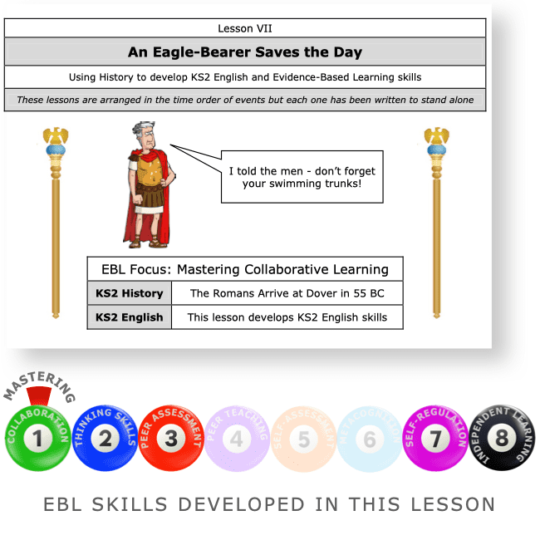
An Eagle-Bearer Saves the Day
£3.00 Add to basket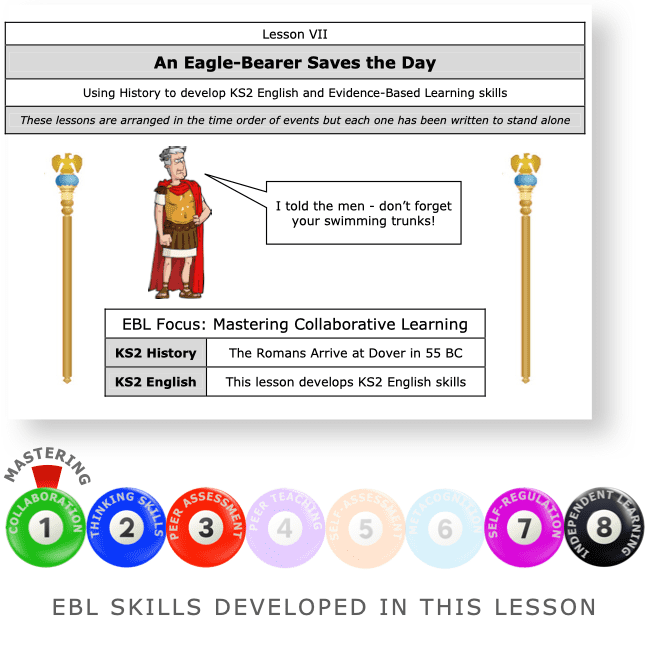 £3.00Add to basket
Julius Caesar has just crossed the English Channel to invade Britain in 55 BC. He had to find another beach to land his soldiers on as the first beach that he sailed to (Dover) had fierce Britons waiting on the cliff tops and was too narrow.
When his ships arrived at the next beach, they could not get close to the shore, so he ordered his men to jump off the ships into the sea and wade ashore. When the order to jump was given, the men refused to jump. However, one soldier, an eagle-bearer, encouraged the others to jump in after him – and they did. Without him, the invasion might not have taken place.
As well as English and history skills the Evidence-Based Learning skills developed in this lesson include independent learning, thinking skills and self-regulation. This lesson also offers pupils the opportunity to master collaborative learning.
VIEW -


Caesar Has Big Plans
£3.00 Add to basket £3.00Add to basket
This lesson explains how the Roman invasion of Britain was just part of Caesar’s bigger plan to rule Rome and its empire. It also has a summary of the events in the first part of the invasion in 55 BC. Things didn’t go that well for Caesar, so he might have to give it another go next year!
As well as English and history skills the Evidence-Based Learning skills developed in this lesson include collaborative learning, self-assessment and thinking skills. This lesson also offers pupils the opportunity to master self-regulation.
VIEW -


Caesar’s Dog Goes on Holiday
£3.00 Add to basket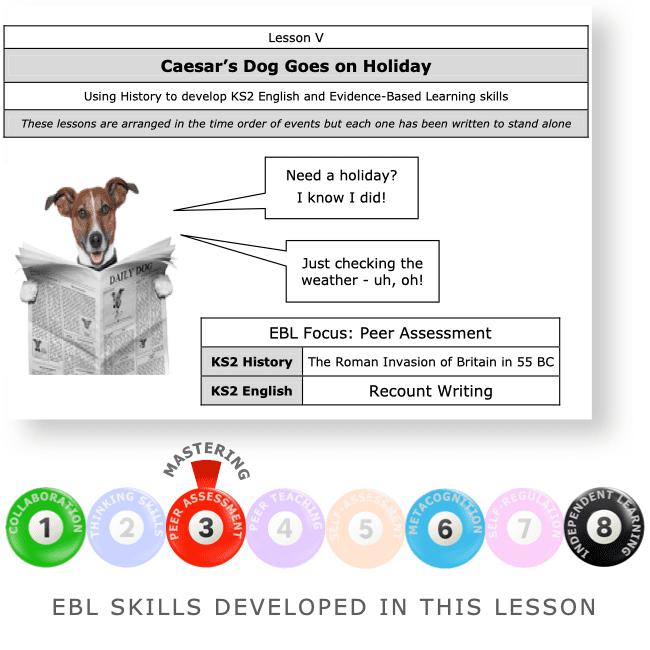 £3.00Add to basket
This lesson offers a light-hearted look at Caesar’s first invasion of Britain in 55 BC from the perspective of his (imaginary) dog called Rexus. Rexus is not invading of course – he is going on holiday!
As well as English (writing a recount with a partner) and history skills the Evidence-Based Learning skills developed in this lesson include collaborative learning, independent learning and metacognition. This lesson also offers pupils the opportunity to master peer assessment.
VIEW -


Nine Reasons Why Caesar Invaded Britain
£3.00 Add to basket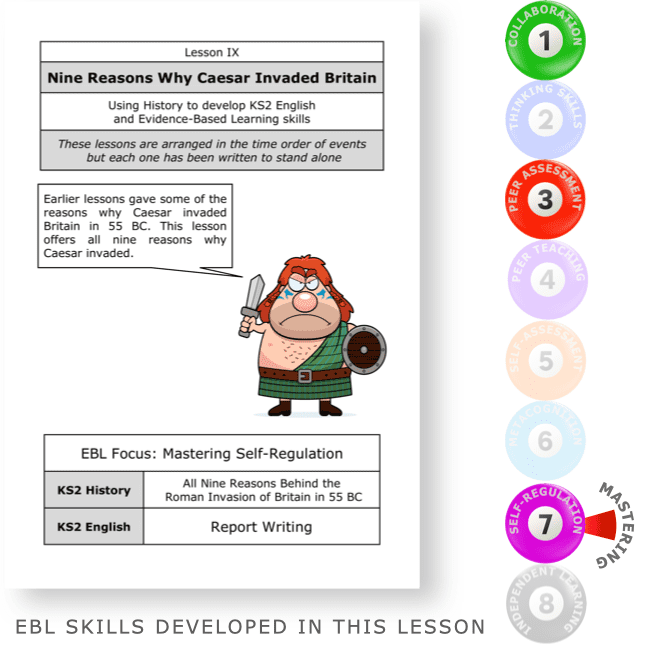 £3.00Add to basket
Earlier lessons gave some of the reasons why Caesar invaded Britain in 55 BC. This lesson offers all nine reasons why Caesar invaded.
As well as English (writing a report) and history skills the Evidence-Based Learning skills developed in this lesson include collaborative learning and peer assessment. This lesson also offers pupils the opportunity to master self-regulation.
VIEW
Philipem (verified owner) –
We asked a.i. to review this lesson. This is what it said:
Dive Into Roman History While Building Critical Thinking Skills
Are you searching for a compelling way to cover the Roman invasion of Britain while developing your students’ cognitive abilities? Look no further than Lesson 14: “Two Days in August 55 BC.” This richly detailed lesson provides the perfect backdrop for not only exploring the motivations and events surrounding Caesar’s historic invasion, but also honing vital evidence-based learning skills like collaborative work and mastering thinking strategies.
The lesson begins by examining the reasons why Rome sought to expand its empire by conquering other territories, including the valuable resources like metals, wool, and salt that Britain offered. Students then zoom in on the pivotal dates of August 22nd and 23rd in 55 BC – the day before and the day of Caesar’s initial invasion attempt. Vivid accounts bring the tense scenes at Dover to life, from the British forces assembled on the cliffs to Caesar’s daring beach landing under scorching volleys.
But the historical substance is just the start. Throughout the activities, students practice intentional thinking skills by analysing texts, formulating reasoned responses, and evaluating multiple perspectives. Partner work provides opportunities for productive collaboration and dialogue. These very same high-level cognitive abilities are consistently highlighted as keys to success across all subjects and future endeavours.
Like all 25 lessons in this series, “Two Days in August 55 BC” gradually builds one core evidence-based learning technique through purposeful scaffolding. In this case, the focus is on “Mastering Thinking Skills” – a capability that will pay massive dividends.
Want to tap into your pupils’ historical curiosity while giving their academic prowess a lasting boost? This resource is a perfect fit. I give it ⭐⭐⭐⭐⭐ for its skilful interweaving of curricular content mastery and cognitive skill development. Your KS2 students will be both captivated and challenged.