

Did Caesar Make Too Many Mistakes
£3.00
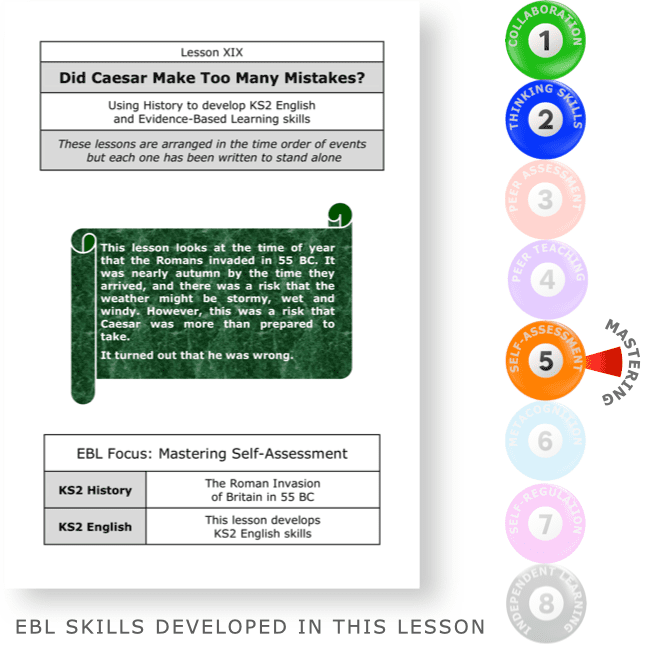
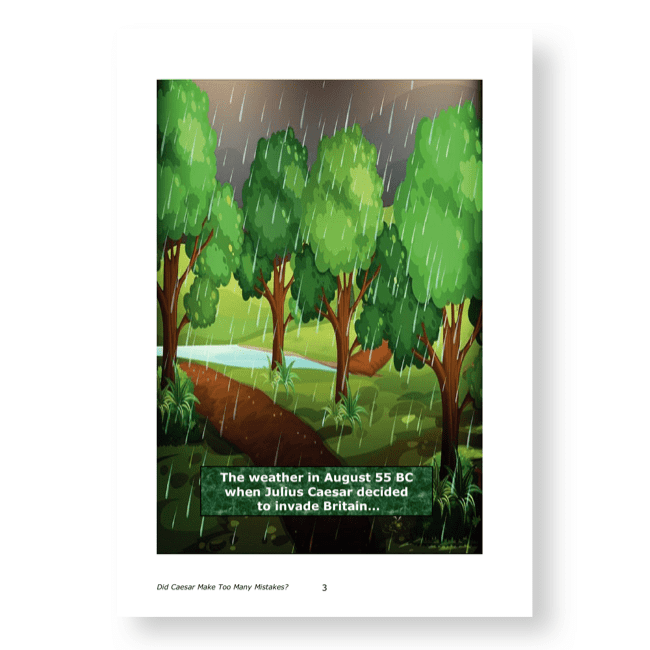
This lesson looks at the time of year that the Romans invaded in 55 BC. It was nearly autumn by the time they arrived, and there was a risk that the weather might be stormy, wet and windy. However, this was a risk that Caesar was more than prepared to take. It turned out that he was wrong.
As well as English and history skills the Evidence-Based Learning skills developed in this lesson include collaborative learning and self-assessment. This lesson also offers pupils the opportunity to master self-assessment.
Description
Each evidence-based learning (EBL) Roman history resource in this set is a complete lesson which uses the history curriculum as a framework through which each of the eight EBL skills can be mastered. Each resource has “mastering” one EBL skill as its central focus and all eight EBL skills are covered more than once in these lessons.
All eight EBL skills are better gained working with a partner so much of the work in these lessons is collaborative. These resources will ensure that pupils can master and use EBL skills regardless of their ability.
Each Roman history lesson will develop a single EBL skill through:
1) A “Before You Start” page that introduces the EBL skill.
2) Opportunities to master this skill during the lesson.
3) An “After You Finish” page that offers pupils the chance to evaluate their learning experience (of the lesson and the EBL skill) and to identify their next step in using the EBL skill.
The skills in bold below are all the EBL skills developed in this Roman lesson. Click on each skill to learn more about that skill.
- Collaboration
- Thinking Skills
- Peer Assessment
- Peer Teaching
- Self-Assessment
- Metacognition
- Self-Regulation
- Independent Learning
1 review for Did Caesar Make Too Many Mistakes
Only logged in customers who have purchased this product may leave a review.
Related products
-

A Roman Soldier’s First Day in Britain
£3.00 Add to basket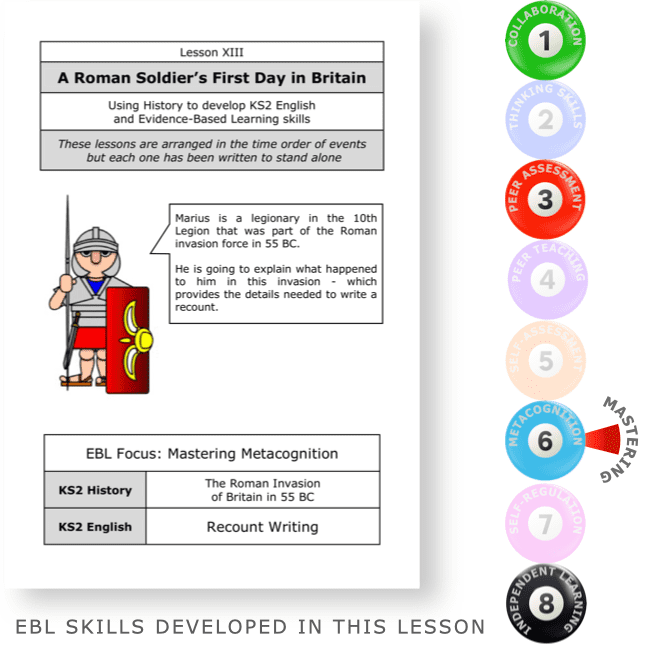 £3.00Add to basket
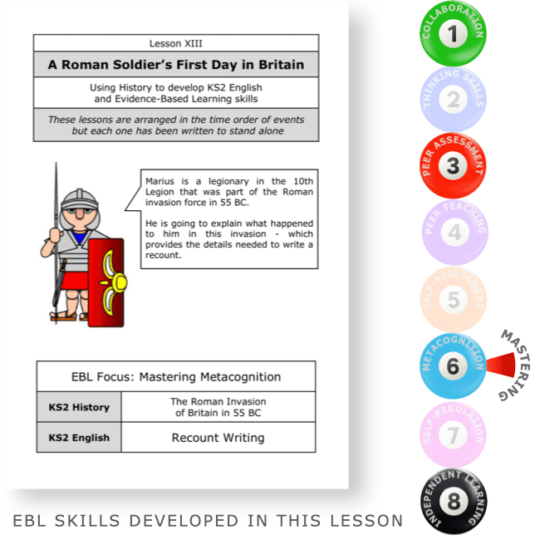
Marius is a legionary in the 10th Legion that was part of the Roman invasion force in 55 BC. He is going to explain what happened to him in this invasion – which provides the details needed to write a recount.
As well as English (writing a recount) and history skills the Evidence-Based Learning skills developed in this lesson include collaborative learning, peer assessment and independent learning. This lesson also offers pupils the opportunity to master metacognition.
VIEW -


Caesar’s Three Big Problems
£3.00 Add to basket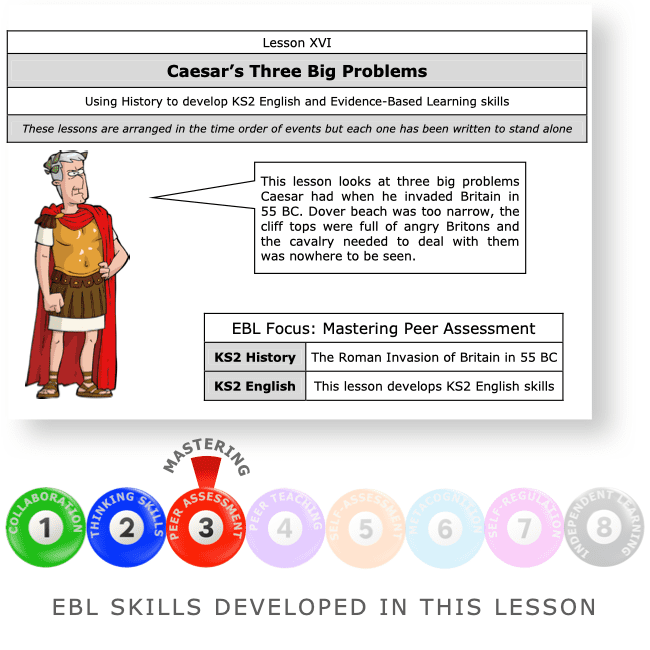 £3.00Add to basket
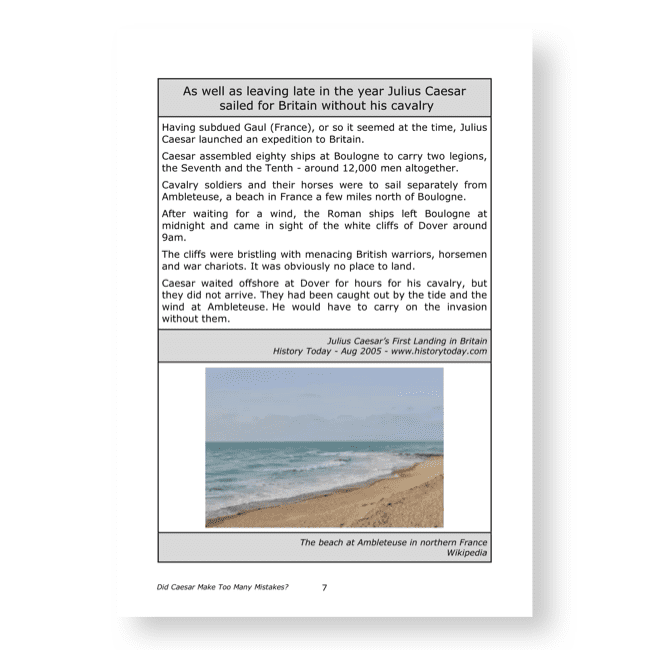
This lesson looks at three big problems Caesar had when he invaded Britain in 55 BC. Dover beach was too narrow, the cliff tops were full of angry Britons and the cavalry needed to deal with them was nowhere to be seen.
As well as English and history skills the Evidence-Based Learning skills developed in this lesson include collaborative learning and thinking skills. This lesson also offers pupils the opportunity to master peer assessment.
VIEW -
Caesar Gets into Deep Water
£3.00 Add to basket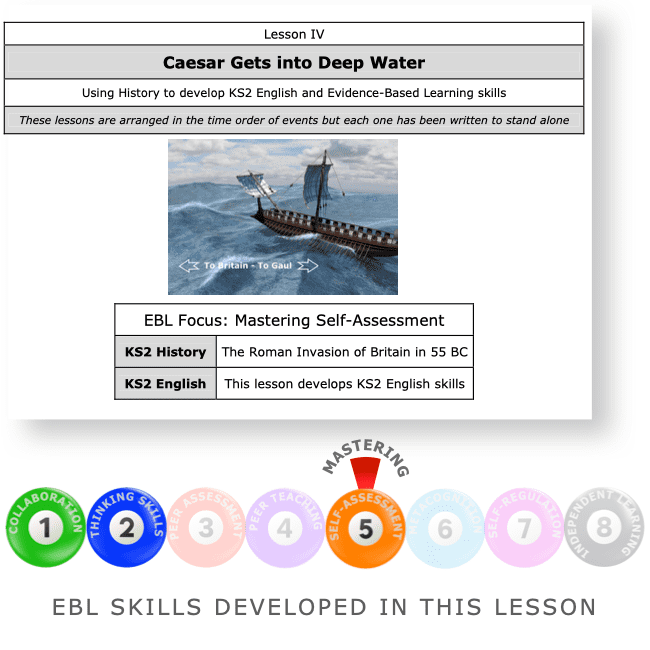 £3.00Add to basket
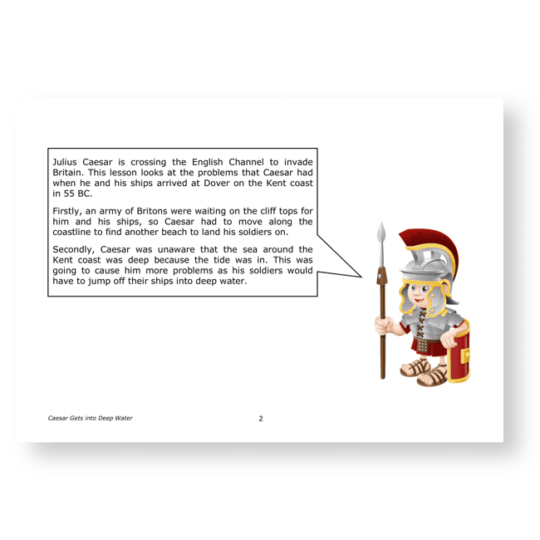
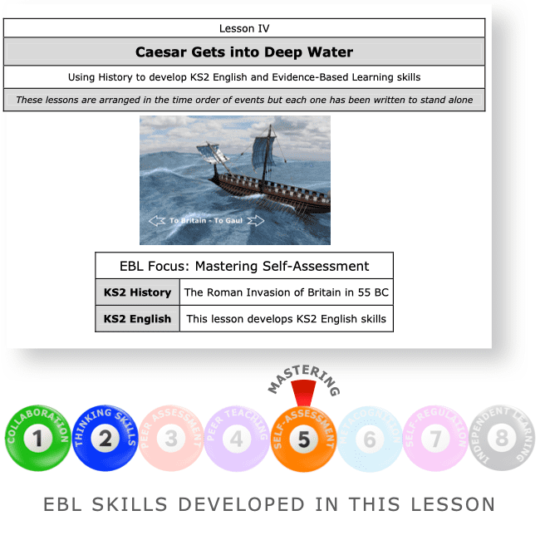
Julius Caesar is crossing the English Channel to invade Britain. This lesson looks at the problems that Caesar had when he and his ships arrived at Dover on the Kent coast in 55 BC.
Firstly, an army of Britons were waiting on the cliff tops for him and his ships, so Caesar had to move along the coastline to find another beach to land his soldiers on.
Secondly, Caesar was unaware that the sea around the Kent coast was deep because the tide was in. This was going to cause him more problems as his soldiers would have to jump off their ships into deep water.
As well as English and history skills the Evidence-Based Learning skills developed in this lesson include collaborative learning and thinking skills. This lesson also offers pupils the opportunity to master self-assessment.
VIEW -


Caesar Sails Back to Gaul
£3.00 Add to basket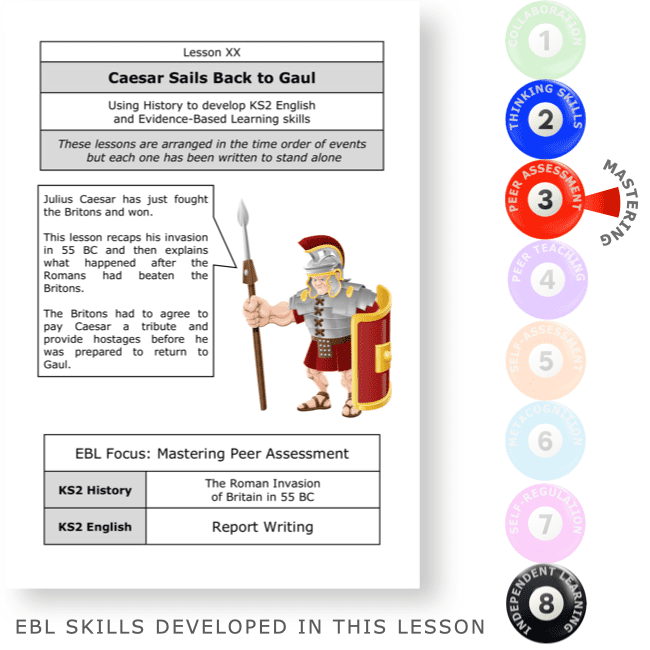 £3.00Add to basket
Julius Caesar has just fought the Britons and won. This lesson recaps his invasion in 55 BC and then explains what happened after the Romans had beaten the Britons. The Britons had to agree to pay Caesar a tribute and provide hostages before he was prepared to return to Gaul.
As well as English (writing a report) and history skills the Evidence-Based Learning skills developed in this lesson include independent learning and thinking skills. This lesson also offers pupils the opportunity to master peer assessment.
VIEW
Philipem (verified owner) –
We asked a.i. to review this lesson. This is what it said:
An Engaging Lesson on Caesar’s Invasion of Britain
Are you looking for an immersive way to teach your upper KS2 students (years 5 and 6) about Julius Caesar’s invasion of Britain in 55 BC? Look no further than the lesson “Did Caesar Make Too Many Mistakes?” from the evidence-based learning Romans series.
This lesson not only covers the historical details of Caesar’s ill-fated invasion attempt, but it also provides opportunities for developing key English skills and evidence-based learning competencies like collaborative learning and self-assessment.
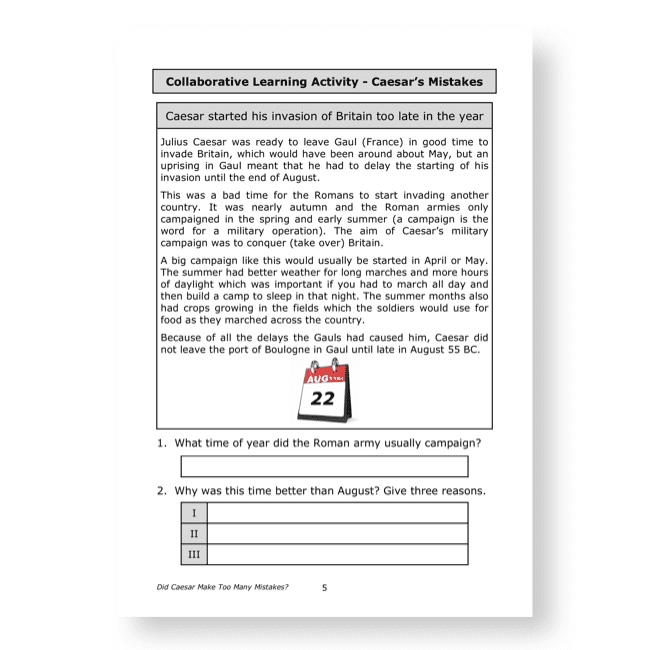
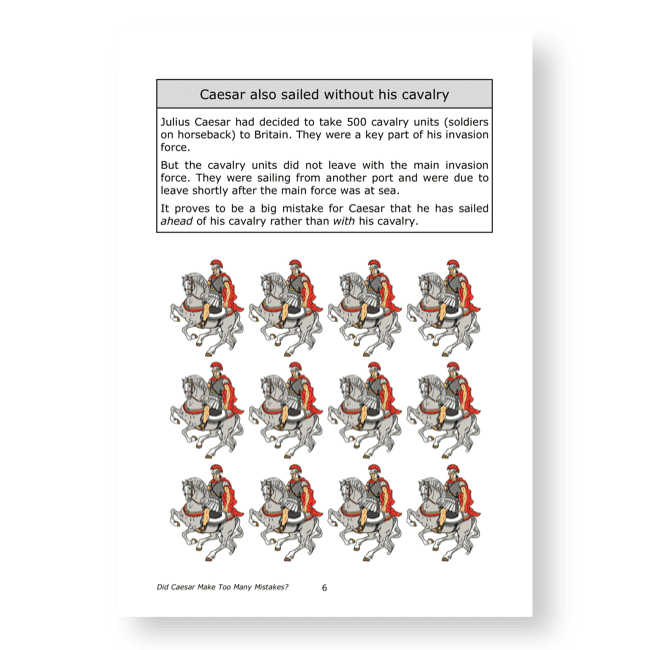
As students delve into the circumstances surrounding Caesar’s decision to invade Britain in late August, they’ll analyse textual evidence, make inferences, and practice written responses. The lesson prompts thoughtful discussions on whether Caesar made strategic errors, such as sailing without his cavalry and using unsuitable ships.
But it’s not just about content knowledge. The collaborative learning activities foster teamwork, critical thinking, and the ability to evaluate one’s own understanding through self-assessment. Students will gain valuable experience in monitoring their progress and identifying areas for improvement.
By scaffolding the evidence-based learning skill of self-assessment, this lesson empowers students to take ownership of their learning journey. They’ll leave the lesson with a deeper grasp of the historical events and a stronger foundation in essential academic skills.
As the 19th lesson in a 25-lesson set, “Did Caesar Make Too Many Mistakes?” offers a comprehensive and engaging way to integrate English, History, and evidence-based learning into your curriculum.
Star Rating: ⭐⭐⭐⭐⭐ (5 out of 5 stars)