


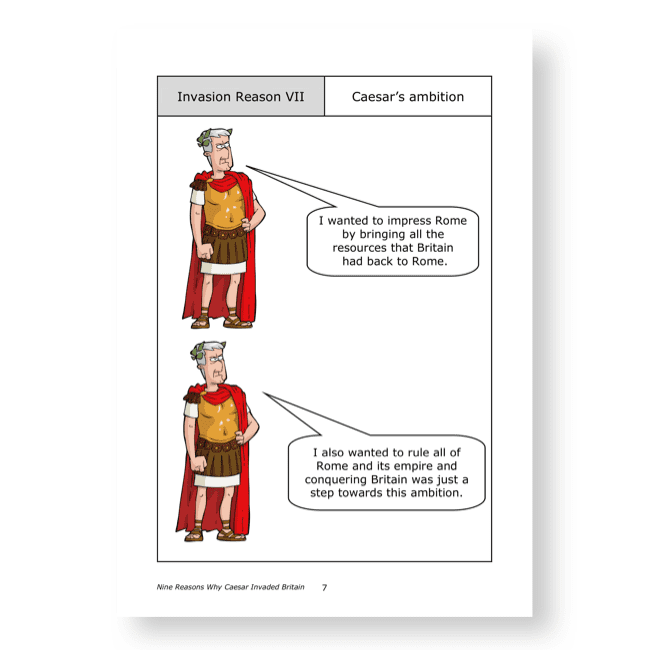

Nine Reasons Why Caesar Invaded Britain
£3.00
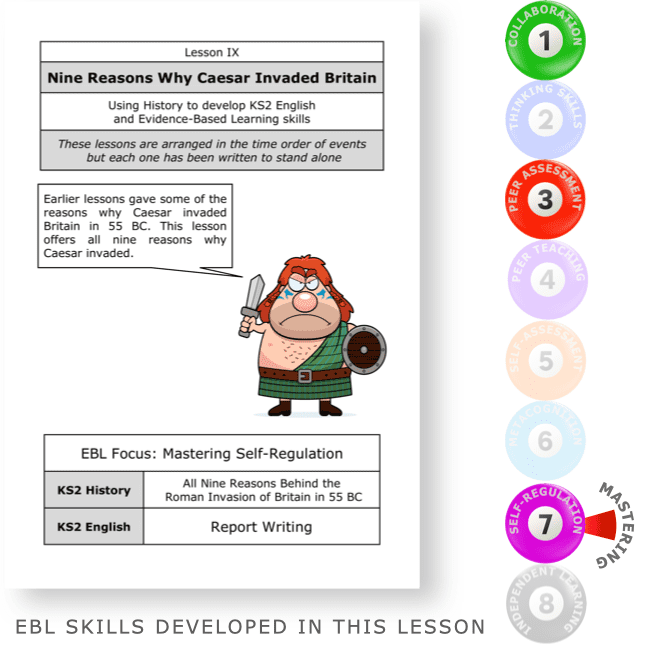
Earlier lessons gave some of the reasons why Caesar invaded Britain in 55 BC. This lesson offers all nine reasons why Caesar invaded.
As well as English (writing a report) and history skills the Evidence-Based Learning skills developed in this lesson include collaborative learning and peer assessment. This lesson also offers pupils the opportunity to master self-regulation.
Description
Each evidence-based learning (EBL) Roman history resource in this set is a complete lesson which uses the history curriculum as a framework through which each of the eight EBL skills can be mastered. Each resource has “mastering” one EBL skill as its central focus and all eight EBL skills are covered more than once in these lessons.
All eight EBL skills are better gained working with a partner so much of the work in these lessons is collaborative. These resources will ensure that pupils can master and use EBL skills regardless of their ability.
Each Roman history lesson will develop a single EBL skill through:
1) A “Before You Start” page that introduces the EBL skill.
2) Opportunities to master this skill during the lesson.
3) An “After You Finish” page that offers pupils the chance to evaluate their learning experience (of the lesson and the EBL skill) and to identify their next step in using the EBL skill.
The skills in bold below are all the EBL skills developed in this Roman lesson. Click on each skill to learn more about that skill.
- Collaboration
- Thinking Skills
- Peer Assessment
- Peer Teaching
- Self-Assessment
- Metacognition
- Self-Regulation
- Independent Learning
1 review for Nine Reasons Why Caesar Invaded Britain
Only logged in customers who have purchased this product may leave a review.
Related products
-


Caesar’s Own Account of the Invasion
£3.00 Add to basket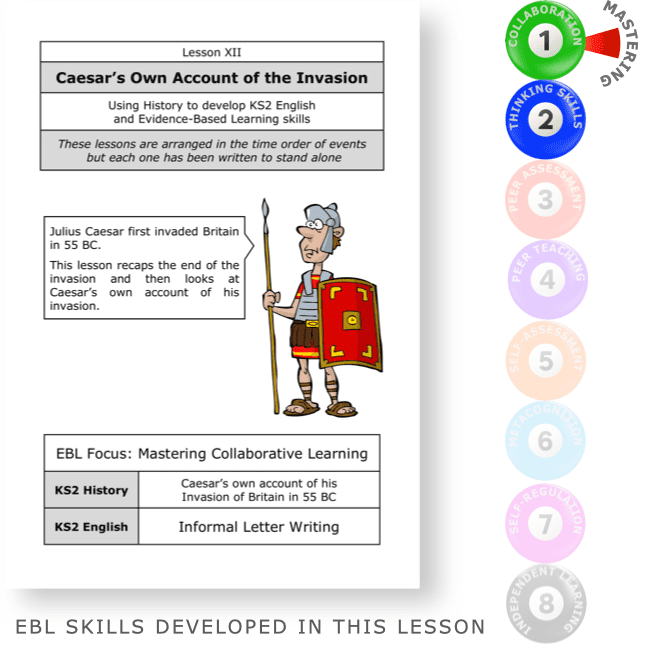 £3.00Add to basket
Julius Caesar first invaded Britain in 55 BC. This lesson recaps the end of the invasion and then looks at Caesar’s own account of his invasion.
As well as English (writing an informal letter) and history skills the Evidence-Based Learning skills developed in this lesson includes thinking skills. This lesson also offers pupils the opportunity to master collaborative learning.
VIEW -


Caesar Sails Back to Gaul
£3.00 Add to basket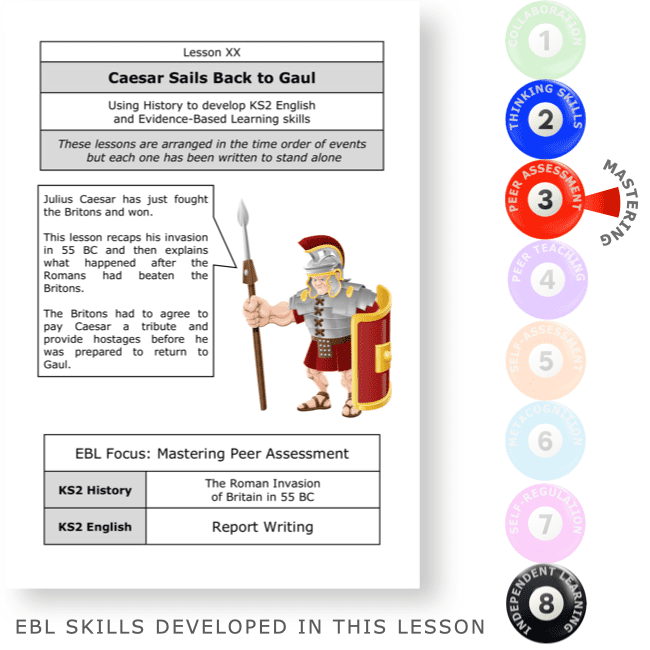 £3.00Add to basket
Julius Caesar has just fought the Britons and won. This lesson recaps his invasion in 55 BC and then explains what happened after the Romans had beaten the Britons. The Britons had to agree to pay Caesar a tribute and provide hostages before he was prepared to return to Gaul.
As well as English (writing a report) and history skills the Evidence-Based Learning skills developed in this lesson include independent learning and thinking skills. This lesson also offers pupils the opportunity to master peer assessment.
VIEW -

Did Caesar Make Too Many Mistakes
£3.00 Add to basket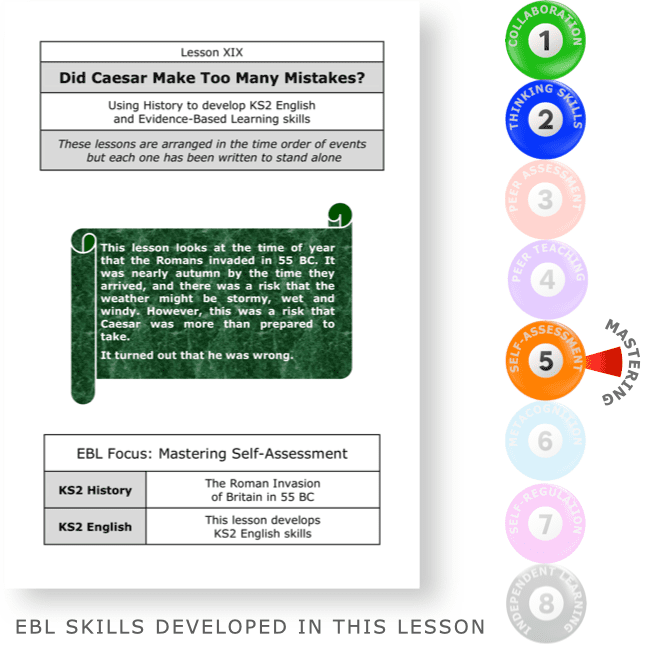 £3.00Add to basket
This lesson looks at the time of year that the Romans invaded in 55 BC. It was nearly autumn by the time they arrived, and there was a risk that the weather might be stormy, wet and windy. However, this was a risk that Caesar was more than prepared to take. It turned out that he was wrong.
As well as English and history skills the Evidence-Based Learning skills developed in this lesson include collaborative learning and self-assessment. This lesson also offers pupils the opportunity to master self-assessment.
VIEW -


Even More Problems for Caesar
£3.00 Add to basket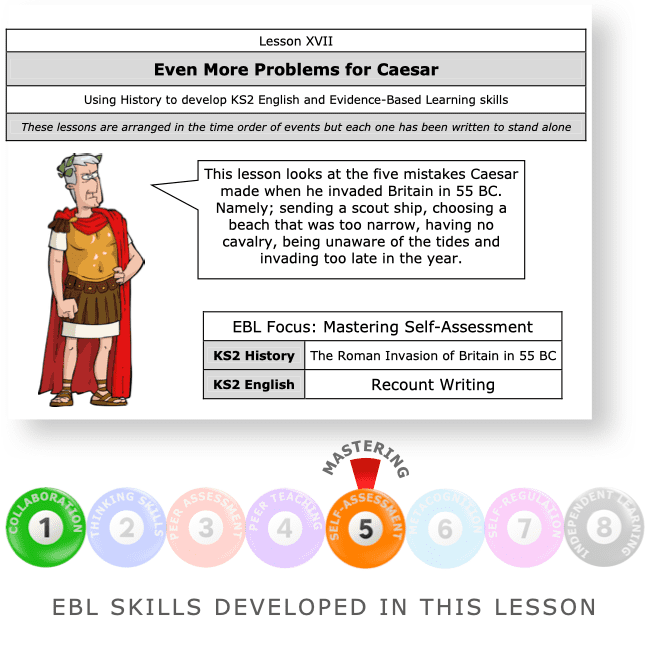 £3.00Add to basket
This lesson looks at the five mistakes Caesar made when he invaded Britain in 55 BC. Namely; sending a scout ship, choosing a beach that was too narrow, having no cavalry, being unaware of the tides and invading too late in the year.
As well as English (writing a recount) and history skills the Evidence-Based Learning skills developed in this lesson includes collaborative learning. This lesson also offers pupils the opportunity to master self-assessment.
VIEW
Philipem (verified owner) –
We asked a.i. to review this lesson. This is what it said:
Conquer Multiple Lessons with This Roman Invasion Resource
Looking for a rich resource that lets you cover English writing skills, Roman history content, and crucial evidence-based learning methods? This lesson examining the nine reasons behind Caesar’s invasion of Britain in 55 BC is a triple treat!
On the English front, students will practise core report writing skills like using topic introductions, bodies with supporting details, conclusions, and accurate past tense narration. Collaborating in pairs to draft reports allows them to put the writing process into action.
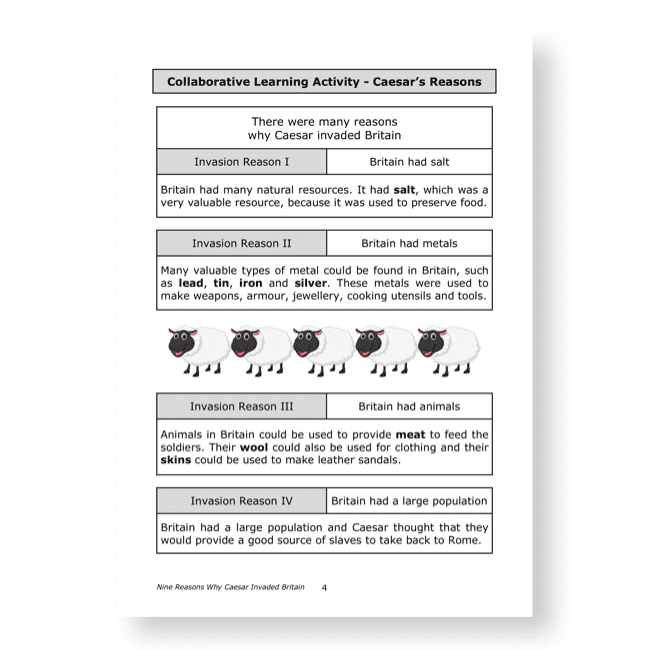
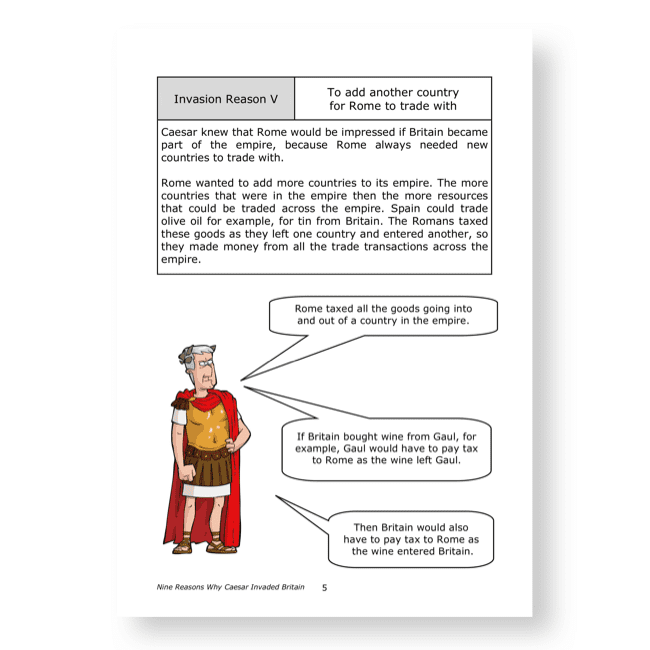
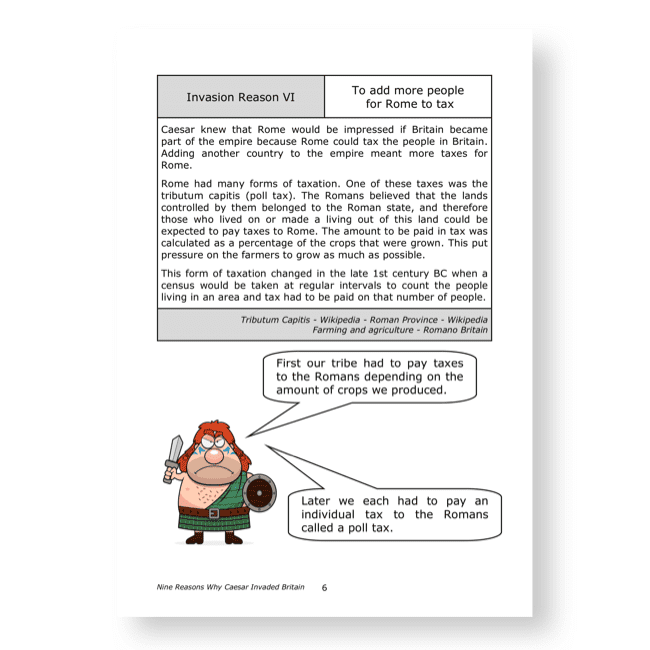
When it comes to historical knowledge, the lesson dives deep into the strategic, economic, political, and personal motivations that drove Caesar to expand Roman territory into Britain. From accessing British resources like salt and metals to settling scores with enemy tribes, students will unpack the complex factors behind this pivotal event.
But perhaps most importantly, the lesson provides the ideal framework for students to master self-regulation – one of the most powerful evidence-based learning skills. Through activities focused on goal-setting, self-assessment, and performance evaluation, pupils will walk away with essential metacognitive habits.
Like all the lessons in this 25-part series, self-regulation is deliberately scaffolded to ensure pupils have ample practice to truly master the skill. The collaborative learning and peer assessment components reinforce even more EBL techniques.
I give this multi-layered, standard-aligned resource ⭐⭐⭐⭐⭐! It’s an expertly designed tool for any upper KS2 (years 5-6) unit on Roman Britain or the Romans in general. Your students’ content knowledge, writing skills, and self-regulated capabilities will all level up.