
Romans, Taxes, and Donkeys
£3.00
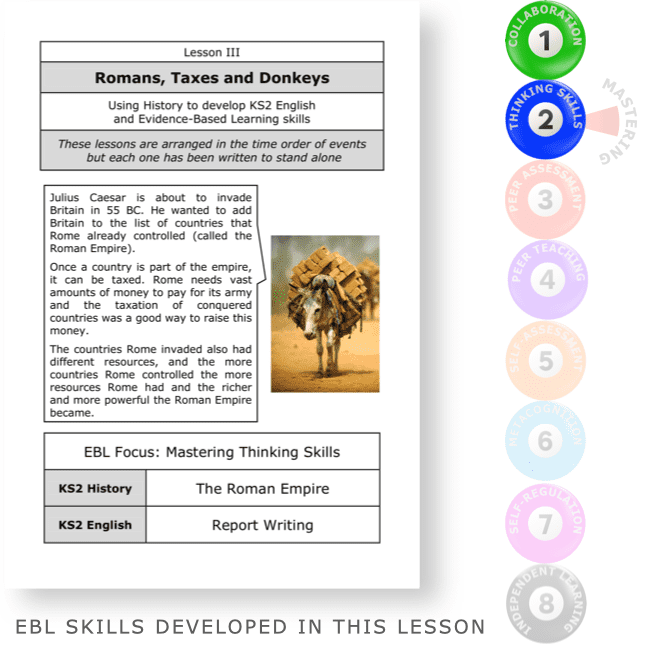
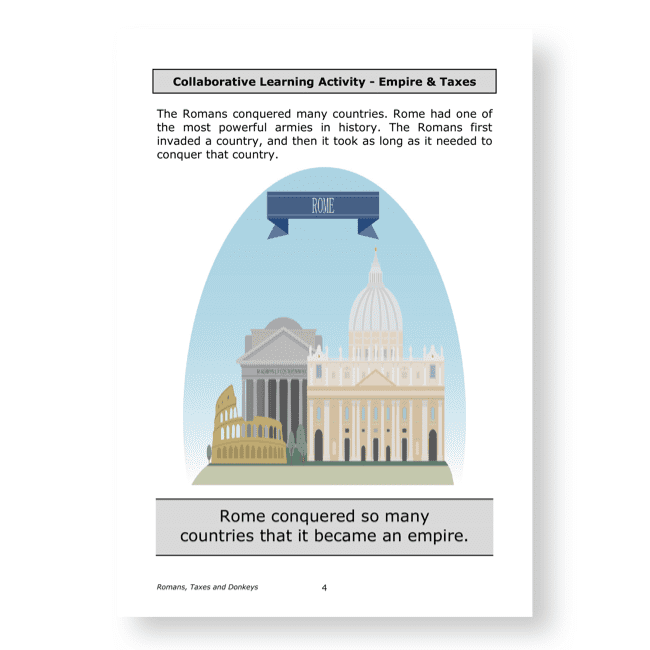
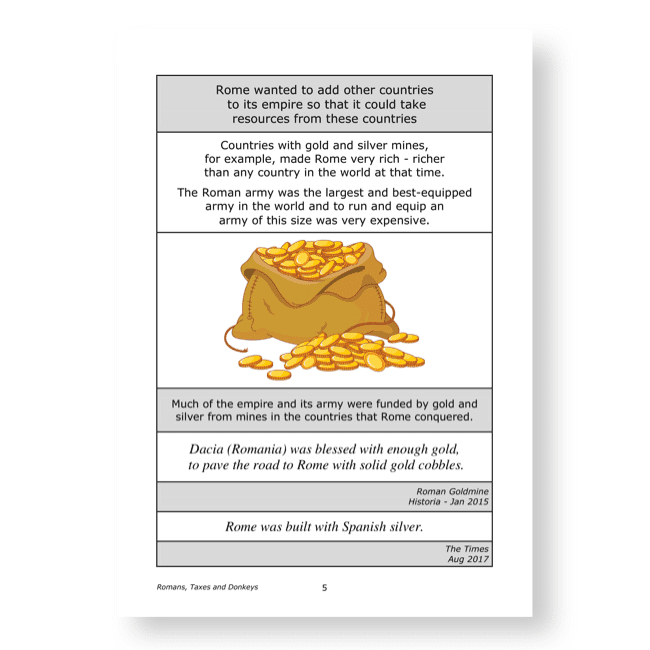
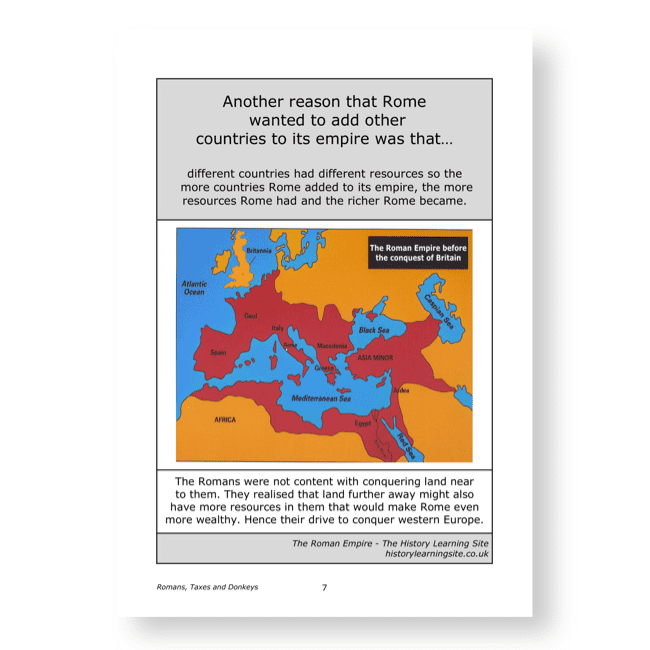
Julius Caesar is about to invade Britain in 55 BC. He wanted to add Britain to the list of countries that Rome already controlled (called the Roman Empire). Once a country is part of the empire, it can be taxed. Rome needs vast amounts of money to pay for its army and the taxation of conquered countries was a good way to raise this money. The countries Rome invaded also had different resources, and the more countries Rome controlled the more resources Rome had and the richer and more powerful the Roman Empire became.
As well as English (writing a report) and history skills the Evidence-Based Learning skills developed in this lesson includes collaborative learning. This lesson also offers pupils the opportunity to master thinking skills.
Description
Each evidence-based learning (EBL) Roman history resource in this set is a complete lesson which uses the history curriculum as a framework through which each of the eight EBL skills can be mastered. Each resource has “mastering” one EBL skill as its central focus and all eight EBL skills are covered more than once in these lessons.
All eight EBL skills are better gained working with a partner so much of the work in these lessons is collaborative. These resources will ensure that pupils can master and use EBL skills regardless of their ability.
Each Roman history lesson will develop a single EBL skill through:
1) A “Before You Start” page that introduces the EBL skill.
2) Opportunities to master this skill during the lesson.
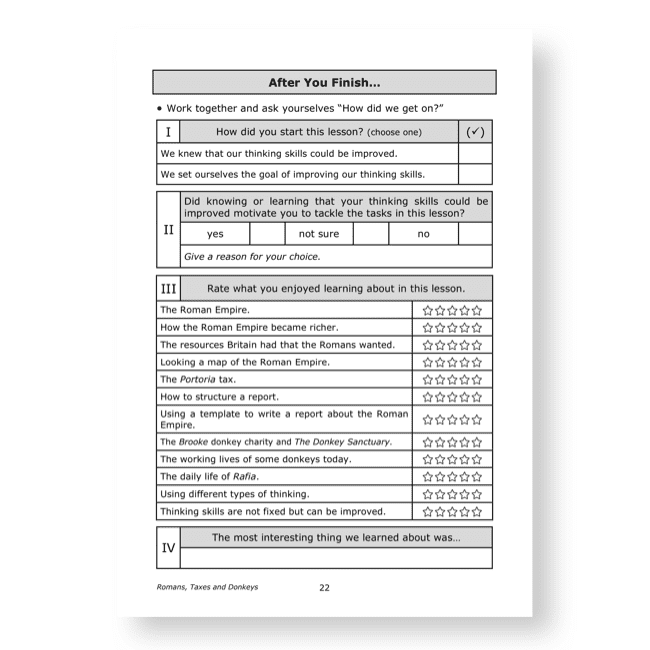
3) An “After You Finish” page that offers pupils the chance to evaluate their learning experience (of the lesson and the EBL skill) and to identify their next step in using the EBL skill.
The skills in bold below are all the EBL skills developed in this Roman lesson. Click on each skill to learn more about that skill.
- Collaboration
- Thinking Skills
- Peer Assessment
- Peer Teaching
- Self-Assessment
- Metacognition
- Self-Regulation
- Independent Learning
1 review for Romans, Taxes, and Donkeys
Only logged in customers who have purchased this product may leave a review.
Related products
-

A Roman Newspaper
£3.00 Add to basket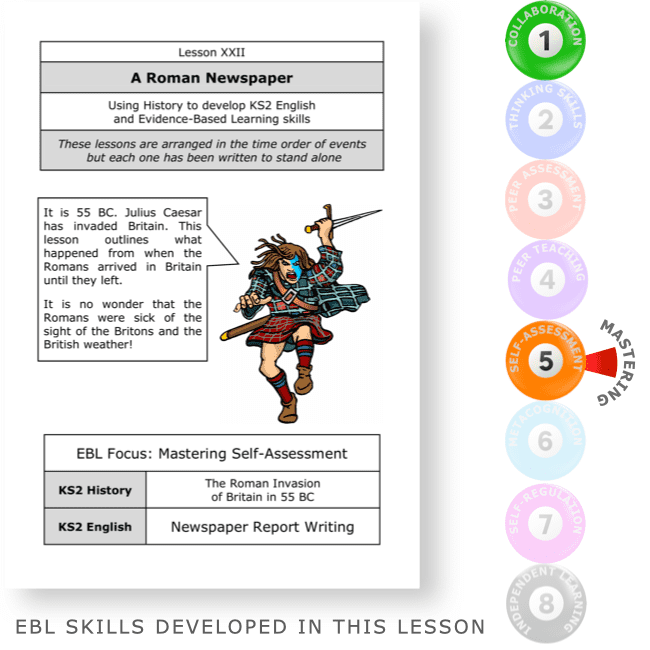 £3.00Add to basket
It is 55 BC. Julius Caesar has invaded Britain. This lesson outlines what happened from when the Romans arrived in Britain until they left.
It is no wonder that the Romans were sick of the sight of the Britons and the British weather!
As well as English (writing a newspaper report) and history skills the Evidence-Based Learning skills developed in this lesson includes collaborative learning. This lesson also offers pupils the opportunity to master self-assessment.
VIEW -


An Interview with Julius Caesar
£3.00 Add to basket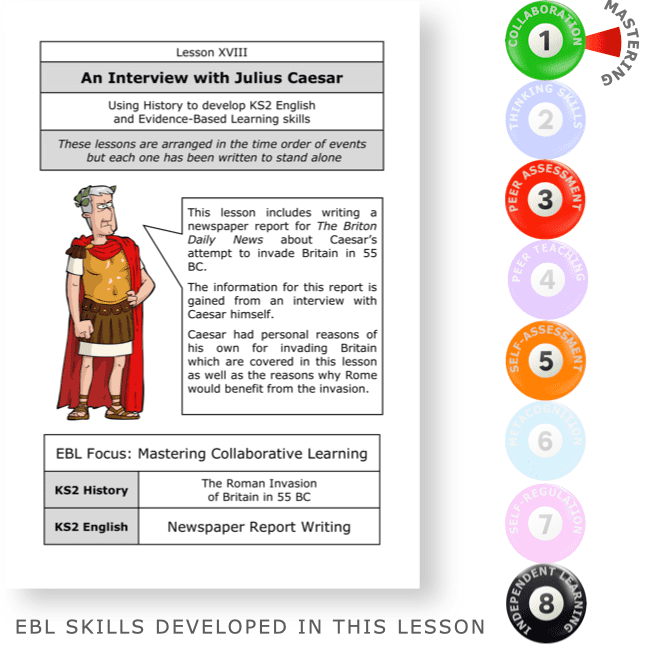 £3.00Add to basket
This lesson includes writing a newspaper report for The Briton Daily News about Caesar’s attempt to invade Britain in 55 BC. The information for this report is gained from an interview with Caesar himself.
Caesar had personal reasons of his own for invading Britain which are covered in this lesson as well as the reasons why Rome would benefit from the invasion.
As well as English (writing a newspaper report) and history skills the Evidence-Based Learning skills developed in this lesson include independent learning, peer and self-assessment. This lesson also offers pupils the opportunity to master collaborative learning.
VIEW -


Caesar’s Parrot Enjoys an Awayday
£3.00 Add to basket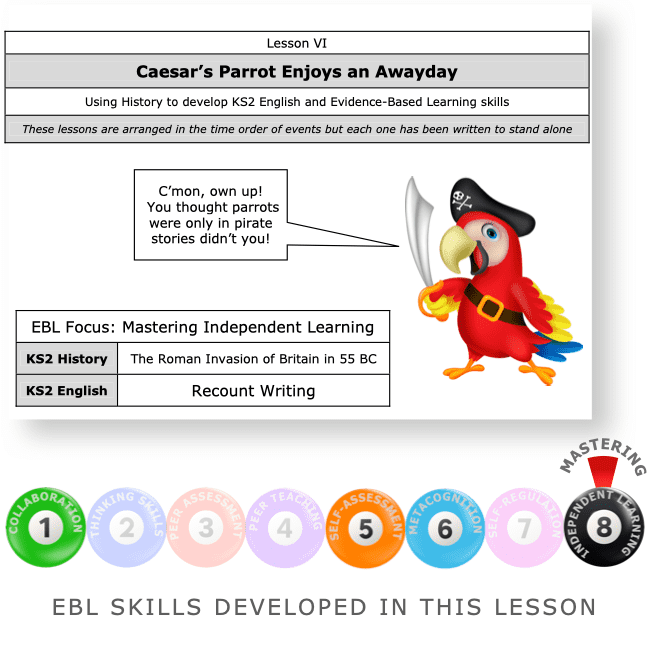 £3.00Add to basket
This lesson offers a light-hearted look at Caesar’s first invasion of Britain in 55 BC from the perspective of his (imaginary) parrot called Capitano. Capitano is not invading of course – he is going on an awayday!
As well as English (writing a recount on their own) and history skills the Evidence-Based Learning skills developed in this lesson include metacognition and self-assessment. This lesson also offers pupils the opportunity to master independent learning.
VIEW -


Caesar Sails Back to Gaul
£3.00 Add to basket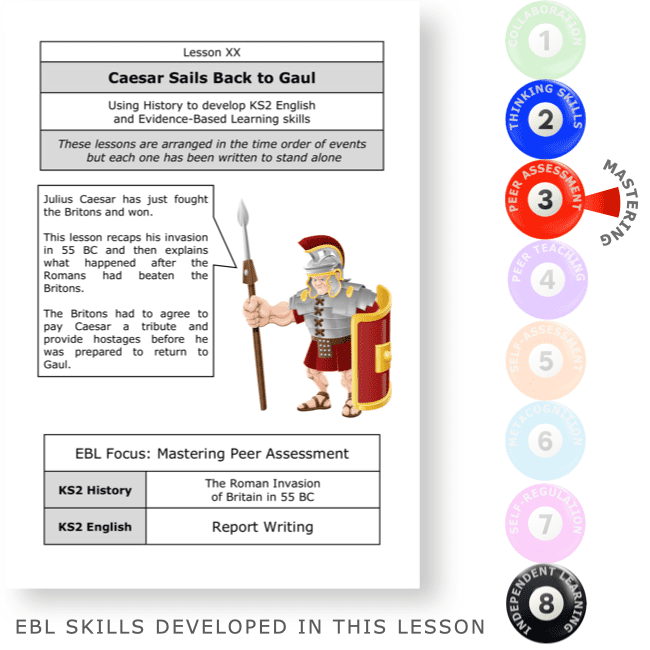 £3.00Add to basket
Julius Caesar has just fought the Britons and won. This lesson recaps his invasion in 55 BC and then explains what happened after the Romans had beaten the Britons. The Britons had to agree to pay Caesar a tribute and provide hostages before he was prepared to return to Gaul.
As well as English (writing a report) and history skills the Evidence-Based Learning skills developed in this lesson include independent learning and thinking skills. This lesson also offers pupils the opportunity to master peer assessment.
VIEW
Philipem (verified owner) –
Enrich Learning with This Multifaceted Roman Lesson
If you’re seeking an engaging way to integrate instruction on writing, history, collaborative learning, and higher-order thinking skills, look no further than the “Romans, Taxes and Donkeys” lesson. As part of a 25-lesson set following Julius Caesar’s invasion of Britain in 55 BC, this innovative lesson covers a wide range of valuable skills and content.
Here are some highlights of what students will experience:
English Skills:
– Report writing practice (structure, tense, organization)
– Guided template for writing a report on the Roman Empire
History Content:
– Background on the Roman conquest of territories
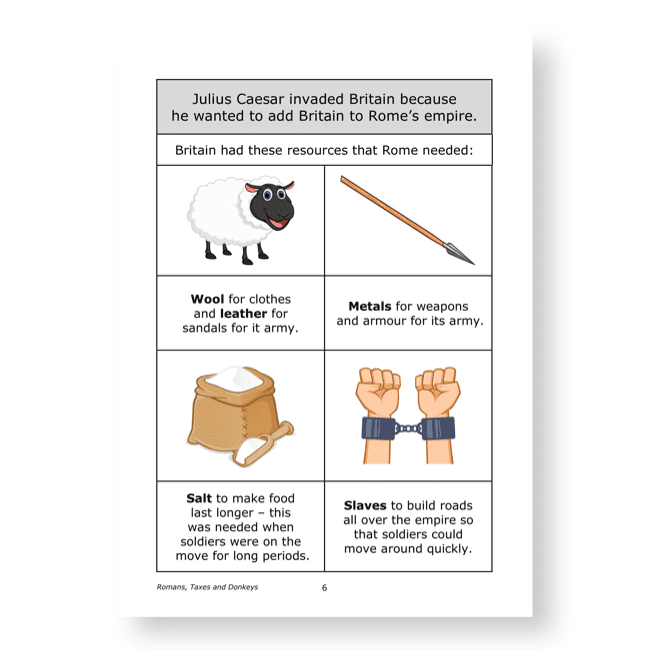
– Exploration of resources Britain offered Rome (metals, crops, etc.)
– How Rome funded its vast army through taxes and plundered wealth
– Economic impacts of the expanding Roman Empire
Evidence-Based Learning:
– Collaborative partner activities to facilitate peer learning
– Explicit modelling of distinguishing cognitive vs. metacognitive skills
– Application of Bloom’s Taxonomy to build ascending thinking skills
The lesson adeptly intertwines reading, writing, analysis, and discussion around the compelling historical context of Rome’s motivations for conquest. Students engage with the content through varied individual and collaborative tasks.
A particularly rich component is the scaffolded report writing section, where partners apply their knowledge by crafting an informative report about why Rome sought to conquer more countries. The provided template and structure ensure appropriate skill development.
Additionally, the seamless integration of Bloom’s Taxonomy questioning allows students to build their cognitive abilities from remembering to creating – solidifying deeper historical understandings.
By bridging literacy skills with historical exploration, collaborative experiences, and robust cognitive progressions, the “Romans, Taxes and Donkeys” lesson is an exemplary tool for Upper KS2 teachers aiming to comprehensively develop cross-curricular competencies.
Star Rating: ★★★★★ (5/5 stars)
A brilliantly designed resource that will get students excited about academic skills while immersing them in the fascinating world of Ancient Rome. Highly recommended!