

Caesar Has Big Plans
£3.00
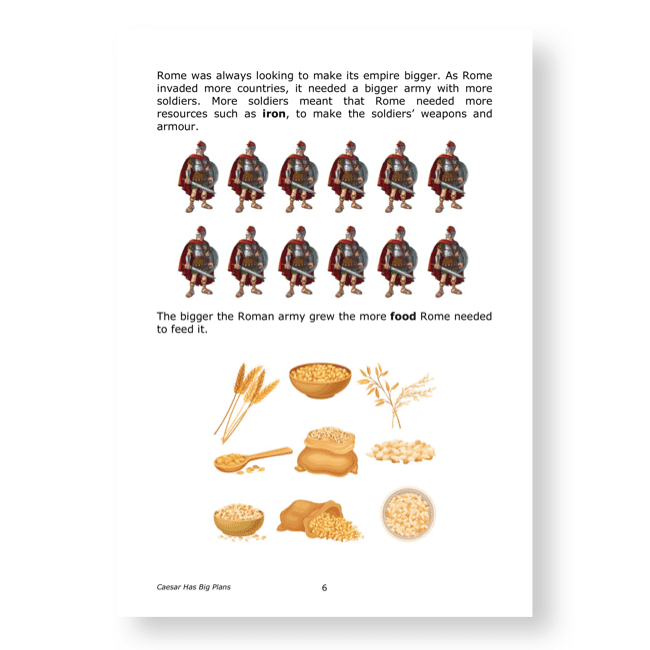
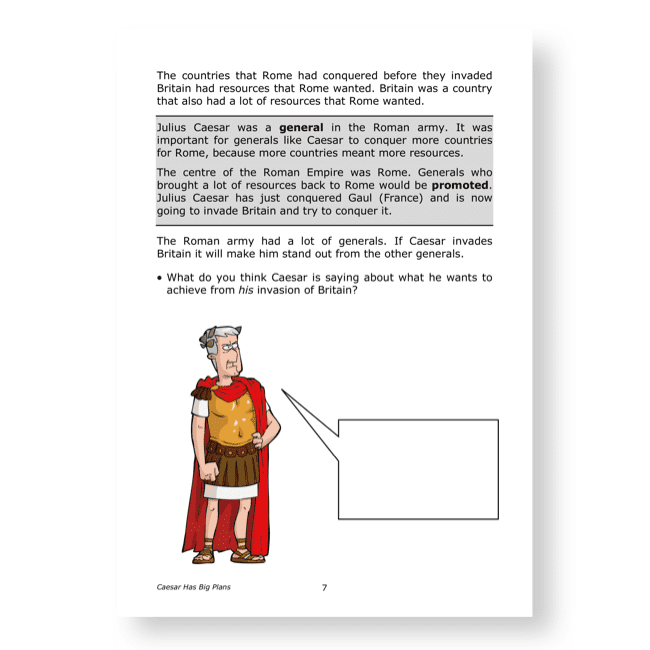
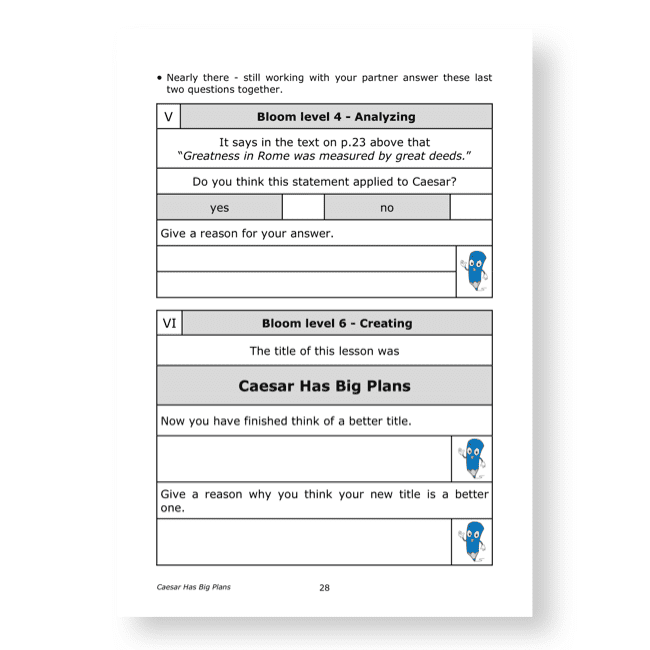
This lesson explains how the Roman invasion of Britain was just part of Caesar’s bigger plan to rule Rome and its empire. It also has a summary of the events in the first part of the invasion in 55 BC. Things didn’t go that well for Caesar, so he might have to give it another go next year!
As well as English and history skills the Evidence-Based Learning skills developed in this lesson include collaborative learning, self-assessment and thinking skills. This lesson also offers pupils the opportunity to master self-regulation.
Description
Each evidence-based learning (EBL) Roman history resource in this set is a complete lesson which uses the history curriculum as a framework through which each of the eight EBL skills can be mastered. Each resource has “mastering” one EBL skill as its central focus and all eight EBL skills are covered more than once in these lessons.
All eight EBL skills are better gained working with a partner so much of the work in these lessons is collaborative. These resources will ensure that pupils can master and use EBL skills regardless of their ability.
Each Roman history lesson will develop a single EBL skill through:
1) A “Before You Start” page that introduces the EBL skill.
2) Opportunities to master this skill during the lesson.
3) An “After You Finish” page that offers pupils the chance to evaluate their learning experience (of the lesson and the EBL skill) and to identify their next step in using the EBL skill.
The skills in bold below are all the EBL skills developed in this Roman lesson. Click on each skill to learn more about that skill.
- Collaboration
- Thinking Skills
- Peer Assessment
- Peer Teaching
- Self-Assessment
- Metacognition
- Self-Regulation
- Independent Learning
1 review for Caesar Has Big Plans
Only logged in customers who have purchased this product may leave a review.
Related products
-
Eagle-Bearers in the Roman Army
£3.00 Add to basket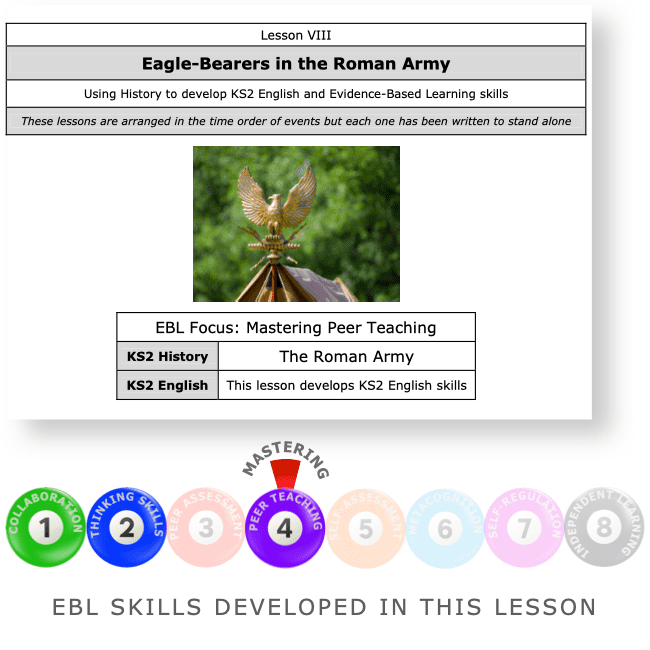 £3.00Add to basket
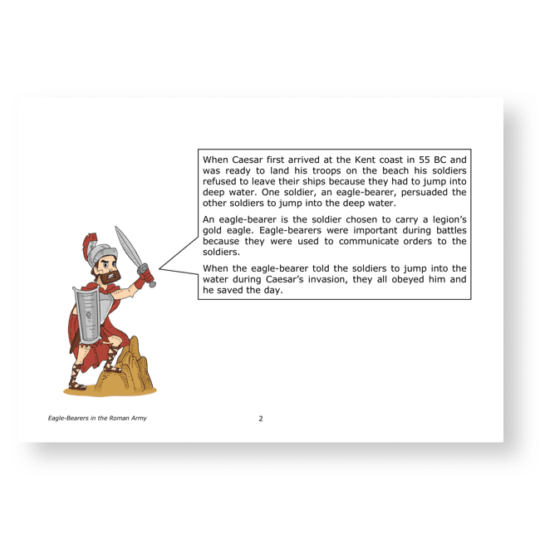
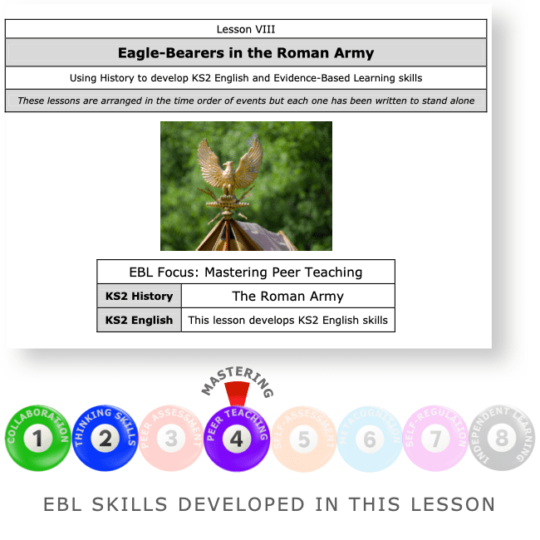
When Caesar first arrived at the Kent coast in 55 BC and was ready to land his troops on the beach his soldiers refused to leave their ships because they had to jump into deep water. One soldier, an eagle-bearer, persuaded the other soldiers to jump into the deep water.
An eagle-bearer is the soldier chosen to carry a legion’s gold eagle. Eagle-bearers were important during battles because they were used to communicate orders to the soldiers. When the eagle-bearer told the soldiers to jump into the water during Caesar’s invasion, they all obeyed him and he saved the day.
As well as English and history skills the Evidence-Based Learning skills developed in this lesson include collaborative learning and metacognition. This lesson also offers pupils the opportunity to master peer teaching.
VIEW -

A Roman Soldier’s First Day in Britain
£3.00 Add to basket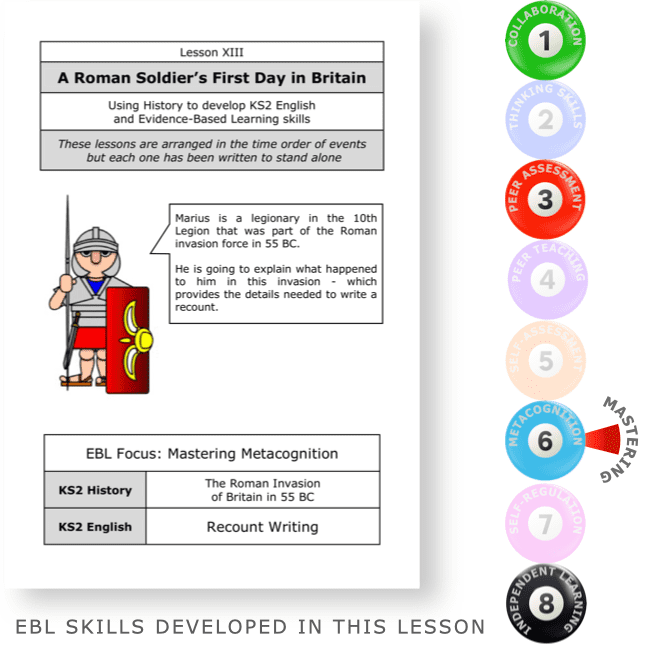 £3.00Add to basket
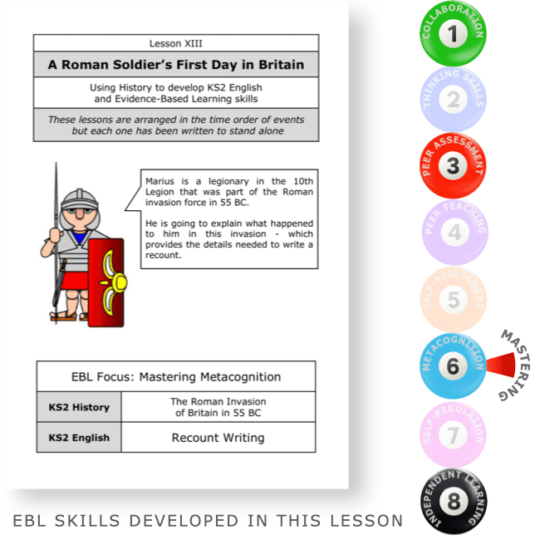
Marius is a legionary in the 10th Legion that was part of the Roman invasion force in 55 BC. He is going to explain what happened to him in this invasion – which provides the details needed to write a recount.
As well as English (writing a recount) and history skills the Evidence-Based Learning skills developed in this lesson include collaborative learning, peer assessment and independent learning. This lesson also offers pupils the opportunity to master metacognition.
VIEW -
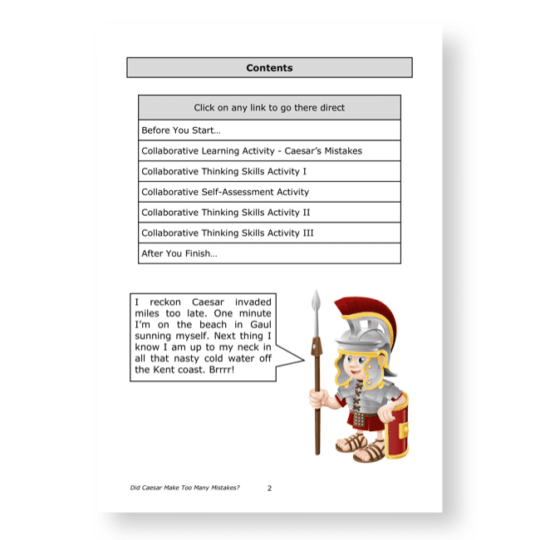

Did Caesar Make Too Many Mistakes
£3.00 Add to basket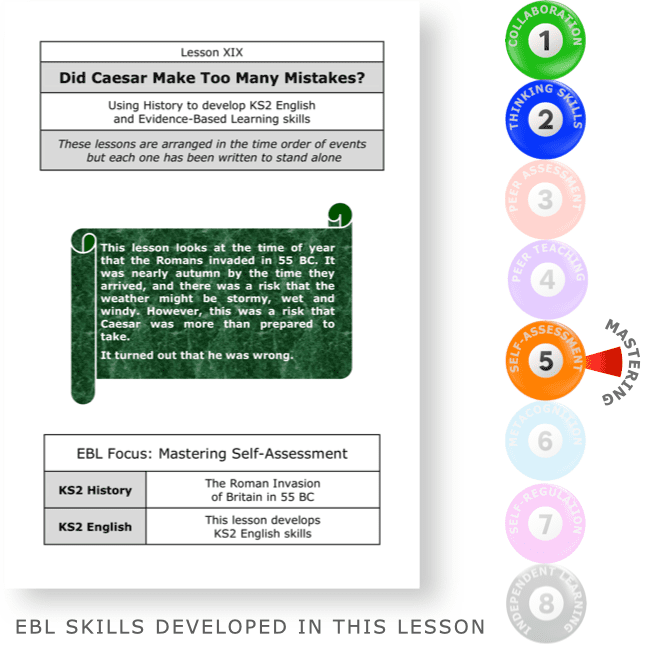 £3.00Add to basket
This lesson looks at the time of year that the Romans invaded in 55 BC. It was nearly autumn by the time they arrived, and there was a risk that the weather might be stormy, wet and windy. However, this was a risk that Caesar was more than prepared to take. It turned out that he was wrong.
As well as English and history skills the Evidence-Based Learning skills developed in this lesson include collaborative learning and self-assessment. This lesson also offers pupils the opportunity to master self-assessment.
VIEW -
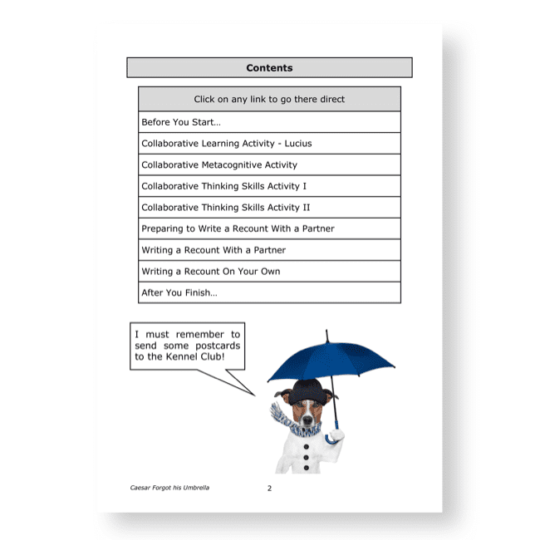
Caesar Forgot His Umbrella
£3.00 Add to basket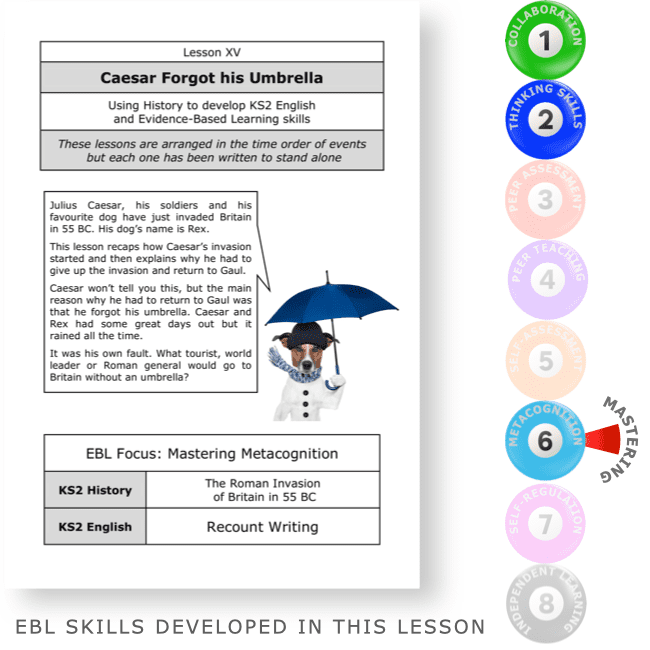 £3.00Add to basket
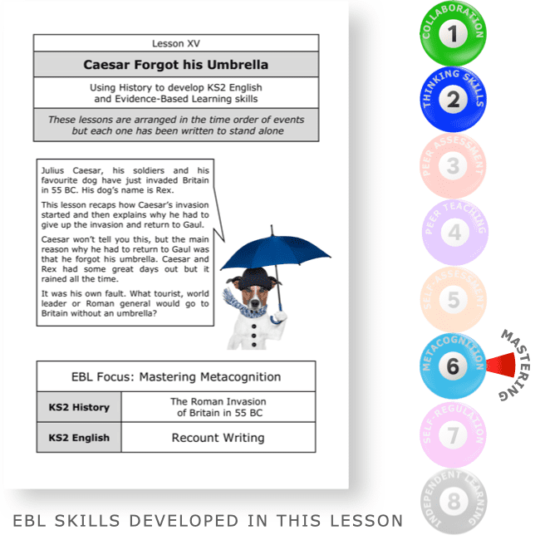
Julius Caesar, his soldiers and his favourite dog have just invaded Britain in 55 BC. His dog’s name is Rex. This lesson recaps how Caesar’s invasion started and then explains why he had to give up the invasion and return to Gaul.
Caesar won’t tell you this, but the main reason why he had to return to Gaul was that he forgot his umbrella. Caesar and Rex had some great days out but it rained all the time. It was his own fault. What tourist, world leader or Roman general would go to Britain without an umbrella?
As well as English (writing a recount) and history skills the Evidence-Based Learning skills developed in this lesson include collaborative learning and self-assessment. This lesson also offers pupils the opportunity to master metacognition.
VIEW
Philipem (verified owner) –
We asked a.i. to review this lesson. This is what it said:
Unveil Caesar’s Ambitions and Help Students Master Self-Regulation
Are you seeking an engaging way to teach your upper KS2 students about Julius Caesar’s motivations behind the Roman invasion of Britain? Look no further than the lesson “Caesar Has Big Plans” from the evidence-based learning series.
This immersive lesson not only delves into Caesar’s larger aspirations of ruling Rome and expanding its empire, but it also provides a comprehensive summary of the events surrounding his first invasion attempt in 55 BC. By exploring Caesar’s personal and strategic reasons for conquering Britain, students gain a deeper understanding of this pivotal moment in history.
But it’s not just about historical content knowledge. The lesson offers ample opportunities for developing key English skills through collaborative learning activities, self-assessment tasks, and critical thinking exercises. Students will practise comprehension, analysis, and written expression as they unpack the complexities of Caesar’s plans and the challenges he faced.
Moreover, this lesson empowers students to become self-regulated learners by scaffolding the essential skill of self-regulation. Through guided activities and reflective exercises, students learn to monitor their progress, set learning goals, and take ownership of their academic journey.
By mastering self-regulation, students develop the metacognitive abilities to “think about their thinking,” an invaluable skill that will benefit them across all subject areas and future endeavours.
As the 21st lesson in a 25-lesson set, “Caesar Has Big Plans” offers a comprehensive and engaging way to integrate English, History, and evidence-based learning into your curriculum.
Star Rating: ⭐⭐⭐⭐⭐ (5 out of 5 stars)