

The Beach, the Campsite and the Garden
£3.00
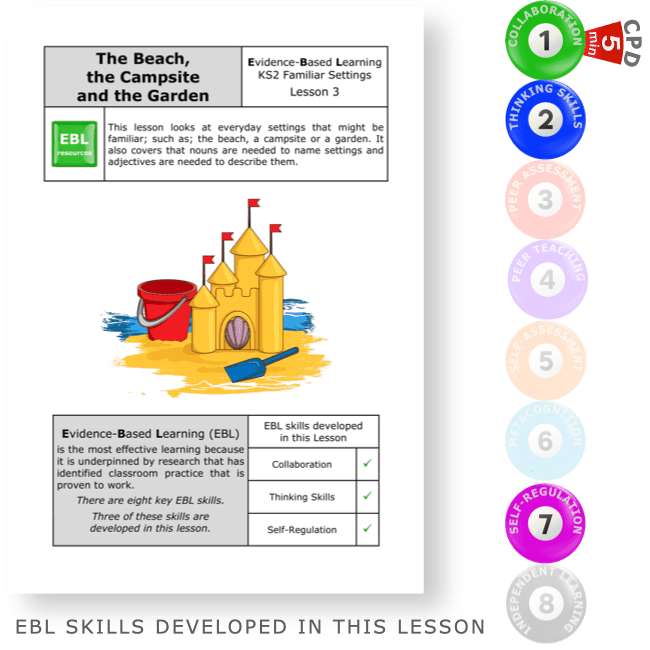
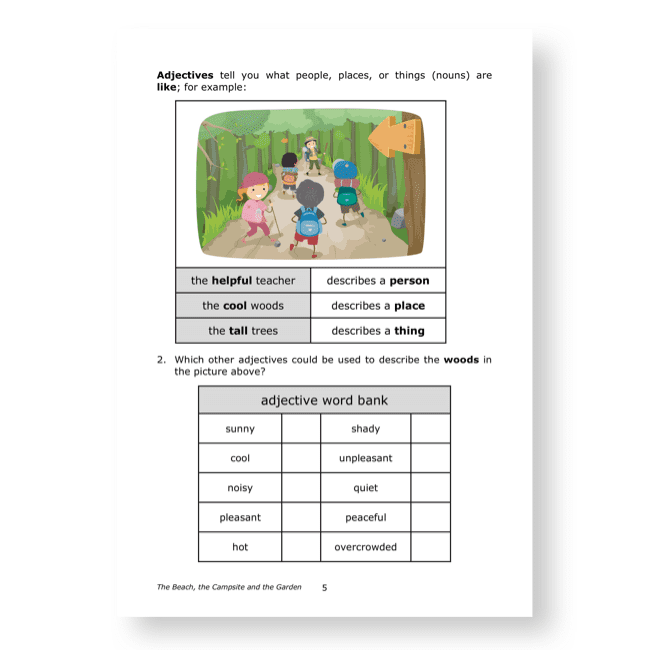
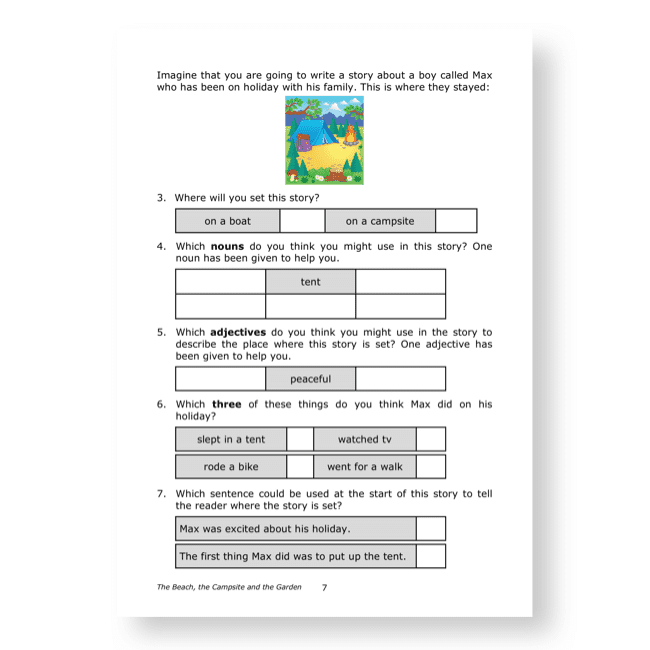
This lesson looks at everyday settings that might be familiar; such as; the beach, a campsite or a garden. It also covers that nouns are needed to name settings and adjectives are needed to describe them.
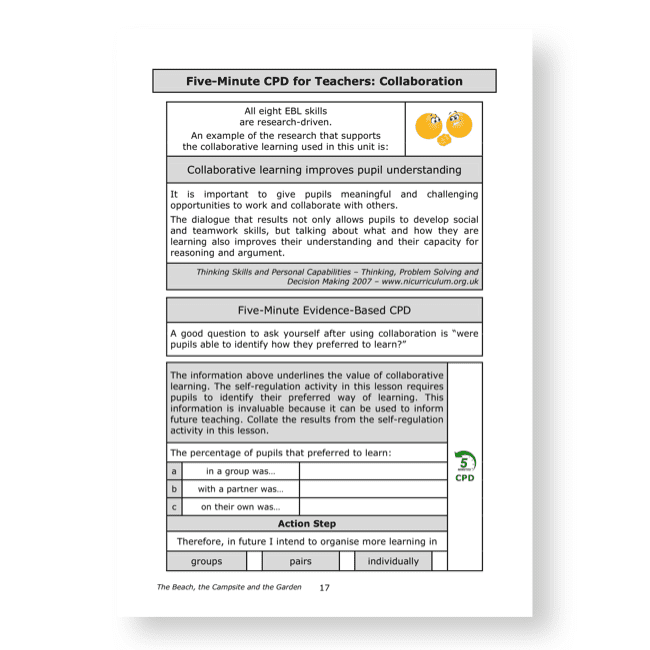
There is a five-minute evidence-based CPD activity at the end of this lesson which will develop classroom teachers’ skill set. This CPD consists of a research extract on collaboration with a five-minute activity based on this extract.
Description
These evidence-based learning (EBL) lessons are based on classroom practice that has been proven, by research, to maximise thinking, learning and attainment. From an extensive review of educational research, we identified the eight key classroom thinking and learning skills that were common across these research papers. We named these eight key skills “EBL skills”.
EBL skills have been proven by research to maximise learning because they combine the most productive thinking skills with the most effective learning behaviours. Each of our evidence-based learning lessons uses the English curriculum as a framework through which the eight EBL skills are delivered.
Teachers also have the opportunity to add to their own skill set or refresh their existing skills with our five-minute CPD activity, based on one of the EBL skills used in this lesson.
The skills in bold below are the EBL skills developed in this Familiar Settings lesson. Click on each skill to learn more about that skill.
- Collaboration
- Thinking Skills
- Peer Assessment
- Peer Teaching
- Self-Assessment
- Metacognition
- Self-Regulation
- Independent Learning
1 review for The Beach, the Campsite and the Garden
Only logged in customers who have purchased this product may leave a review.
Related products
-


The Plot of a Pirate Story
£3.00 Add to basket £3.00Add to basket
This lesson looks at the main features of pirate stories including good and bad characters, treasure maps and typical plots. It also includes learning how to design a poster. Activities include designing a poster for the classroom to explain the plot of a pirate story and drawing a treasure map.
There is a five-minute evidence-based CPD activity at the end of this lesson which will develop classroom teachers’ skill set. This CPD consists of a research extract on collaboration with a five-minute activity based on this extract.
VIEW -


Everyday Settings
£3.00 Add to basket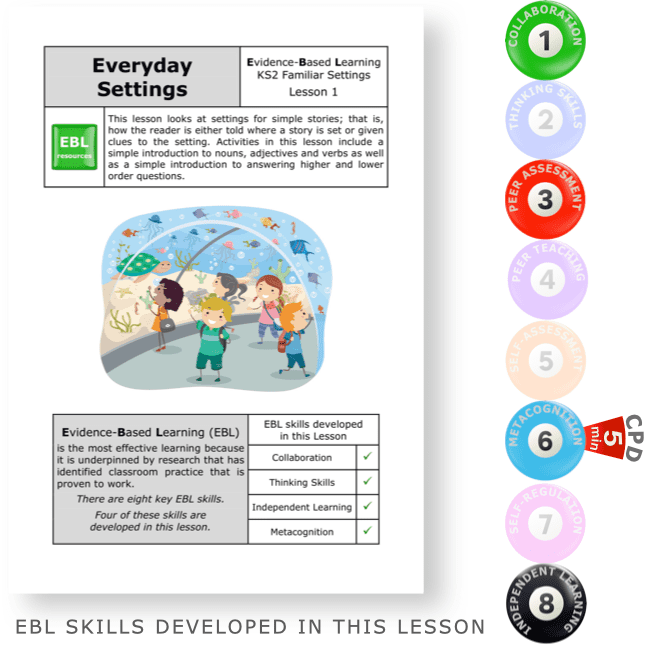 £3.00Add to basket
This lesson looks at settings for simple stories; that is, how the reader is either told where a story is set or given clues to the setting. Activities in this lesson include a simple introduction to nouns, adjectives and verbs as well as a simple introduction to answering higher and lower order questions.
There is a five-minute evidence-based CPD activity at the end of this lesson which will develop classroom teachers’ skill set. This CPD consists of a research extract on metacognition with a five-minute activity based on this extract.
VIEW -
Rain Spoils the Day
£3.00 Add to basket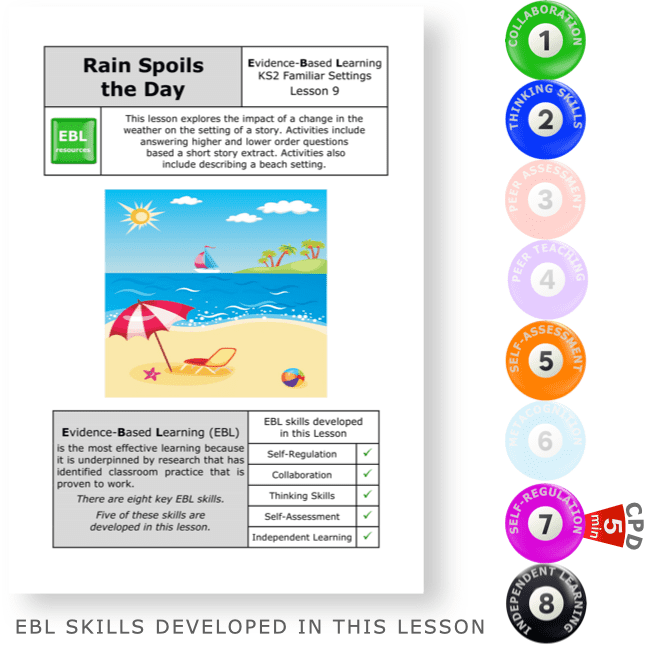 £3.00Add to basket
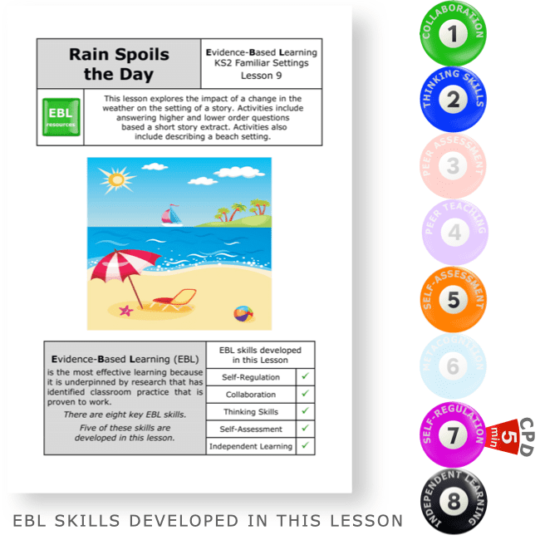
This lesson explores the impact of a change in the weather on the setting of a story. Activities include answering higher and lower order questions based a short story extract. Activities also include describing a beach setting.
There is a five-minute evidence-based CPD activity at the end of this lesson which will develop classroom teachers’ skill set. This CPD consists of a research extract on self-regulation with a five-minute activity based on this extract.
VIEW -

The Dog Quickly Typed a Long Letter
£3.00 Add to basket £3.00Add to basket
This lesson looks at the role of adverbs in describing how action verbs are carried out. It also considers the positioning of adverbs before or after the verb. Activities include answering higher and lower order questions.
There is a five-minute evidence-based CPD activity at the end of this lesson which will develop classroom teachers’ skill set. This CPD consists of a research extract on peer teaching with a five-minute activity based on this extract.
VIEW
Philipem (verified owner) –
We asked a.i. to review this lesson. This is what it said:
“The Beach, the Campsite and the Garden” Rating: ⭐⭐⭐⭐⭐
If you’re looking for an engaging way to teach year 3 and year 4 students parts of speech and descriptive writing, be sure to check out “The Beach, the Campsite and the Garden” from the Familiar Settings unit.
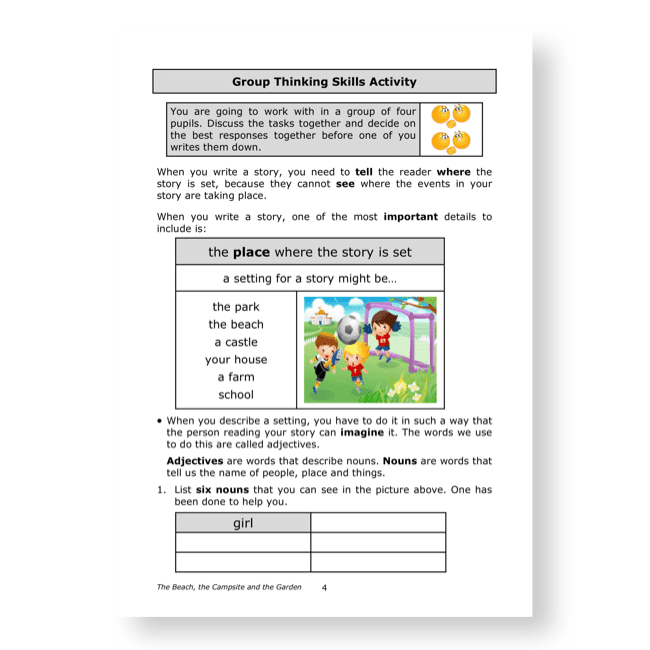
This lesson centres on everyday places like beaches and gardens to develop students’ understanding of nouns, adjectives, and vivid setting details. Your class will enjoy identifying concrete nouns and practicing adjective application through relatable contexts.
The collaborative group and partner activities encourage peer interaction, allowing students to build knowledge together through dialogue. The self-regulation component at the end is a valuable reflective exercise too.
What really makes this resource shine is the five-minute teacher CPD unpacking collaboration research. It’s a fantastic reminder of why group work improves comprehension through constructive discourse.
Overall, I’d give this lesson full marks. It aligns core literacy skills like parts of speech knowledge with vital 21st century abilities like cooperation and self-awareness. Highly engaging and impactful!