

The Dog Quickly Typed a Long Letter
£3.00
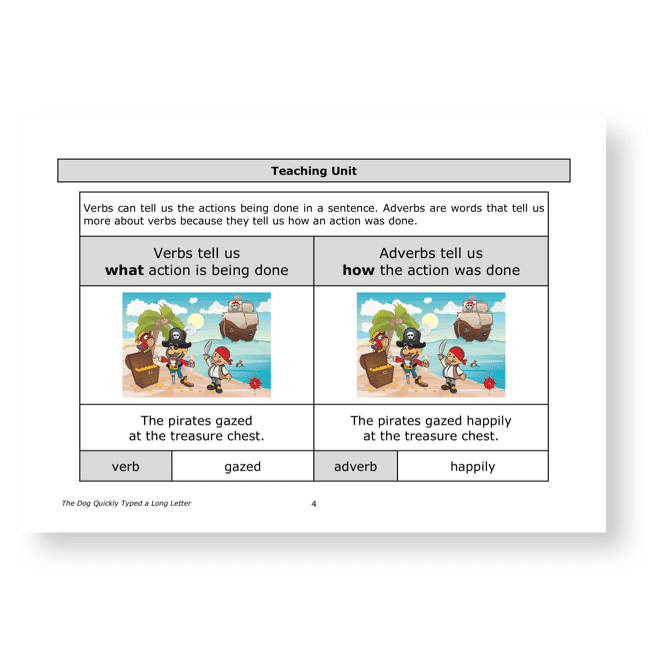
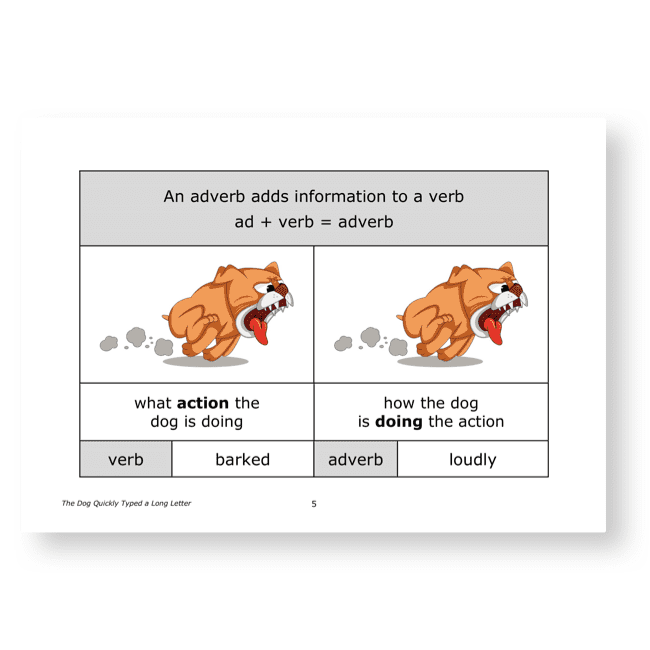
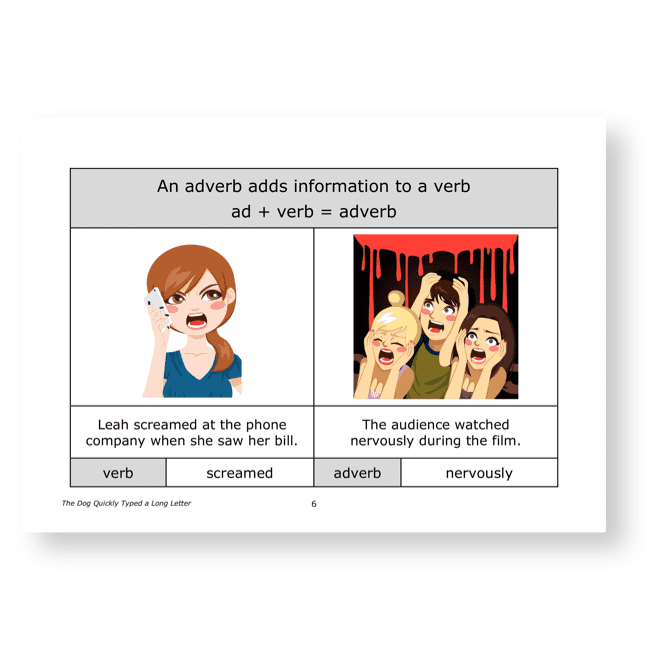
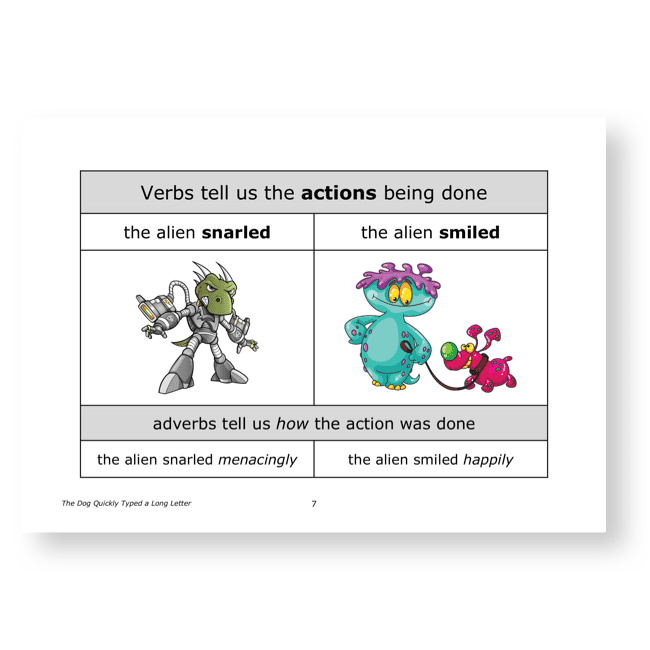
This lesson looks at the role of adverbs in describing how action verbs are carried out. It also considers the positioning of adverbs before or after the verb. Activities include answering higher and lower order questions.
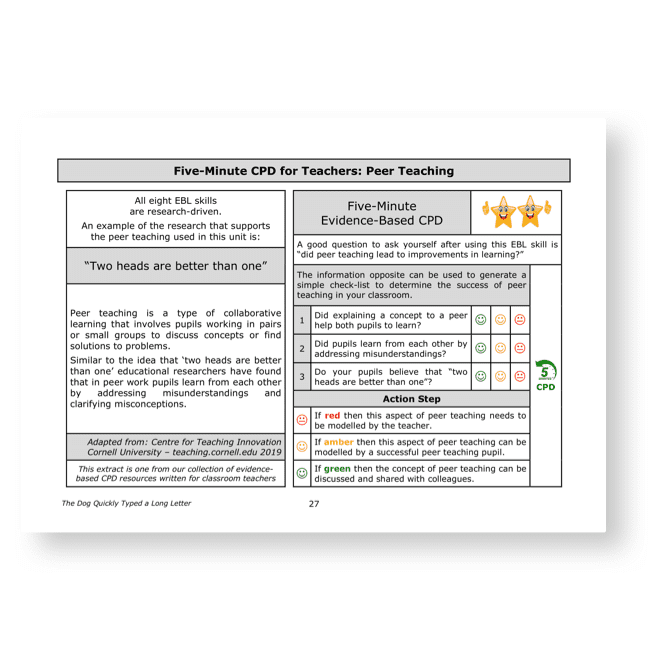
There is a five-minute evidence-based CPD activity at the end of this lesson which will develop classroom teachers’ skill set. This CPD consists of a research extract on peer teaching with a five-minute activity based on this extract.
Description
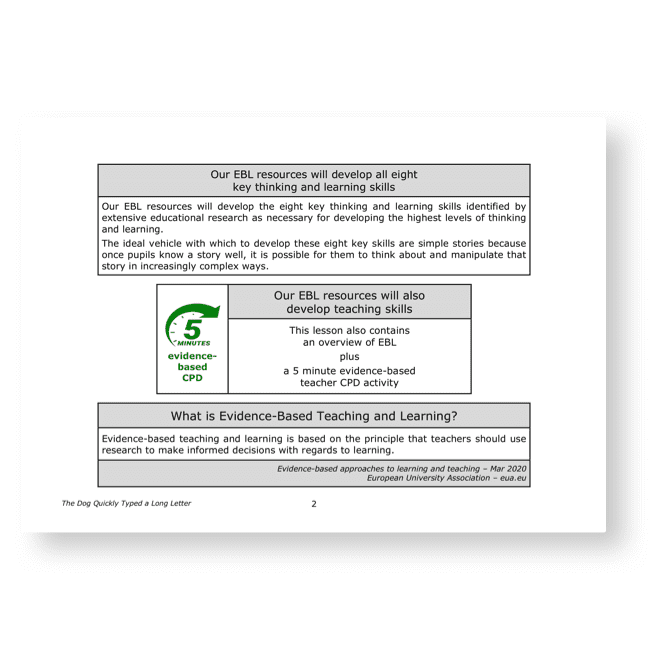
These evidence-based learning (EBL) lessons are based on classroom practice that has been proven, by research, to maximise thinking, learning and attainment. From an extensive review of educational research, we identified the eight key classroom thinking and learning skills that were common across these research papers. We named these eight key skills “EBL skills”.
EBL skills have been proven by research to maximise learning because they combine the most productive thinking skills with the most effective learning behaviours. Each of our evidence-based learning lessons uses the English curriculum as a framework through which the eight EBL skills are delivered.
Teachers also have the opportunity to add to their own skill set or refresh their existing skills with our five-minute CPD activity, based on one of the EBL skills used in this lesson.
The skills in bold below are the EBL skills developed in this Familiar Settings lesson. Click on each skill to learn more about that skill.
- Collaboration
- Thinking Skills
- Peer Assessment
- Peer Teaching
- Self-Assessment
- Metacognition
- Self-Regulation
- Independent Learning
1 review for The Dog Quickly Typed a Long Letter
Only logged in customers who have purchased this product may leave a review.
Related products
-


Y5 Nailing a Setting
£3.00 Add to basket £3.00Add to basket
KS2 National Curriculum:
✓ Identifying setting components: place, time of day, time period, and weather
✓ Analysing visual cues and using setting vocabulary
✓ Teaching peers to consolidate understanding
✓ Generating original examples through partner workThis lesson looks at the four possible features of a story setting: the place, the time period, the time of day and the weather. It also looks at real and imaginary settings. Activities include answering higher and lower order questions.
There is a five-minute evidence-based CPD activity at the end of this lesson which will develop classroom teachers’ skill set. This CPD consists of a research extract on peer teaching with a five-minute activity based on this extract.
VIEW -
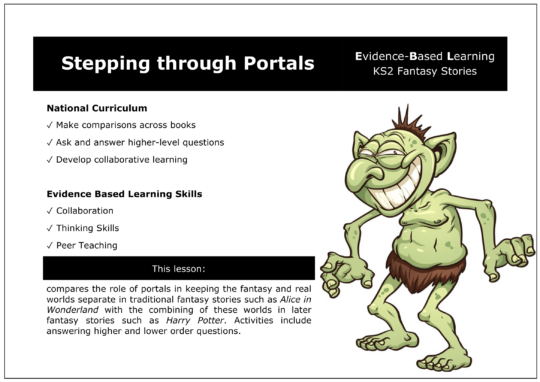
Y6 Stepping through Portals
£3.00 Add to basket £3.00Add to basket
KS2 National Curriculum:
✓ Make comparisons across books
✓ Ask and answer higher-level questions
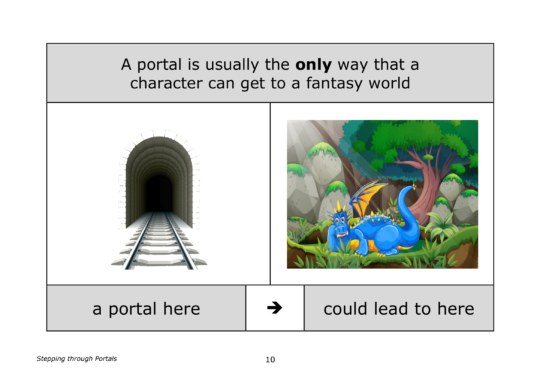
✓ Develop collaborative learningThis lesson compares the role of portals in keeping the fantasy and real worlds separate in traditional fantasy stories such as Alice in Wonderland with the combining of these worlds in later fantasy stories such as Harry Potter. Activities include answering higher and lower order questions.
There is a five-minute evidence-based CPD activity at the end of this lesson which will develop classroom teachers’ skill set. This CPD consists of a research extract on peer teaching with a five-minute activity based on this extract.
VIEW -
On the Beach
£3.00 Add to basket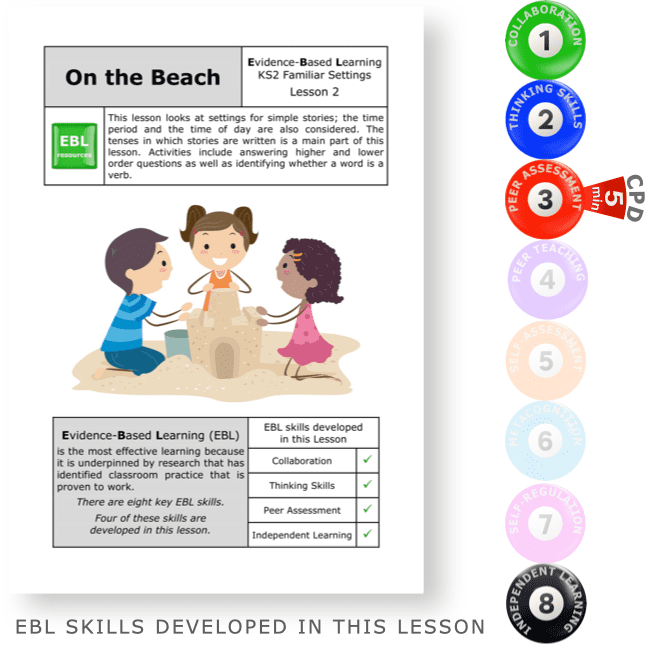 £3.00Add to basket
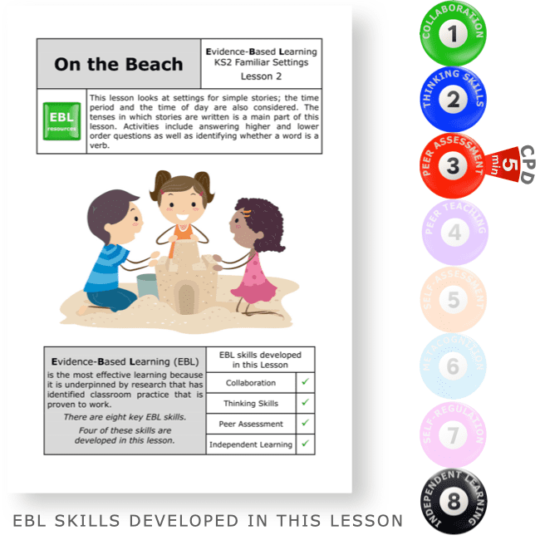
This lesson looks at settings for simple stories; the time period and the time of day are also considered. The tense in which stories are written is a main part of this lesson. Activities include answering higher and lower order questions as well as identifying whether a word is a verb.
There is a five-minute evidence-based CPD activity at the end of this lesson which will develop classroom teachers’ skill set. This CPD consists of a research extract on peer assessment with a five-minute activity based on this extract.
VIEW -


A Pirate on the Moon
£3.00 Add to basket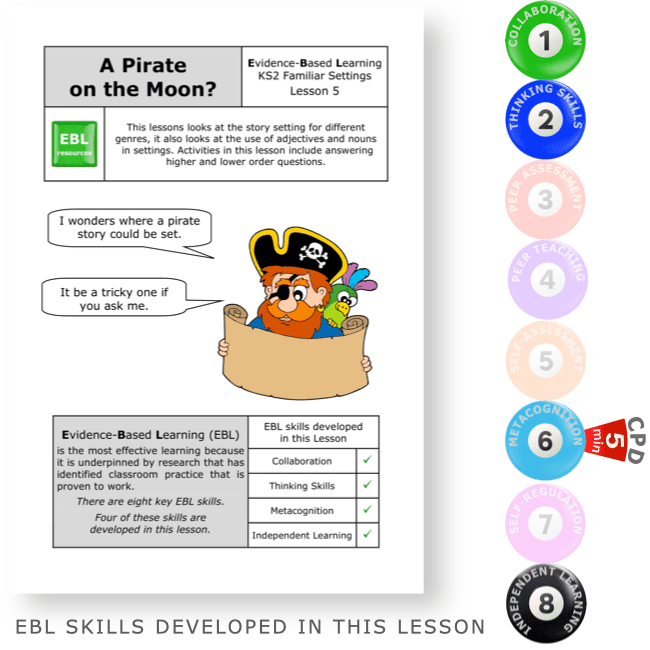 £3.00Add to basket
This lesson looks at the story setting for different genres; it also looks at the use of adjectives and nouns in settings. Activities in this lesson include answering higher and lower order questions.
There is a five-minute evidence-based CPD activity at the end of this lesson which will develop classroom teachers’ skill set. This CPD consists of a research extract on metacognition with a five-minute activity based on this extract.
VIEW
Philipem (verified owner) –
We asked a.i. to review this lesson. This is what it said:
“The Dog Quickly Typed a Long Letter” Rating: ⭐⭐⭐⭐⭐
Looking for an engaging way to teach adverbs and action verbs? Check out “The Dog Quickly Typed a Long Letter” from the Familiar Settings unit.
This cleverly-named lesson explores how adverbs modify verbs to describe precisely how an action is carried out. Through collaborative activities and sample texts, students identify adverbs positioned before and after verbs.
The varied question types build essential literacy skills like parts of speech knowledge as well as vital cognitive competencies. I appreciate how it pushes beyond simple recall toward higher-order application and analysis.
But the real value-add is the peer teaching component. Partner explanation activities cement adverb comprehension while fostering 21st century communication abilities. The five-minute teacher CPD summarises compelling research on this evidence-based methodology.
Overall, I’d rate this resource 5/5 stars. It aligns core language content with proven cooperative learning strategies in a imaginatively contextual package.