
Y6 The Hare and the Tortoise
£3.00
KS2 National Curriculum:
✓ Understanding the message of perseverance and pride
✓ Comparing traditional and modern attitudes to effort and speed
✓ Planning a short moral reflection or response
✓ Participating in group discussions with roles
Activities in this lesson include reminders about the main features of fables, learning about the moral in fables in general and the moral in The Hare and the Tortoise, The Fox and the Crow and The Dog and His Reflection in particular.
There is a five-minute evidence-based CPD activity at the end of this lesson which will develop classroom teachers’ skill set. This CPD consists of a research extract on collaboration with a five-minute activity based on this extract.
Description
Recommended Year Group: Year 6
Focus: Applying moral meaning to modern situations
Skills Developed:
• Understanding the message of perseverance and pride
• Comparing traditional and modern attitudes to effort and speed
• Planning a short moral reflection or response
• Participating in group discussions with roles
📘 National Curriculum Links:
• Reading – Comprehension: Identify moral themes and link to personal views
• Writing – Composition: Write a reflection or short essay based on meaning
• Spoken Language: Take on discussion roles; explore multiple viewpoints
• Thinking and Learning: Collaboration, critical thinking, self-regulation
These evidence-based learning (EBL) lessons are based on classroom practice that has been proven, by research, to maximise thinking, learning and attainment. From an extensive review of educational research, we identified the eight key classroom thinking and learning skills that were common across these research papers. We named these eight key skills “EBL skills”.
EBL skills have been proven by research to maximise learning because they combine the most productive thinking skills with the most effective learning behaviours. Each of our evidence-based learning lessons uses the English curriculum as a framework through which the eight EBL skills are delivered.
Teachers also have the opportunity to add to their own skill set or refresh their existing skills with our five-minute CPD activity, based on one of the EBL skills used in this lesson.
The skills in bold below are the EBL skills developed in this Fables lesson. Click on each skill to learn more about that skill.
- Collaboration
- Thinking Skills
- Peer Assessment
- Peer Teaching
- Self-Assessment
- Metacognition
- Self-Regulation
- Independent Learning
1 review for Y6 The Hare and the Tortoise
Only logged in customers who have purchased this product may leave a review.
Related products
-


Y5 Introduction to Real Pirates
£3.00 Add to basket £3.00Add to basket
KS2 National Curriculum:
✓ Separating fact from fiction through structured retrieval
✓ Identifying pirate motivations and fears
✓ Clarifying the difference between imagined and historical pirate details
✓ Reflecting on working preferences and peer collaborationThis lesson continues with the theme of the Golden Age of piracy and looks at the main aspects of the pirate life, such as how dangerous it was and how pirates came to be ‘pirates’ in the first place. Other aspects include why parrots were ideal pets for pirates, what pirates wore, the pirate code and the pirate flag. The activities in this lesson include answering higher and lower order questions.
There is a five-minute evidence-based CPD activity at the end of this lesson which will develop classroom teachers’ skill set. This CPD consists of a research extract on collaboration with a five-minute activity based on this extract.
VIEW -


Y5 Alice, the White Rabbit and the Portal
£3.00 Add to basket £3.00Add to basket
KS2 National Curriculum:
✓ Identify themes and conventions
✓ Understand story structure
✓ Develop speaking and listening through partner workActivities in this lesson include exploring the key components of fantasy stories: real and imaginary settings, real and imaginary characters, good vs evil, real journeys vs portals, the passing of time and the use of magic. Activities also include answering higher and lower order questions.
There is a five-minute evidence-based CPD activity at the end of this lesson which will develop classroom teachers’ skill set. This CPD consists of a research extract on collaboration with a five-minute activity based on this extract.
VIEW -


Y5 The Cook is really Long John Silver
£3.00 Add to basket £3.00Add to basket
KS2 National Curriculum:
✓ Understanding bartering, currency, and trade in historical context
✓Explaining why treasure is buried and how maps are created
✓Completing a pirate plot story mountain
✓Exploring openings to pirate storiesThis lesson looks at why gold became so important and it introduces the concepts of bartering and trade. It also looks at why gold needed to be buried and considers the key role played by treasure maps in the plots of pirate stories. It also looks at the need to include good and bad characters. Activities include completing a story mountain outlining a possible plot for a pirate story and a task based on pirate story openings.
There is a five-minute evidence-based CPD activity at the end of this lesson which will develop classroom teachers’ skill set. This CPD consists of a research extract on collaboration with a five-minute activity based on this extract.
VIEW -


Y5 & Y6 Looking at Dialogue in Treasure Island
£3.00 Add to basket £3.00Add to basket
KS2 National Curriculum:
✓ Recognising the purpose of dialogue in storytelling
✓ Modernising dialogue
✓ Planning and writing a story opening with a stolen mapThis lesson looks at the role of dialogue using an extract from Treasure Island and how to punctuate dialogue. Activities include answering higher and lower order questions as well as writing the opening paragraph of a pirate story after considering three alternative ways of opening the story.
There is a five-minute evidence-based CPD activity at the end of this lesson which will develop classroom teachers’ skill set. This CPD consists of a research extract on collaboration with a five-minute activity based on this extract.
VIEW
Philipem (verified owner) –
We asked a.i. to review this lesson. This is what it said:
Teaching English and Evidence-Based Skills through Fables with the “The Hare and the Tortoise” lesson ⭐⭐⭐⭐⭐
I’ve come across a brilliant KS2 resource for teaching the classic fable, The Hare and the Tortoise, in a way that interweaves English skills with four key evidence-based learning skills. This ingenious lesson design seamlessly incorporates collaboration, thinking skills, self-regulation and independent learning into the learning process.
Engaging student activities include:
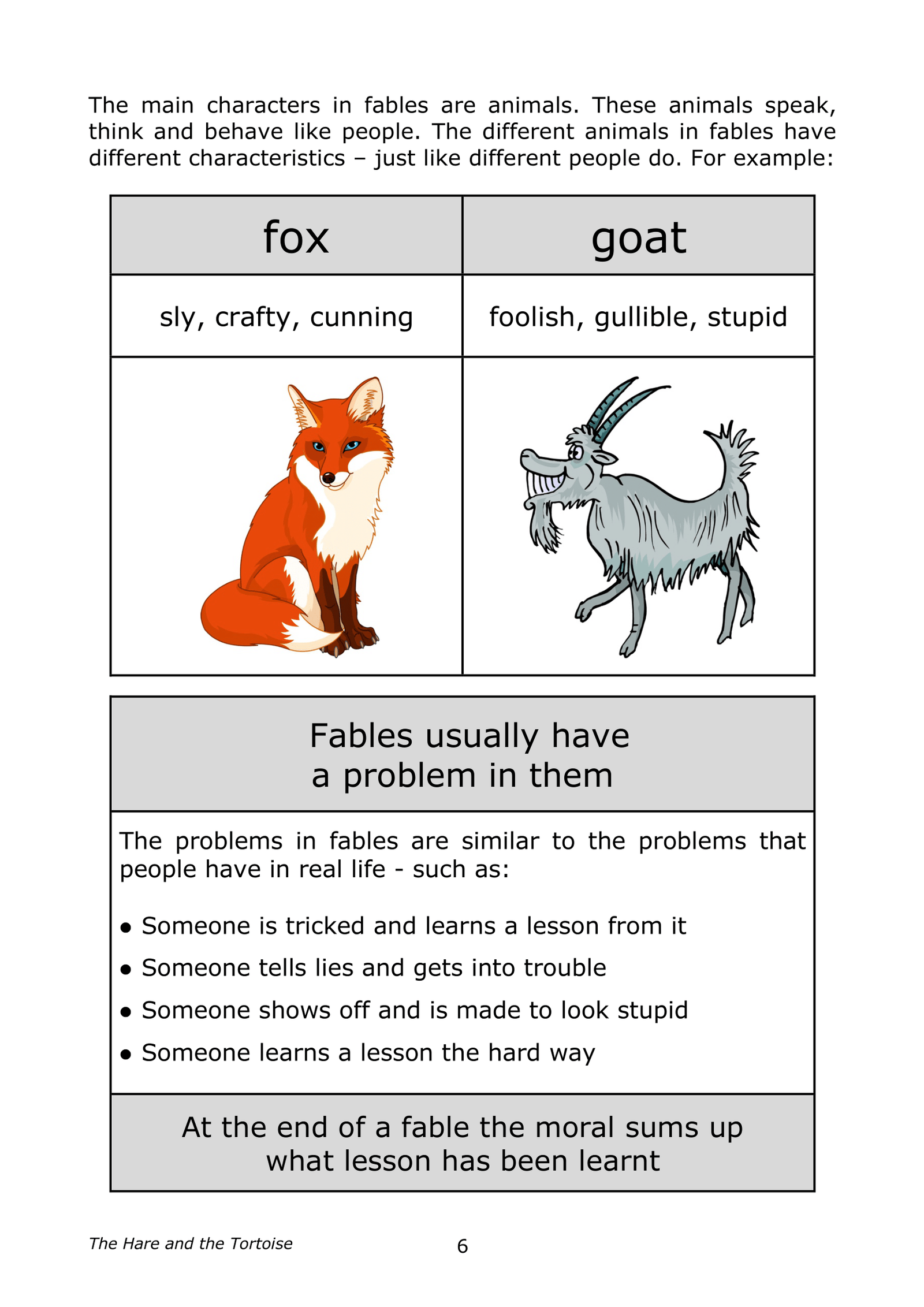
✅ Revisiting the key features of fables
✅ Identifying the moral in The Hare and the Tortoise fable
✅ Interpreting morals from other Aesop’s fables
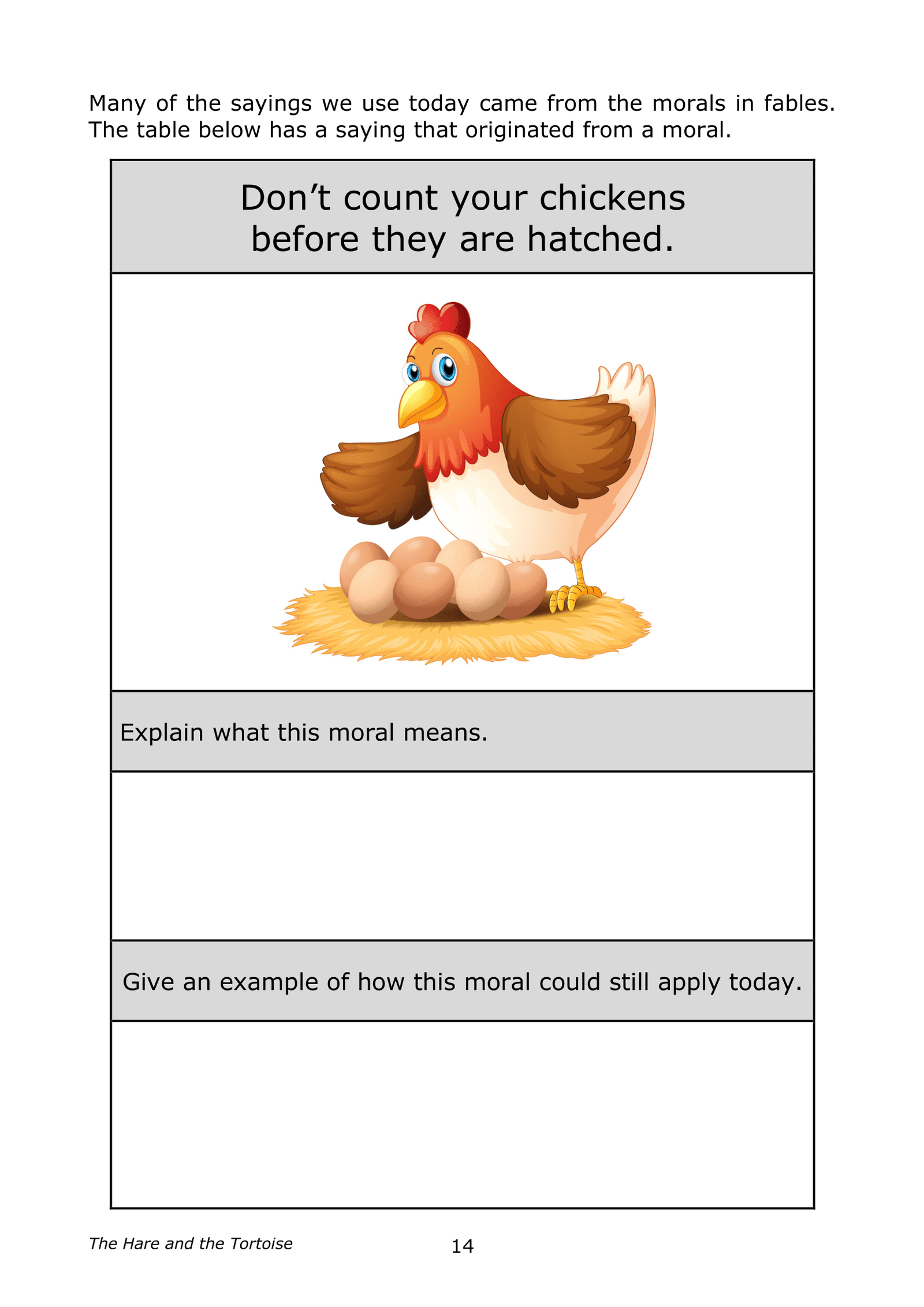
✅ Explaining the meaning of fable-inspired sayings
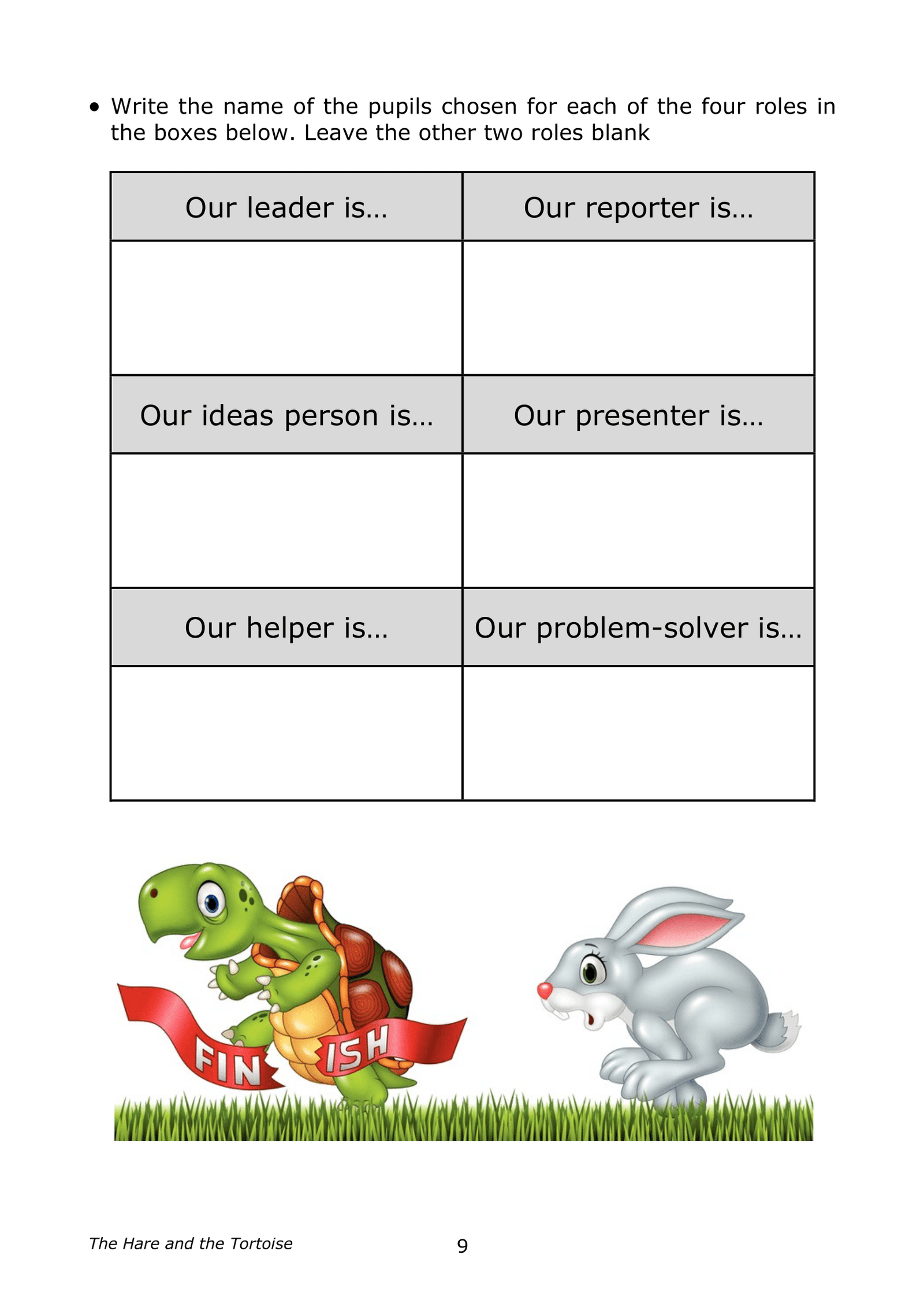
As students work through the tasks, they will be developing collaborative skills by working together in groups with assigned roles. They will use thinking skills to determine appropriate morals and provide examples. The self-regulation activity gets students to assess their own group work performance. Finally, the independent learning task requires justification of moral choices.
There is also a 5 minute CPD activity for teachers on collaborative learning. This features a research extract examining how group work builds complex thinking, alongside a template to map the collaborative learning process taking place in your classroom.
I would highly recommend this comprehensive fables lesson. It gets top marks for effectively blending English and evidence-based skills development in a creative way. I’m awarding it 5 stars – why not try it yourself and see the impact on learning in your classroom?