
Caesar’s Parrot Enjoys an Awayday
£3.00
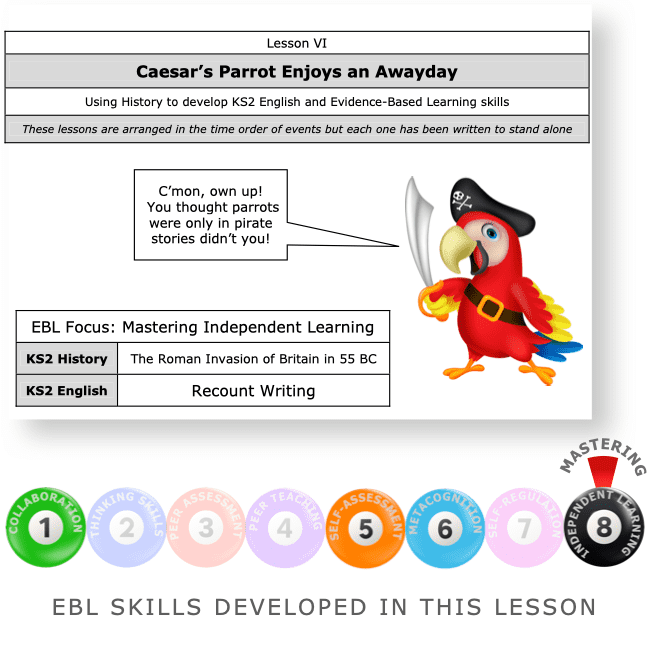
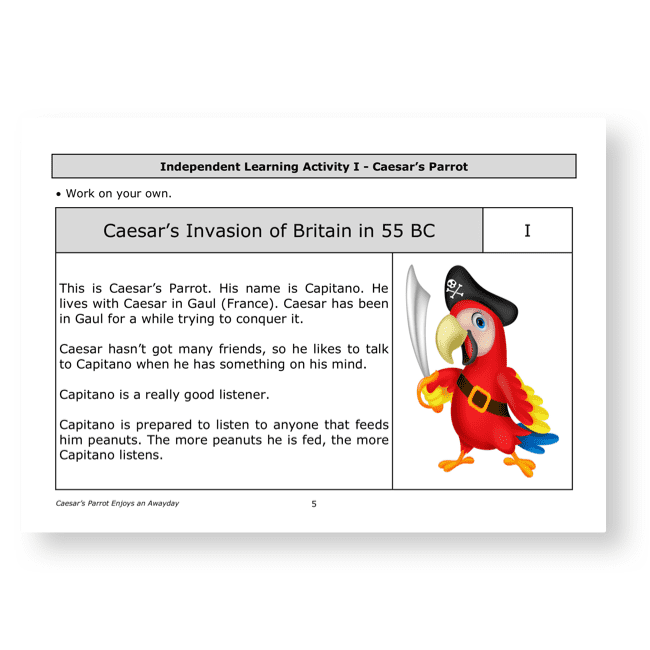
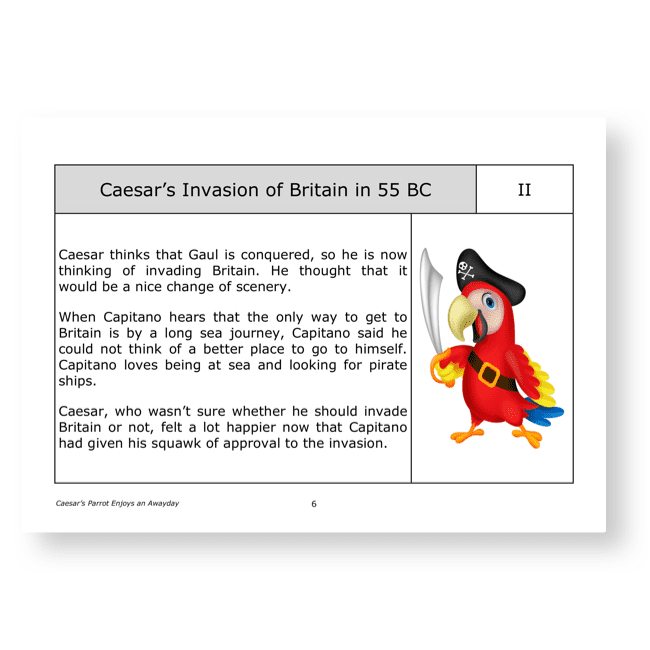
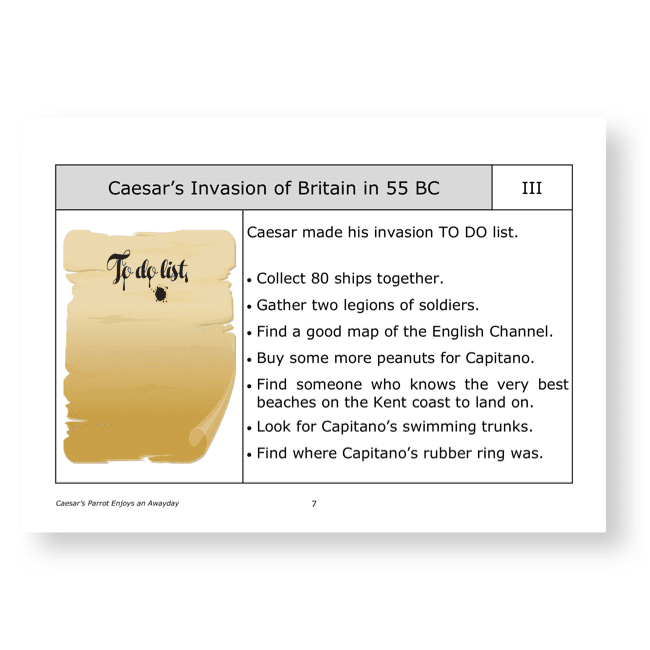
This lesson offers a light-hearted look at Caesar’s first invasion of Britain in 55 BC from the perspective of his (imaginary) parrot called Capitano. Capitano is not invading of course – he is going on an awayday!
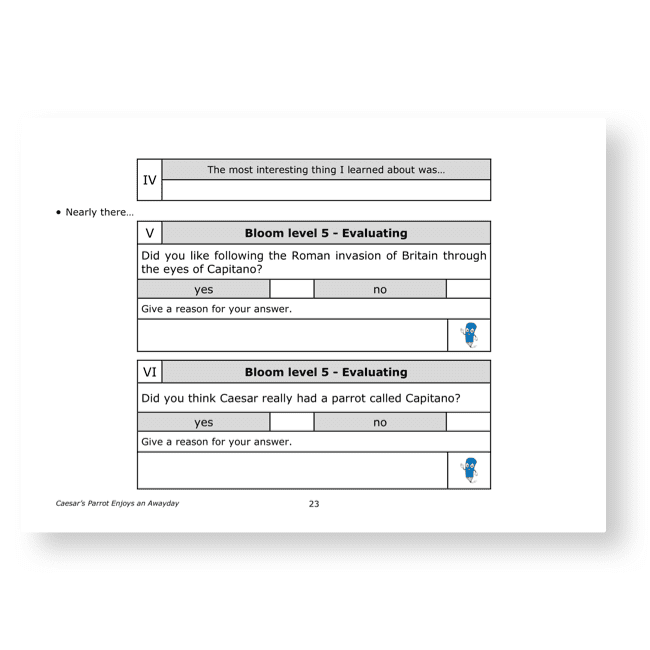
As well as English (writing a recount on their own) and history skills the Evidence-Based Learning skills developed in this lesson include metacognition and self-assessment. This lesson also offers pupils the opportunity to master independent learning.
Description
Each evidence-based learning (EBL) Roman history resource in this set is a complete lesson which uses the history curriculum as a framework through which each of the eight EBL skills can be mastered. Each resource has “mastering” one EBL skill as its central focus and all eight EBL skills are covered more than once in these lessons.
All eight EBL skills are better gained working with a partner so much of the work in these lessons is collaborative. These resources will ensure that pupils can master and use EBL skills regardless of their ability.
Each Roman history lesson will develop a single EBL skill through:
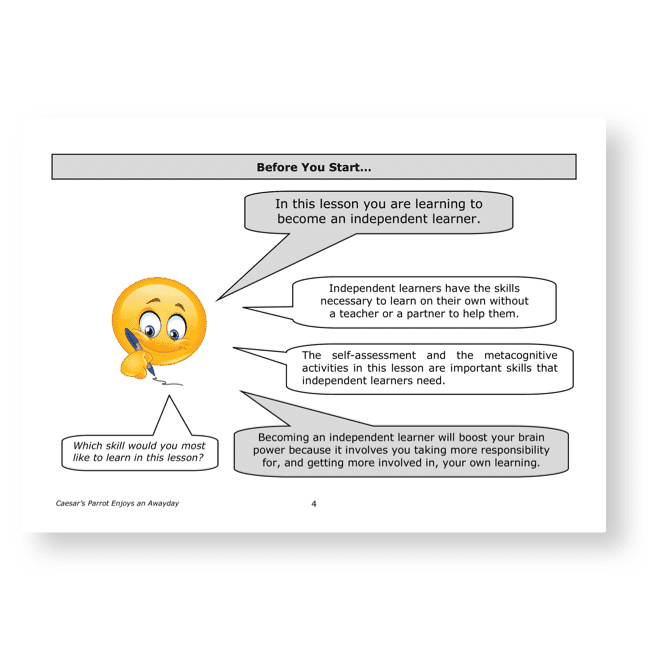
1) A “Before You Start” page that introduces the EBL skill.
2) Opportunities to master this skill during the lesson.
3) An “After You Finish” page that offers pupils the chance to evaluate their learning experience (of the lesson and the EBL skill) and to identify their next step in using the EBL skill.
The skills in bold below are all the EBL skills developed in this Roman lesson. Click on each skill to learn more about that skill.
- Collaboration
- Thinking Skills
- Peer Assessment
- Peer Teaching
- Self-Assessment
- Metacognition
- Self-Regulation
- Independent Learning
1 review for Caesar’s Parrot Enjoys an Awayday
Only logged in customers who have purchased this product may leave a review.
Related products
-
Two Days in August 55 BC
£3.00 Add to basket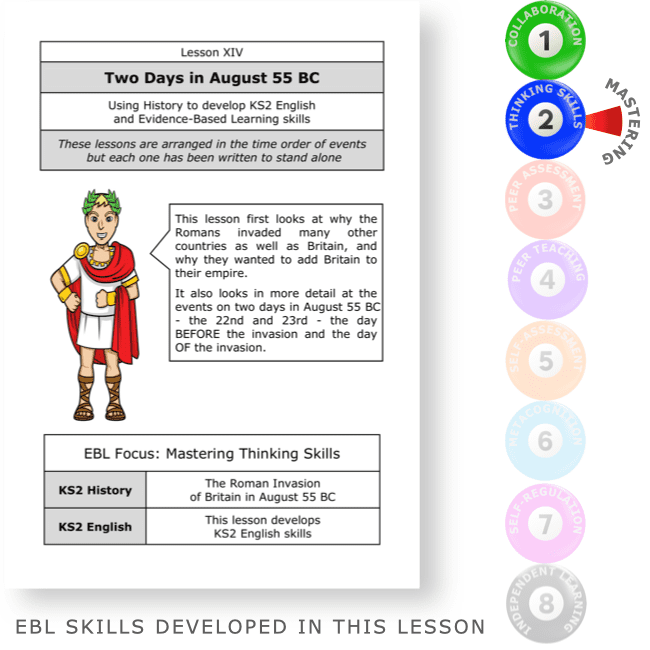 £3.00Add to basket
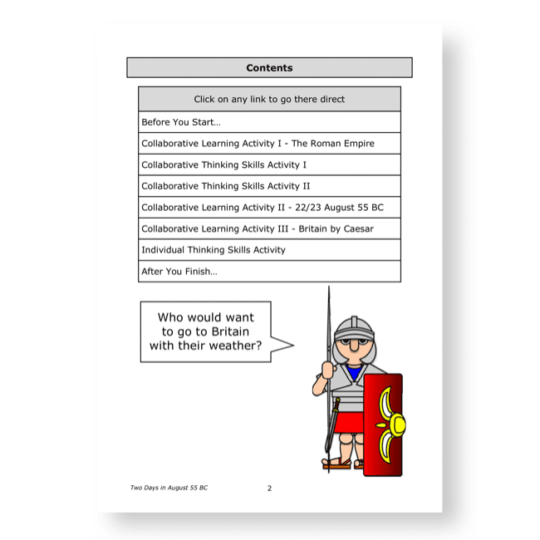
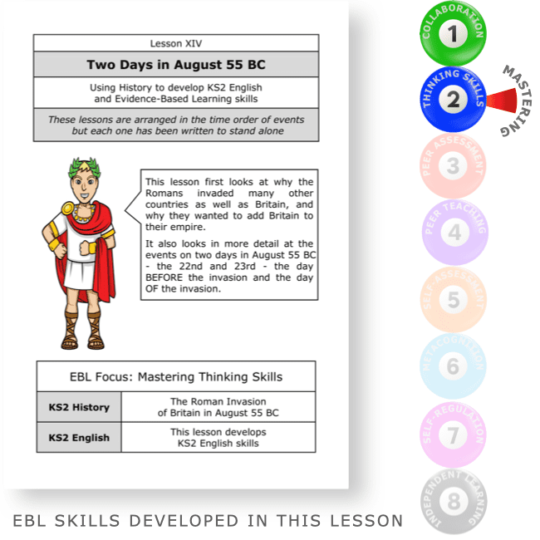
This lesson first looks at why the Romans invaded many other countries as well as Britain, and why they wanted to add Britain to their empire. It also looks in more detail at the events on two days in August 55 BC – the 22nd and 23rd – the day BEFORE the invasion and the day OF the invasion.
As well as English and history skills the Evidence-Based Learning skills developed in this lesson includes collaborative learning. This lesson also offers pupils the opportunity to master thinking skills.
VIEW -
It’s 54 BC and Caesar is Back
£3.00 Add to basket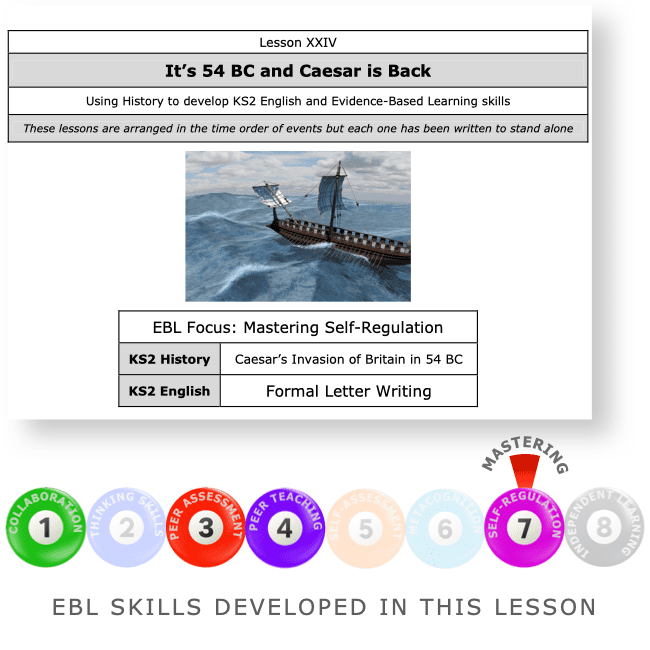 £3.00Add to basket
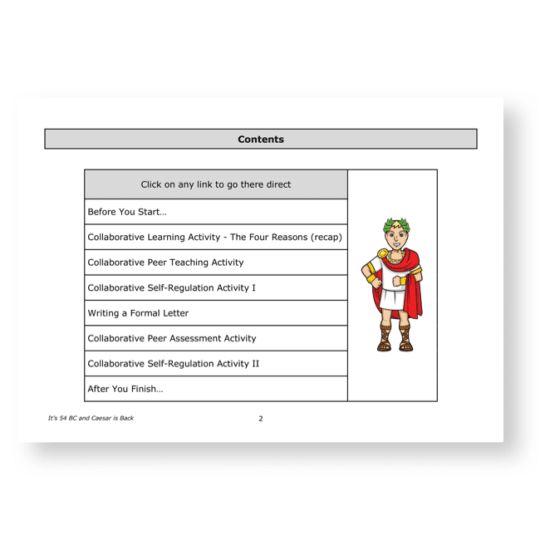
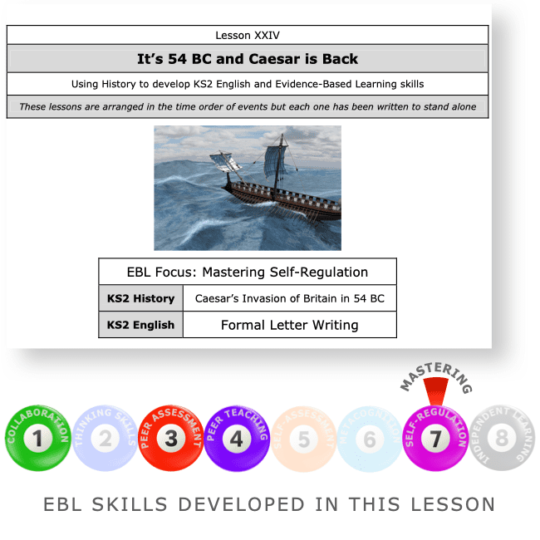
This lesson uses the mechanism of a formal letter to explore the fact that although Caesar’s first invasion in 55 BC was a failure, his second invasion a year later in 54 BC was a success. This lesson also considers why invading Britain was extremely important for Caesar and for the Roman Empire.
As well as English (writing a formal letter) and history skills the Evidence-Based Learning skills developed in this lesson include collaborative learning, peer teaching and peer assessment. This lesson also offers pupils the opportunity to master self-regulation.
VIEW -
Caesar Gets into Deep Water
£3.00 Add to basket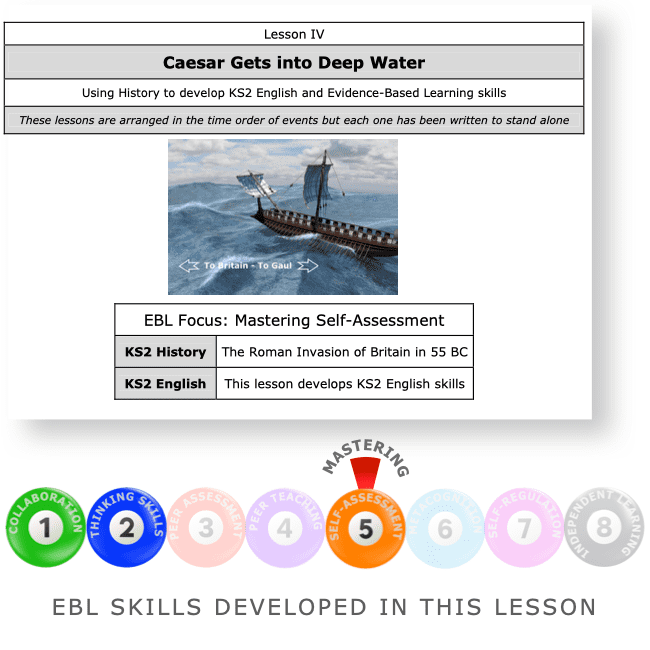 £3.00Add to basket
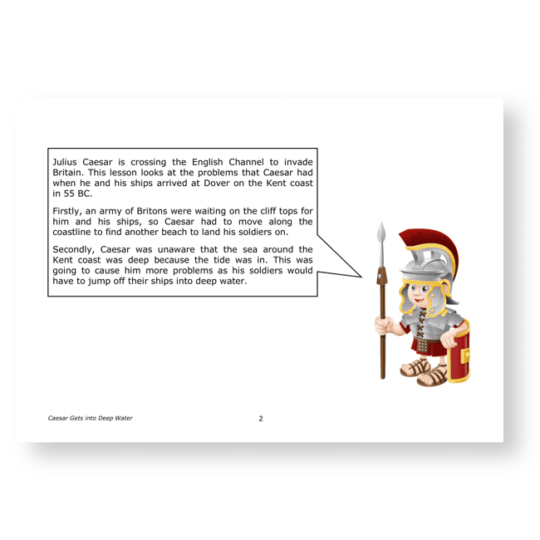
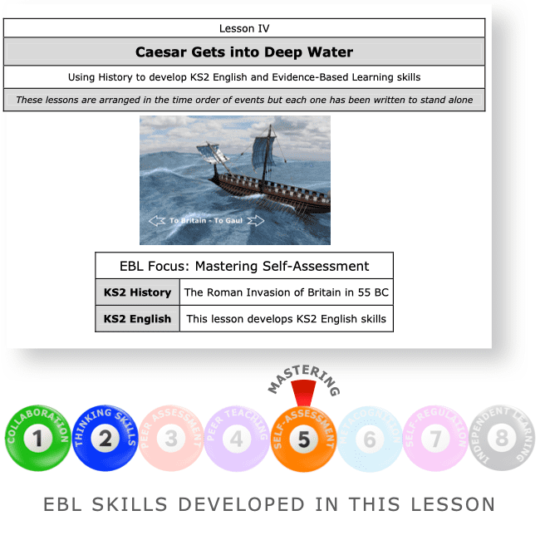
Julius Caesar is crossing the English Channel to invade Britain. This lesson looks at the problems that Caesar had when he and his ships arrived at Dover on the Kent coast in 55 BC.
Firstly, an army of Britons were waiting on the cliff tops for him and his ships, so Caesar had to move along the coastline to find another beach to land his soldiers on.
Secondly, Caesar was unaware that the sea around the Kent coast was deep because the tide was in. This was going to cause him more problems as his soldiers would have to jump off their ships into deep water.
As well as English and history skills the Evidence-Based Learning skills developed in this lesson include collaborative learning and thinking skills. This lesson also offers pupils the opportunity to master self-assessment.
VIEW -


Caesar’s Dog Goes on Holiday
£3.00 Add to basket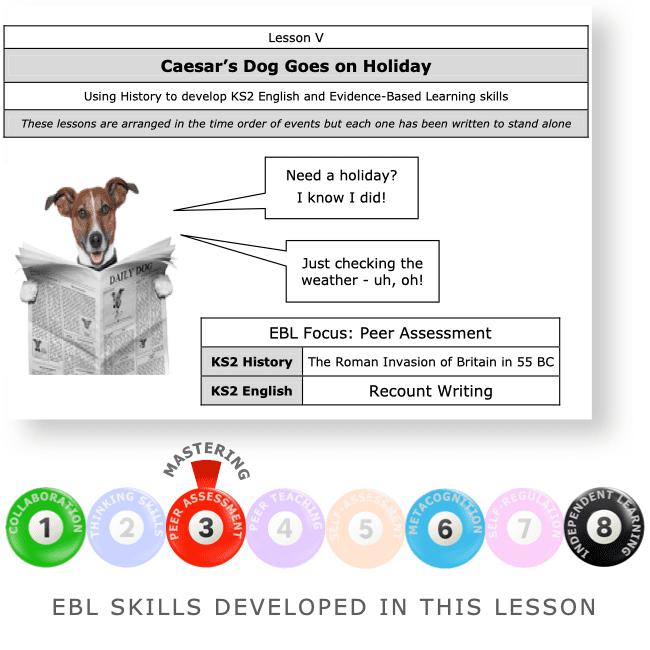 £3.00Add to basket
This lesson offers a light-hearted look at Caesar’s first invasion of Britain in 55 BC from the perspective of his (imaginary) dog called Rexus. Rexus is not invading of course – he is going on holiday!
As well as English (writing a recount with a partner) and history skills the Evidence-Based Learning skills developed in this lesson include collaborative learning, independent learning and metacognition. This lesson also offers pupils the opportunity to master peer assessment.
VIEW
Philipem (verified owner) –
We asked a.i. to review this lesson. This is what it said:
Bring the Roman Invasion of Britain to Life with Caesar’s Parrot Capitano!
Are you looking for an engaging way to teach English skills, history, and evidence-based learning strategies all at once? Look no further than “Caesar’s Parrot Enjoys an Awayday” – the sixth lesson in a set of 25 on the Romans.
This clever lesson offers a humorous twist by seeing Caesar’s first invasion of Britain in 55 BC through the eyes of his imaginary parrot companion, Capitano. While Caesar is focused on conquering new lands, Capitano is just excited for an “awayday” full of peanuts, sailing, and making sandcastles.
But don’t let the light-hearted narrative fool you – this resource packs a powerful educational punch. Your upper KS2 students (years 5 and 6) will:
• Practice recount writing by chronicling Capitano’s amusing adventure
• Learn key details about the Roman invasion in an entertaining context
• Develop evidence-based learning skills like metacognition and self-assessment
• Master independent learning by working through activities solo
The lesson skilfully scaffolds the evidence-based skill of self-assessment, allowing pupils to evaluate their own work using rubrics. It’s the perfect way to embed this crucial EBL strategy.
With an ideal blend of engaging content and robust learning opportunities, “Caesar’s Parrot Enjoys an Awayday” is a must-have for any teacher wanting to make Roman history an unforgettable experience.
Star Rating: ⭐⭐⭐⭐⭐ (5/5 stars)