










Mastering EBL Skills through the Romans + PDF
£56.25
Save 25% when you buy all 25 lessons in this series:
- The Roman Army vs the Britons
- Why Caesar Wanted to Invade Britain
- Romans, Taxes and Donkeys
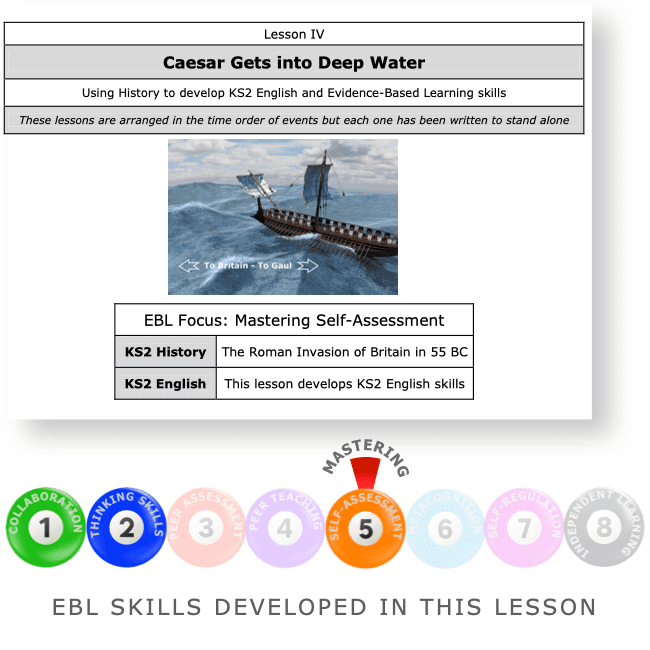
- Caesar Gets into Deep Water
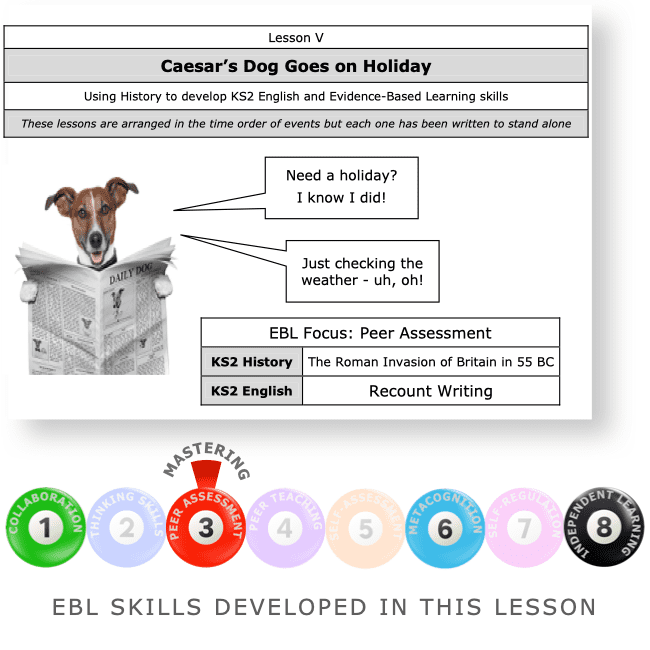
- Caesar’s Dog Goes on Holiday
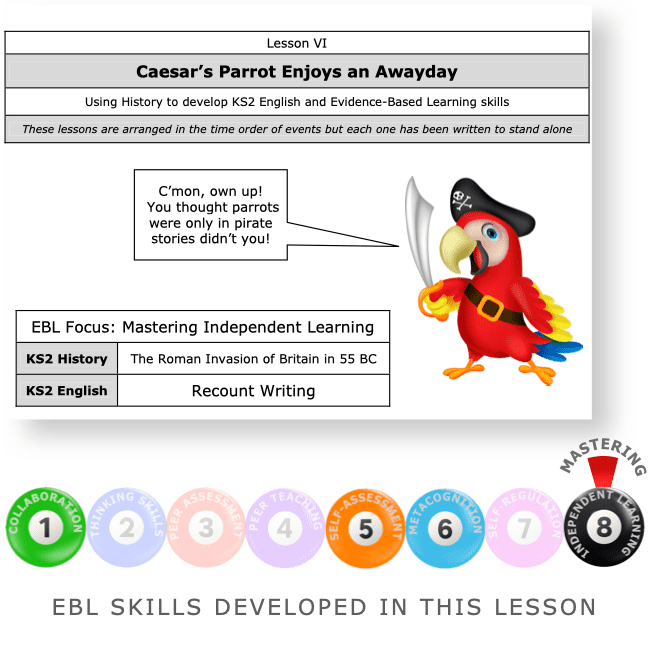
- Caesar’s Parrot Has An Awayday
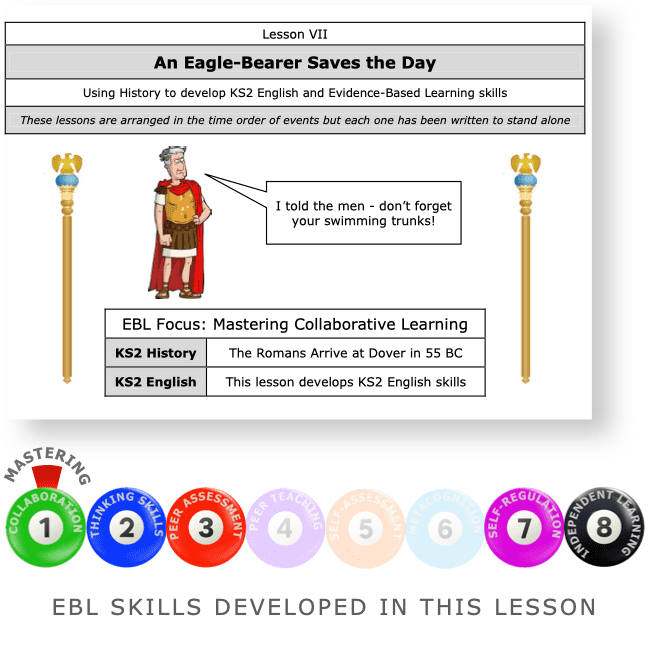
- An Eagle-Bearer Saves the Day
- Eagle-Bearers in the Roman Army
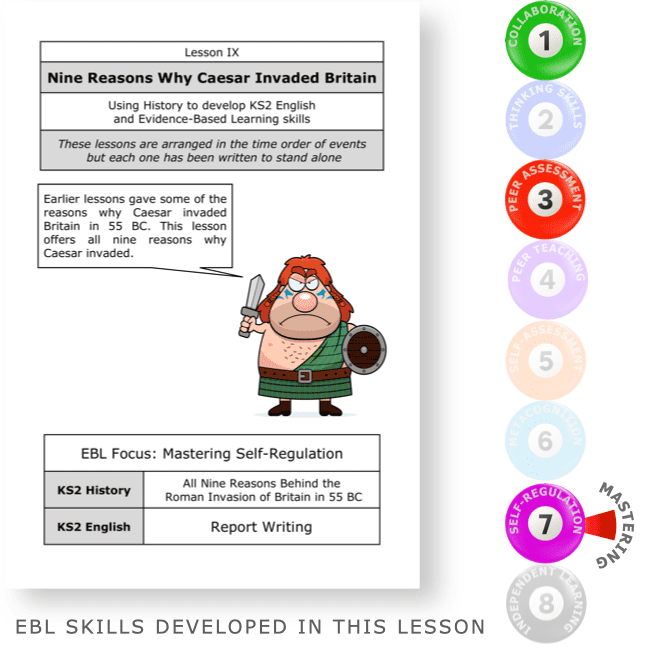
- Nine Reasons Why Caesar Invaded Britain
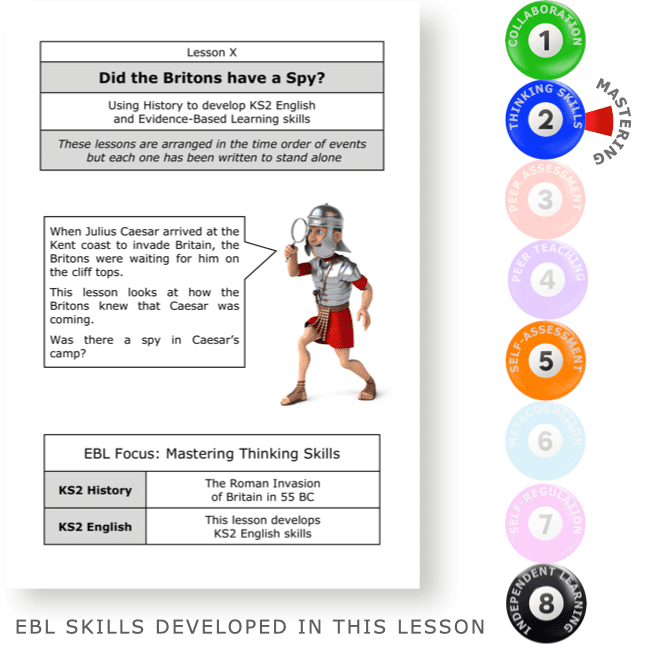
- Did the Britons have a Spy?
- Caesar Sails Without his Cavalry
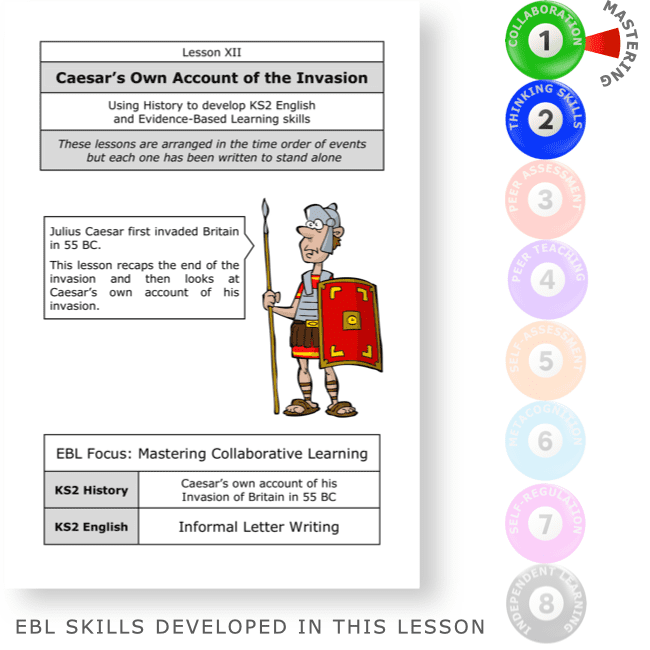
- Caesar’s Own Account of the Invasion
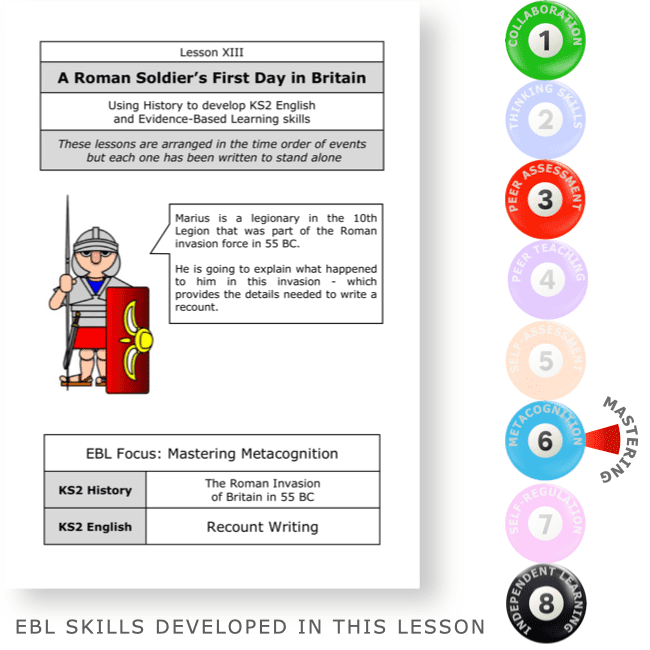
- A Roman Soldier’s First Day in Britain
- Two Days in August 55 BCE
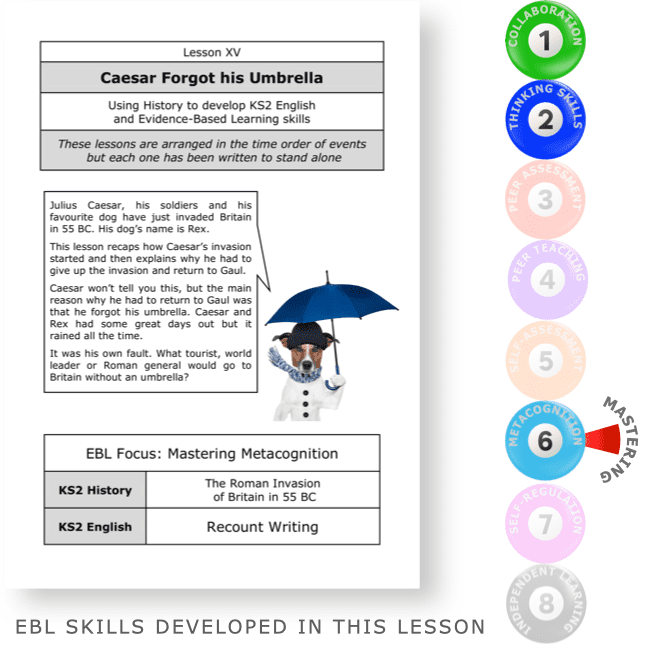
- Caesar Forgot His Umbrella
- Caesar’s Three Big Problems
- Even More Problems for Caesar
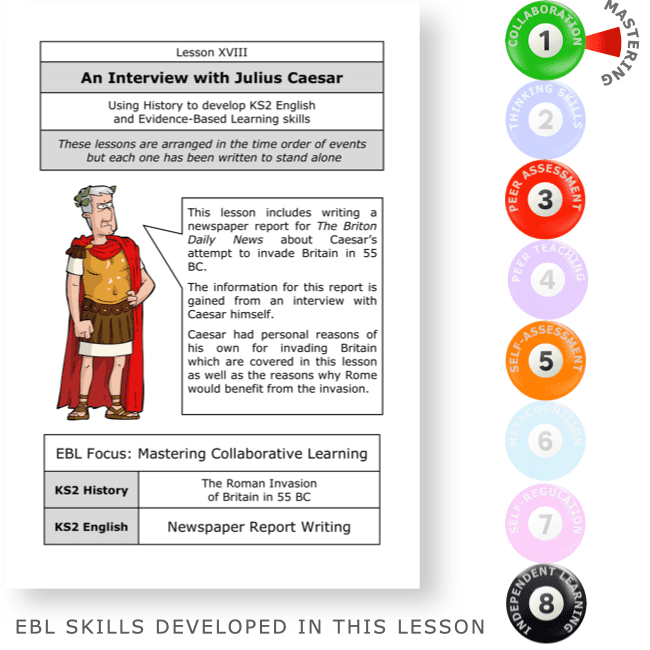
- An Interview with Julius Caesar
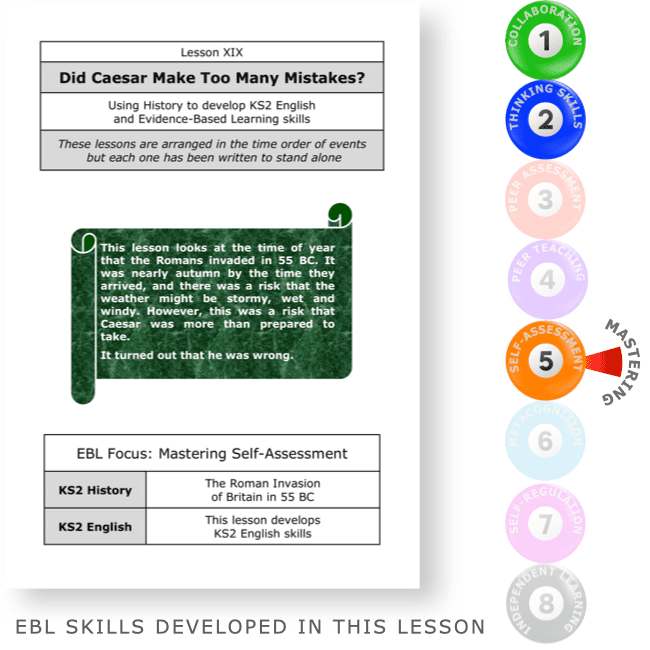
- Did Caesar Make Too Many Mistakes
- Caesar Sails back to Gaul
- Caesar Has Big Plans
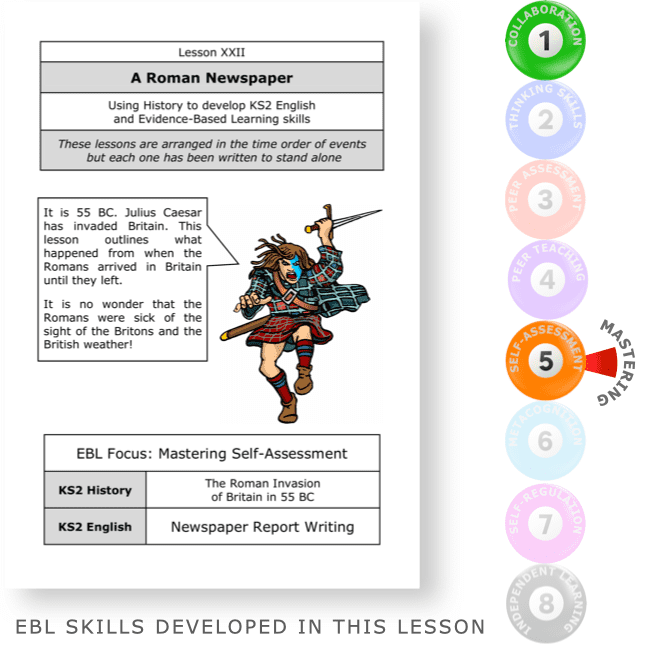
- A Roman Newspaper
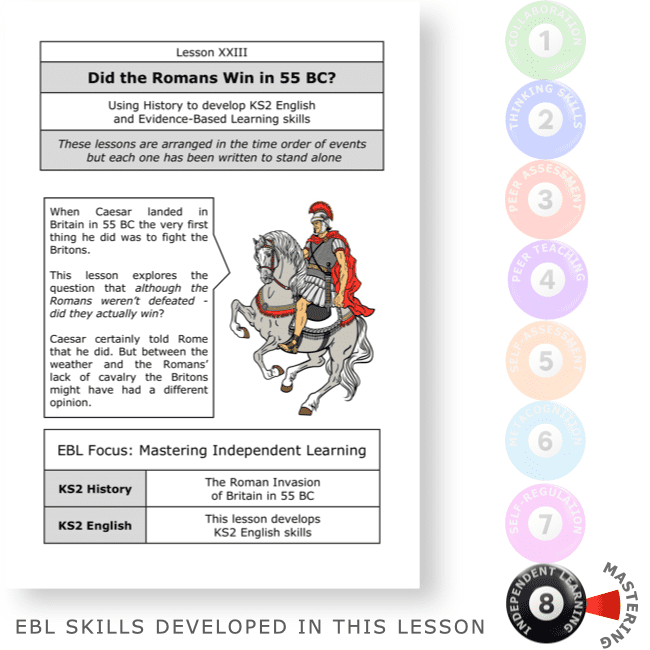
- Did the Romans Win?
- It’s 54 BC and Caesar is Back
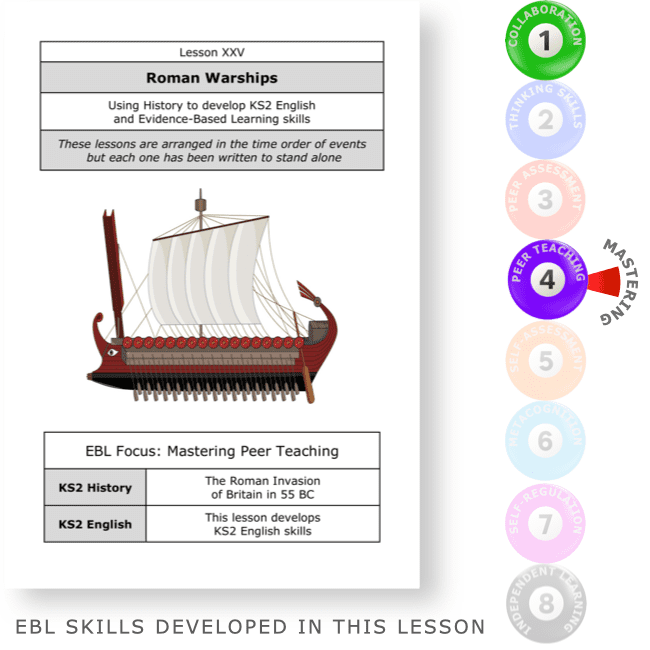
- Roman Warships
Description
This comprehensive set of 25 lessons takes an innovative approach to teaching about the Roman invasion of Britain in 55 BC, combining historical content with the development of crucial English literacy skills and evidence-based learning (EBL) techniques. Designed specifically for upper KS2 students in years 5 and 6, the lessons deftly interweave these three components for a rich, cross-curricular learning experience.
On the history front, students will gain a deep understanding of Julius Caesar’s motives, strategies, and the pivotal events surrounding his attempted invasion of Britain. From exploring the might of the Roman army to analysing Caesar’s personal ambitions, the lessons bring this era vividly to life through dramatic accounts and primary source evidence.
Simultaneously, the lessons provide ample practice for core English skills like reading comprehension, writing recounts/reports/letters, summarizing, and more. Students engage in activities that have them analysing texts, articulating ideas, and working collaboratively – all while building their historical knowledge.
However, what truly sets this resource apart is its intentional integration of evidence-based learning (EBL) techniques proven to boost academic achievement. Each lesson gradually builds one fundamental EBL skill through purposeful scaffolding and activities. These include:
– Collaborative learning
– Independent learning
– Metacognition/Self-regulation
– Peer teaching
– Self-assessment
– Peer assessment
– Thinking skills (Bloom’s Taxonomy)
By mastering competencies like self-assessment, thinking strategies, and peer collaboration, students gain invaluable tools for lifelong learning success across all subjects.
The lessons themselves are described as creative, engaging, and substantive – using amusing narrative hooks, hands-on activities, and robust learning materials. Whether it’s the ‘Caesar’s Dog Goes on Holiday’ lesson or exploring ‘Roman Warships’, students will be captivated while levelling up their skills.
With a holistic approach that makes cross-curricular connections, develops vital EBL techniques, and immerses students in the fascinating historical context, the ‘Mastering EBL Skills Through the Romans’ series emerges as an exemplary teaching resource highly recommended across all 25 five-star reviews. Any upper KS2 teacher looking to bring evidence-based practices into their classroom should undoubtedly consider utilising this powerful set of lessons.
These 8 skills are the EBL skills developed across these Mastering EBL Skills Through The Romans lessons. Click on each skill to learn more about that skill.
Only logged in customers who have purchased this product may leave a review.
Related products
-


Caesar’s Three Big Problems
£3.00 Add to basket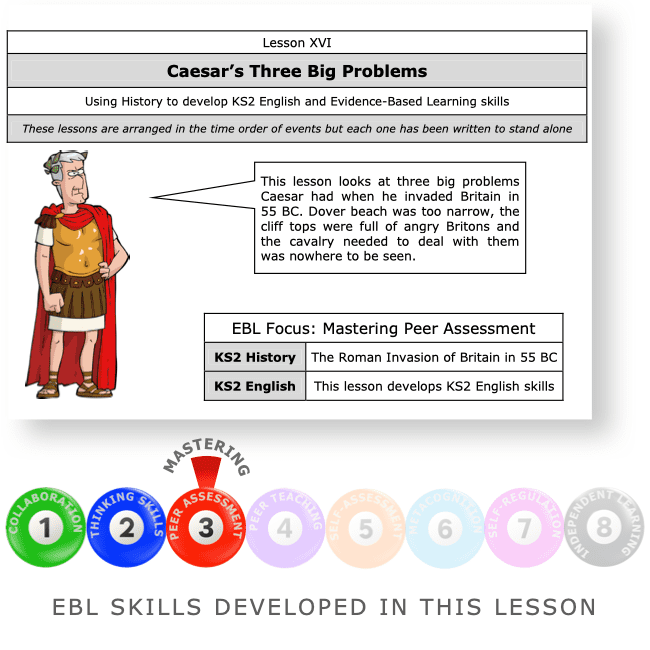 £3.00Add to basket
This lesson looks at three big problems Caesar had when he invaded Britain in 55 BC. Dover beach was too narrow, the cliff tops were full of angry Britons and the cavalry needed to deal with them was nowhere to be seen.
As well as English and history skills the Evidence-Based Learning skills developed in this lesson include collaborative learning and thinking skills. This lesson also offers pupils the opportunity to master peer assessment.
VIEW -
It’s 54 BC and Caesar is Back
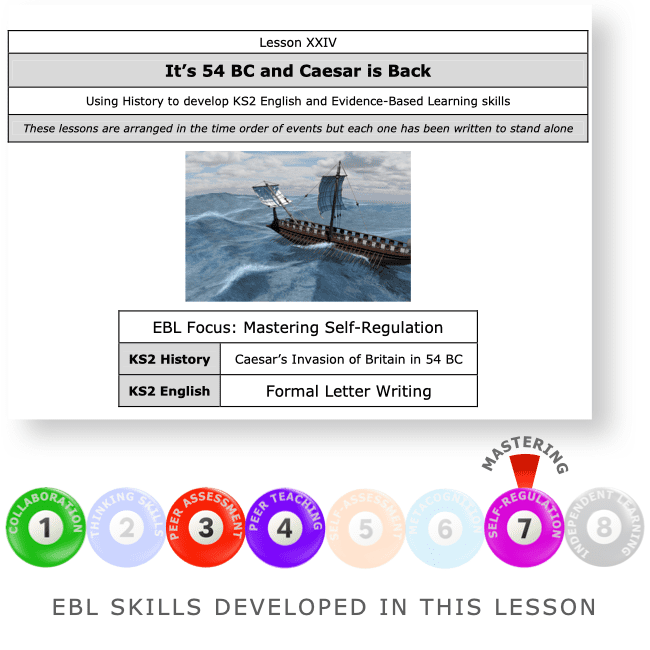
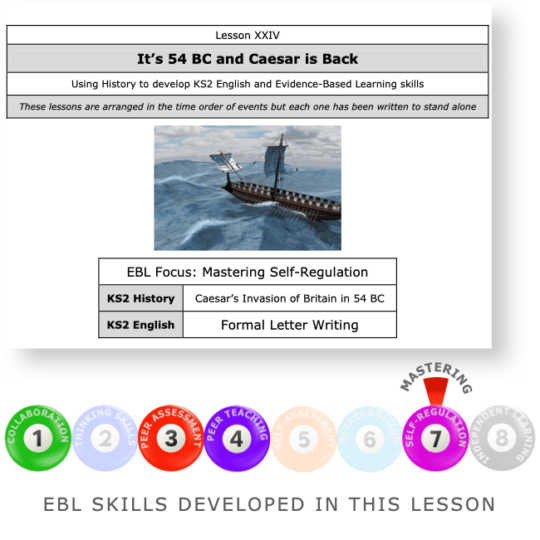
£3.00 Add to basket £3.00Add to basketThis lesson uses the mechanism of a formal letter to explore the fact that although Caesar’s first invasion in 55 BC was a failure, his second invasion a year later in 54 BC was a success. This lesson also considers why invading Britain was extremely important for Caesar and for the Roman Empire.
As well as English (writing a formal letter) and history skills the Evidence-Based Learning skills developed in this lesson include collaborative learning, peer teaching and peer assessment. This lesson also offers pupils the opportunity to master self-regulation.
VIEW -

The Roman Army vs the Britons
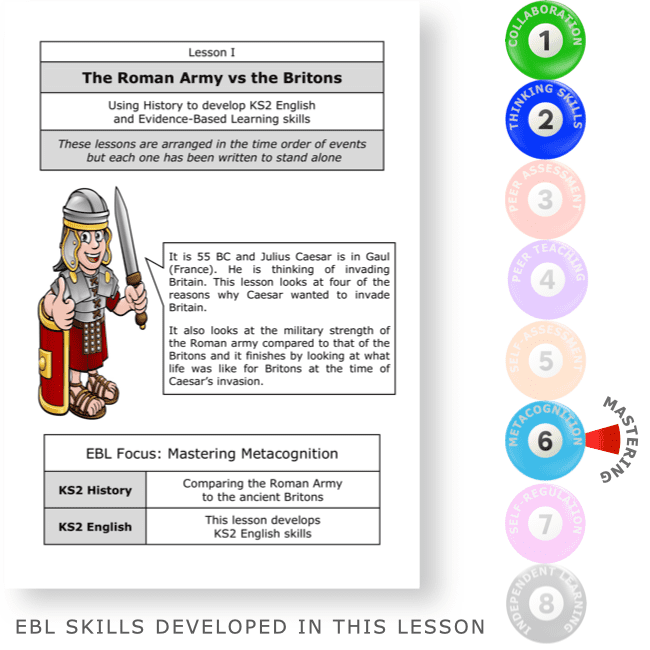
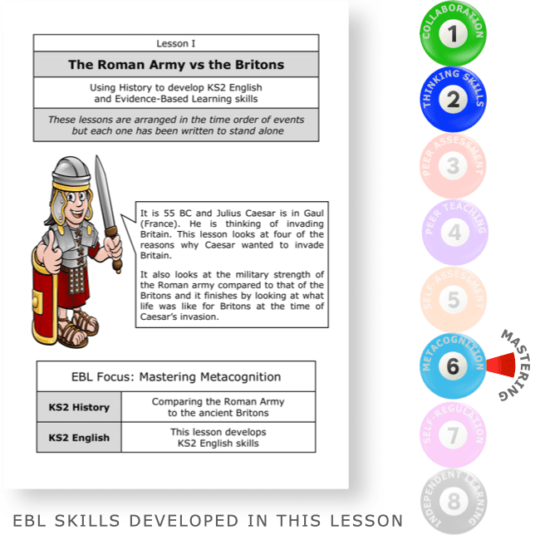
£3.00 Add to basket £3.00Add to basketIt is 55 BC and Julius Caesar is in Gaul (France). He is thinking of invading Britain. This lesson looks at four of the reasons why Caesar wanted to invade Britain. It also looks at the military strength of the Roman army compared to that of the Britons and it finishes by looking at what life was like for Britons at the time of Caesar’s invasion.
As well as English and history skills the Evidence-Based Learning skills developed in this lesson include collaborative learning and thinking skills. This lesson also offers pupils the opportunity to master metacognition.
VIEW -
Caesar Forgot His Umbrella
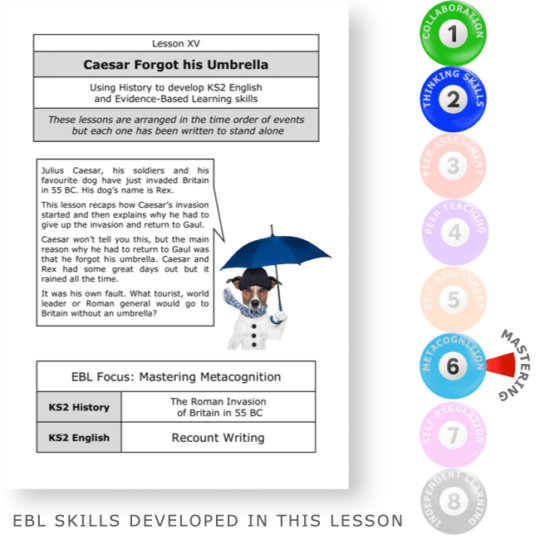
£3.00 Add to basket £3.00Add to basketJulius Caesar, his soldiers and his favourite dog have just invaded Britain in 55 BC. His dog’s name is Rex. This lesson recaps how Caesar’s invasion started and then explains why he had to give up the invasion and return to Gaul.
Caesar won’t tell you this, but the main reason why he had to return to Gaul was that he forgot his umbrella. Caesar and Rex had some great days out but it rained all the time. It was his own fault. What tourist, world leader or Roman general would go to Britain without an umbrella?
As well as English (writing a recount) and history skills the Evidence-Based Learning skills developed in this lesson include collaborative learning and self-assessment. This lesson also offers pupils the opportunity to master metacognition.
VIEW

Reviews
There are no reviews yet.